
Last updated November 2, 2026
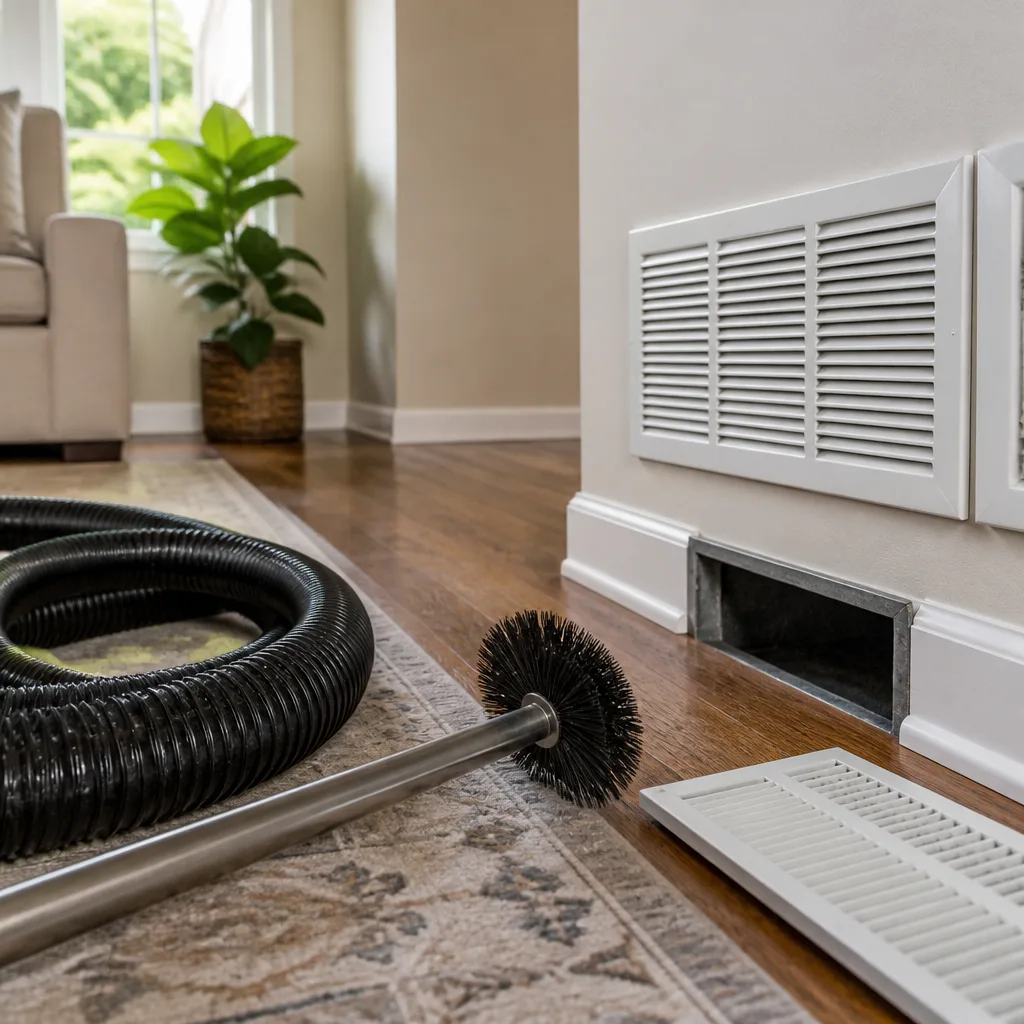 Whole-home duct cleaning
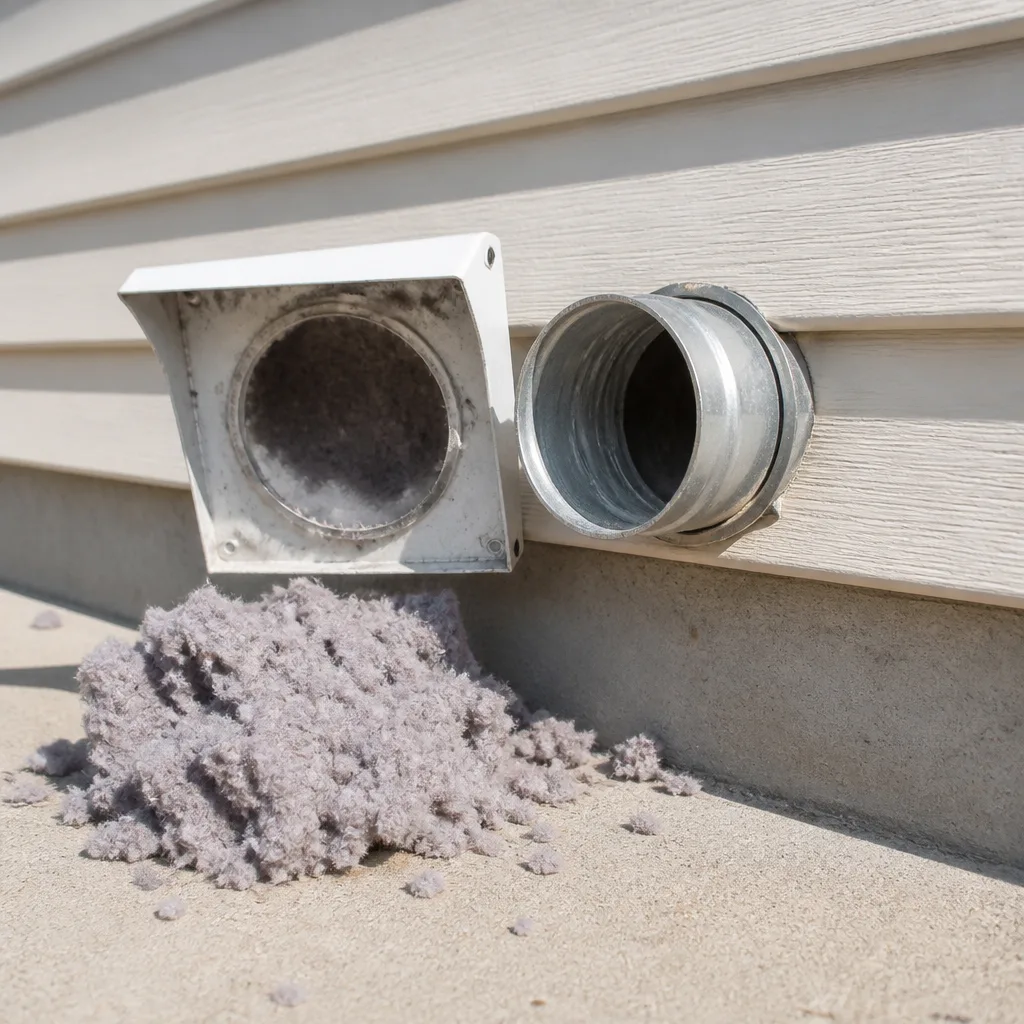 Dryer vent cleaning
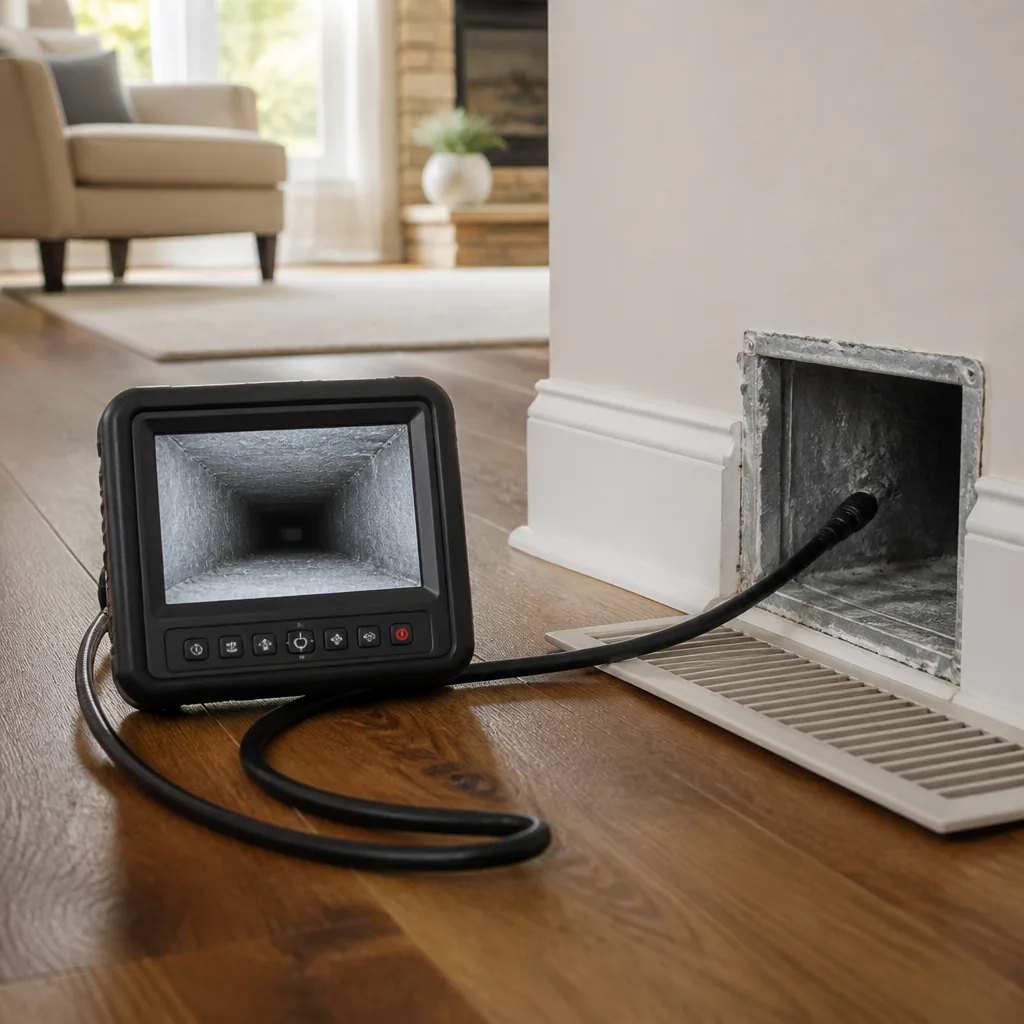 Camera inspection
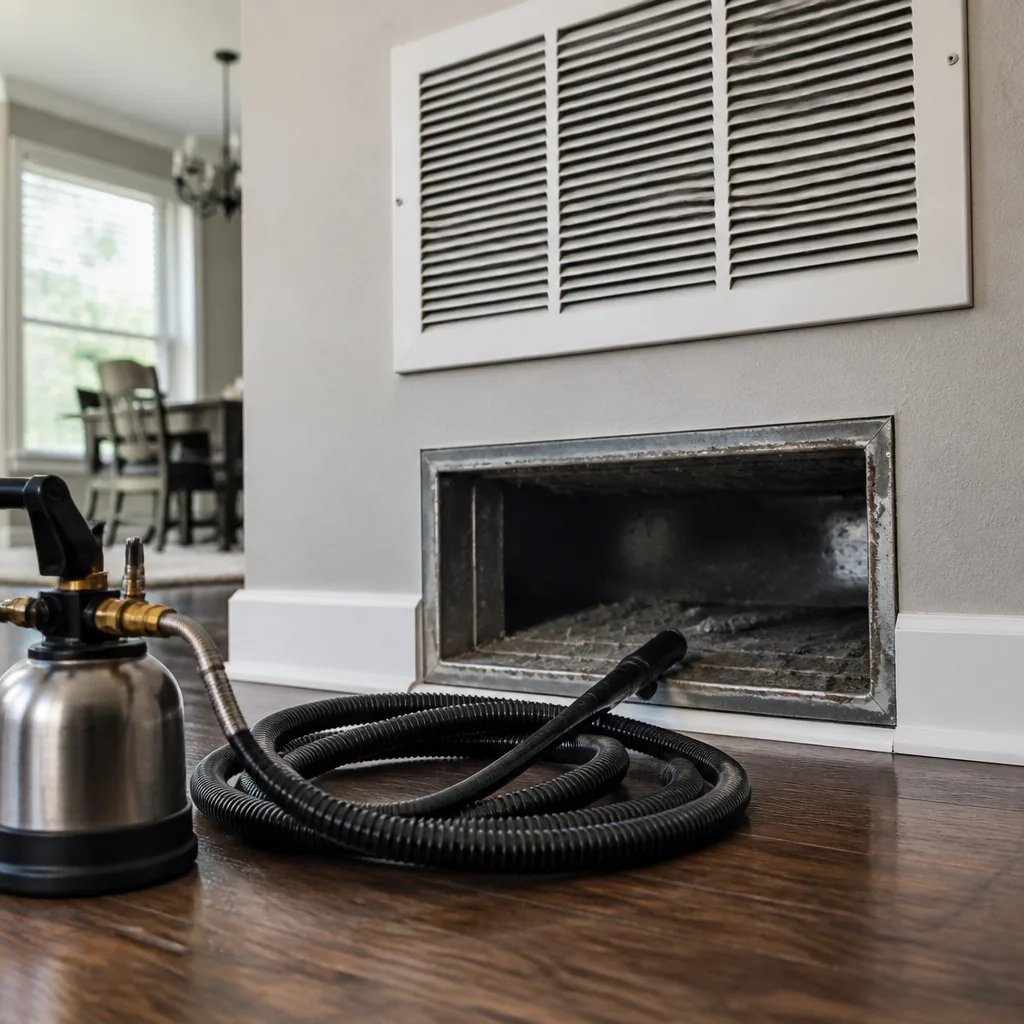 Sanitizing & deodorizing
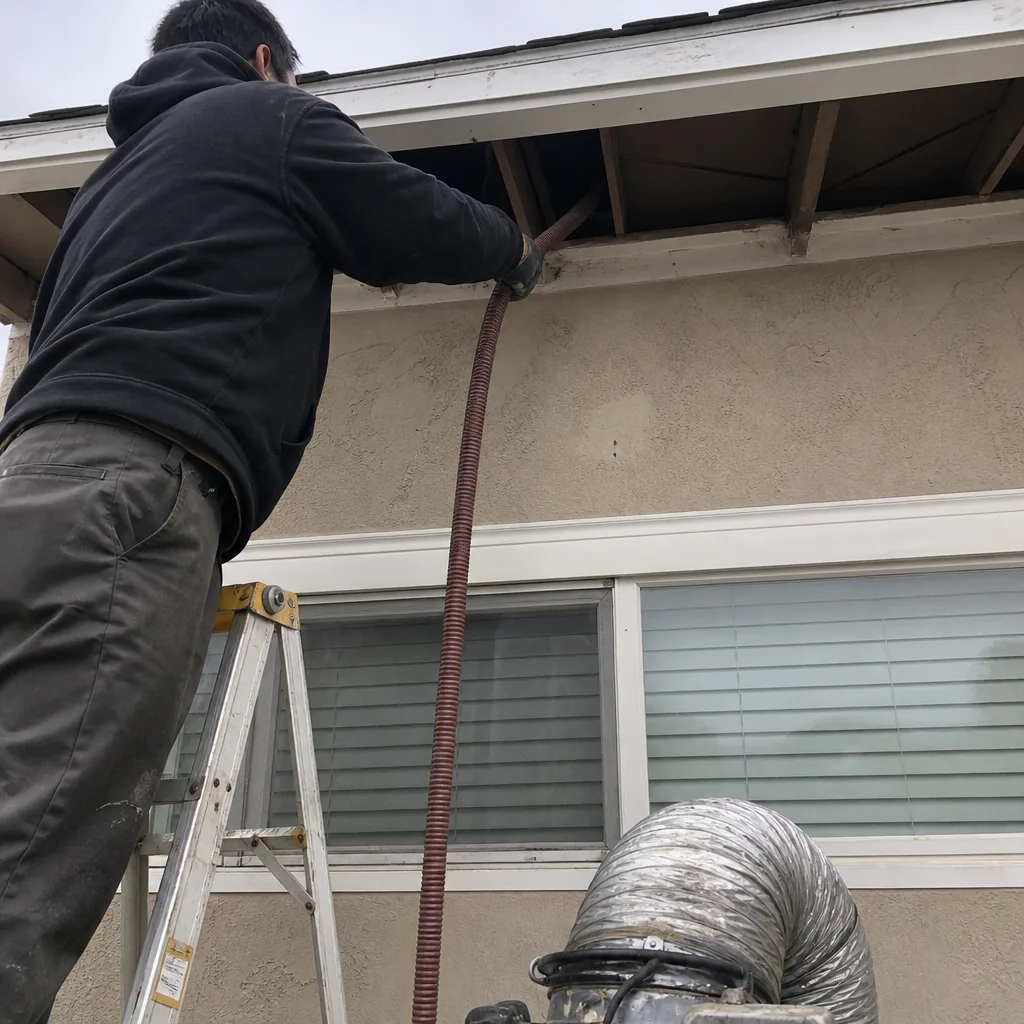
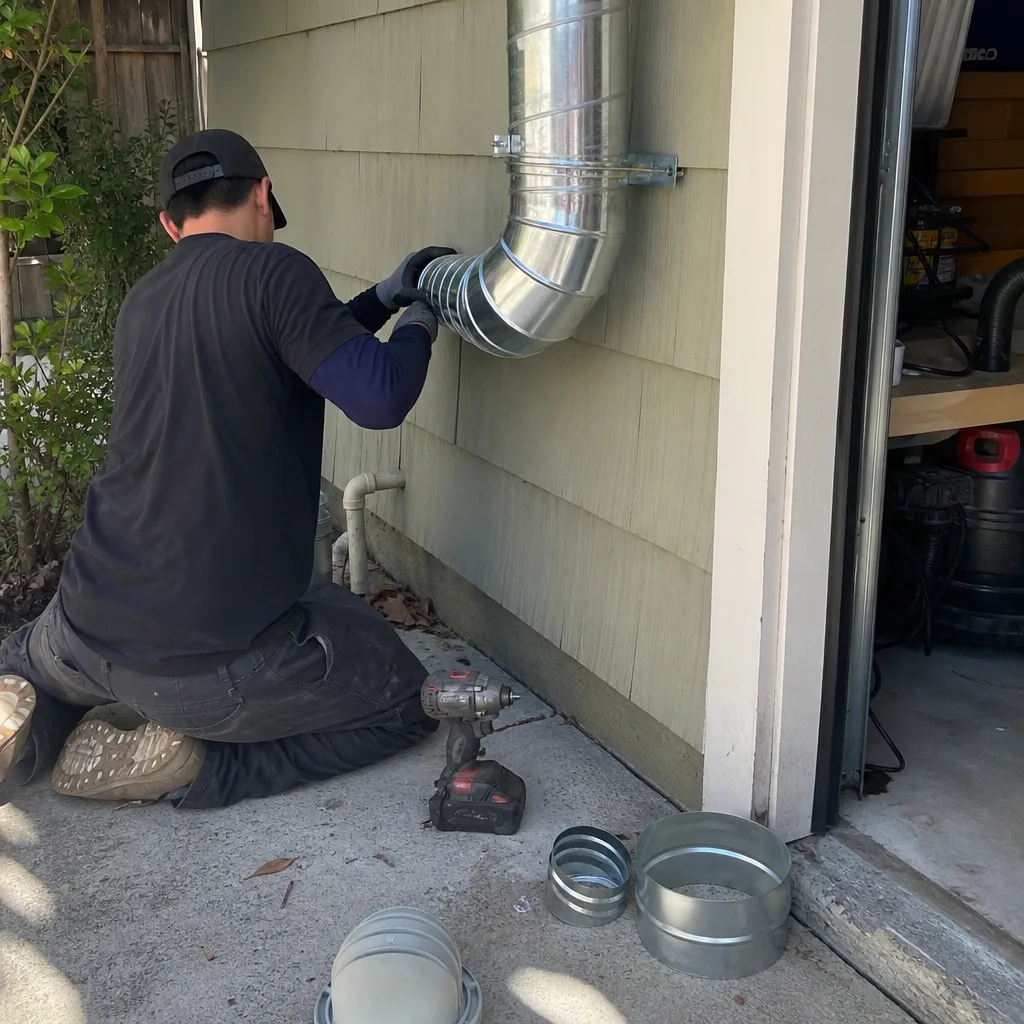
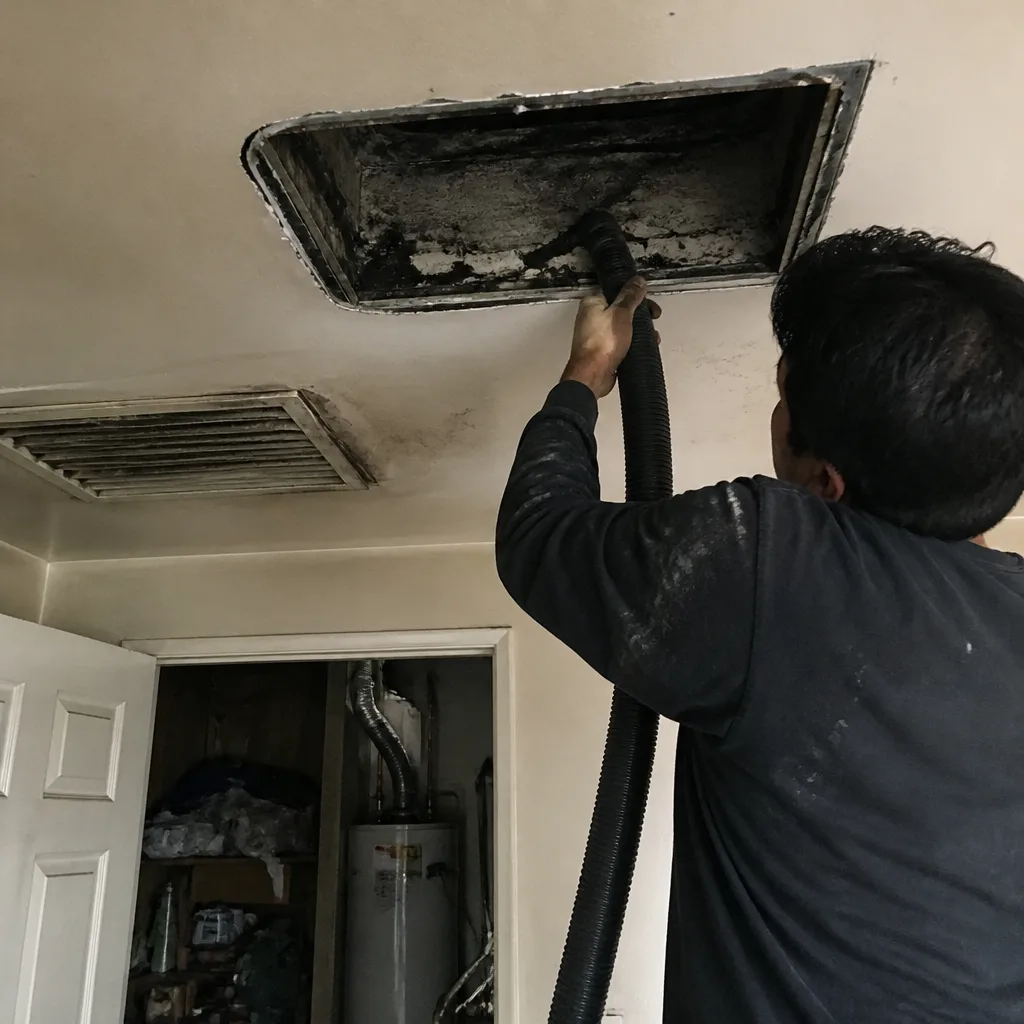
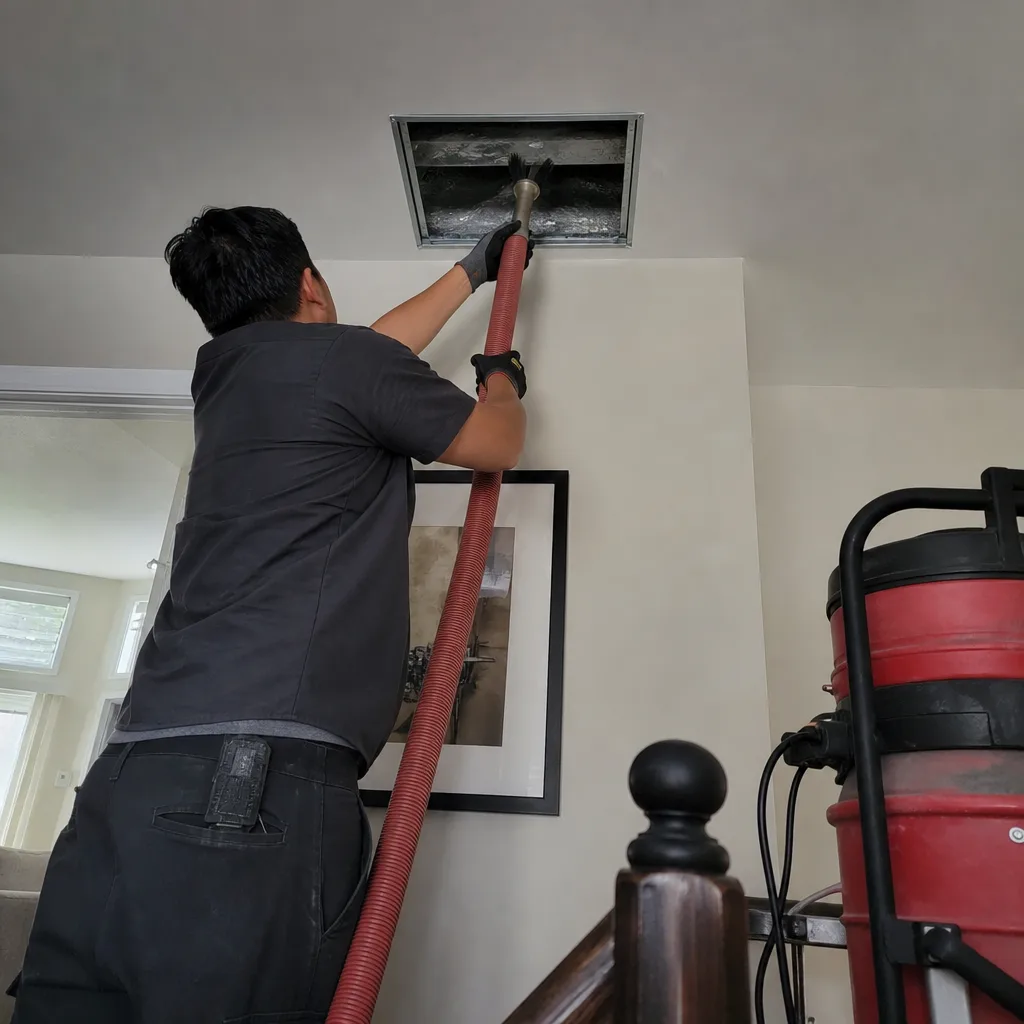
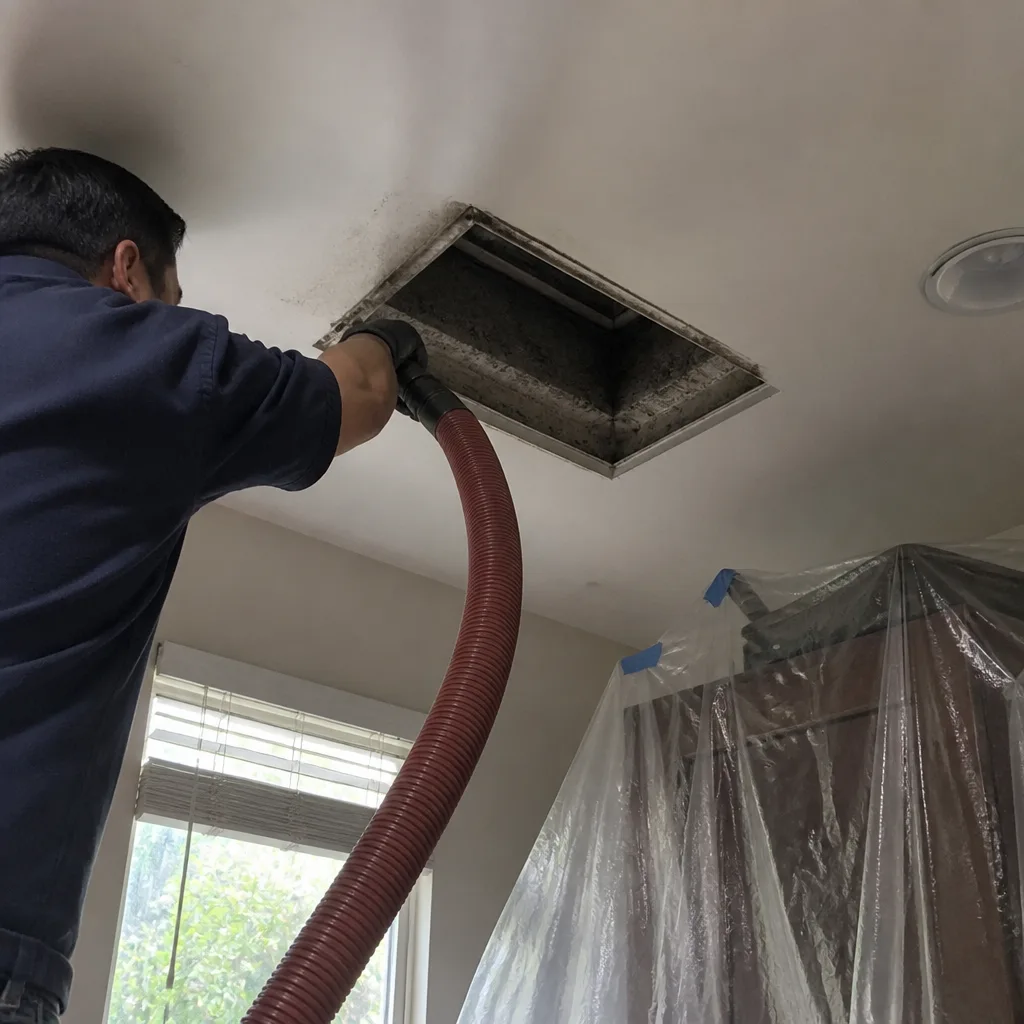
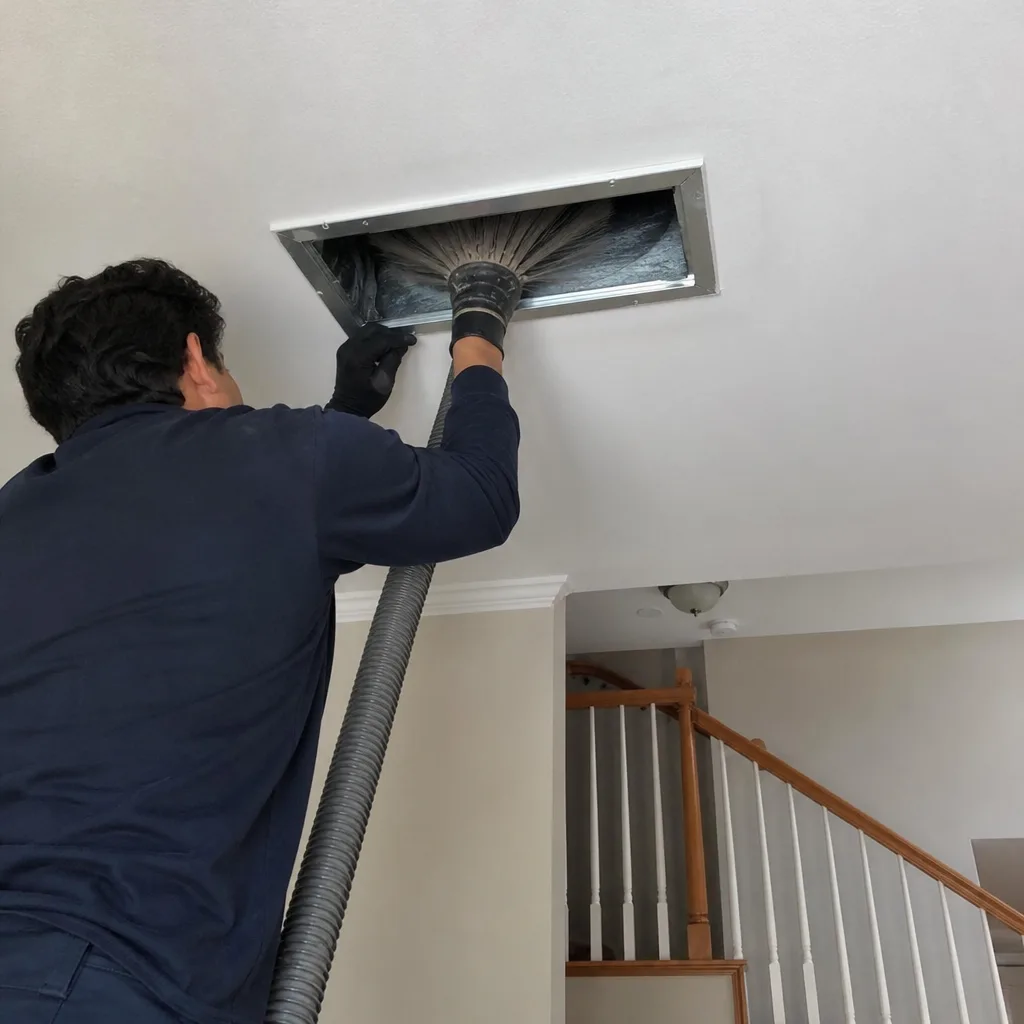
Whole-system duct and dryer vent check with before-and-after photos - you see exactly what came out of your vents
That "$99 whole-house special" is a bait ad - the real number appears once they are in your hallway, or the "clean" is a shop-vac at the register. We photograph the inside of your ducts before and after instead.
Air Duct Cleaning Emergency Preparedness Guide for Mountain View Homes
During the 2020 Bay Area wildfire events, researchers found something that should stop every Mountain View homeowner cold: PM2.5 levels inside homes with forced-air systems often exceeded outdoor concentrations. The duct system that was supposed to distribute clean air was actively pulling contaminated air in and pushing it through every room. And in a region that sits inside a wildfire smoke corridor and on top of active fault lines, the question isn’t whether your ducts will face an emergency event. It’s whether you’ll have a protocol ready when they do. This guide – along with our Air Duct Cleaning Maintenance Checklist for Mountain View Homeowners – walks you through exactly what to do before, during, and after the two events most likely to contaminate or damage duct systems in Mountain View: wildfire smoke and seismic activity.
Styles & brands we work with
- Whole-home duct cleaning
- Dryer vent cleaning
- Camera inspection
- Sanitizing & deodorizing
Quick Answer
Air Duct Cleaning and emergency preparedness for Mountain View homes means having a written shutdown protocol for forced-air systems during wildfire smoke events, knowing which filter upgrades actually protect against PM2.5 infiltration, and inspecting duct connections and insulation after any significant seismic event before running the system again. The most important step you can take today is documenting your duct system’s baseline condition now, so post-event damage is identifiable and insurable. Keep MERV-13 filters in your system’s exact size on hand, along with HVAC-rated foil tape, and a pre-saved contact for a mechanical inspection.
Table of Contents
- The Wildfire Smoke Response Protocol for Duct Systems
- Which Filter Upgrades Actually Block PM2.5
- The Post-Event Inspection Sequence Before Restarting
- Earthquake Preparedness for Duct Systems
- Documenting Your Duct System Before an Emergency
- Emergency Cleaning vs. Emergency Sealing: What to Prioritize
- Building a Duct System Emergency Kit
- Common Mistakes to Avoid
- When to Call a Professional
- Frequently Asked Questions
The Wildfire Smoke Response Protocol for Duct Systems
The single biggest mistake Mountain View homeowners make during a wildfire smoke event is leaving their HVAC fan running in “auto” or “on” mode and assuming the filter will handle it. It won’t. A standard fiberglass filter catches large dust particles but lets fine combustion particles pass straight through. PM2.5 particles, the ones that lodge deep in lung tissue, measure 2.5 microns or smaller. For comparison, a human hair is about 70 microns across. Your basic filter is not a smoke barrier.
Here is the shutdown sequence we’ve refined through field experience with smoke-contaminated systems in the South Bay:
- Switch the HVAC fan to “off” at the thermostat. Do not run it on “circulate” or “on,” even if the air inside feels stale. Recirculation pulls outdoor smoke through the return ducts and deposits it on duct walls, blower components, and the evaporator coil.
- Close all windows and exterior doors. This includes fireplace dampers and pet doors. Seal obvious gaps with rolled towels if needed.
- If you have a window AC unit, check whether it has an outdoor air intake. Most window units recirculate indoor air only, but some models have a vent setting that draws outdoor air. Keep that vent closed.
- Do not use the whole-house fan. Whole-house fans pull massive volumes of outdoor air into the attic and living space. During a smoke event, this is the fastest way to contaminate every surface, including the duct system.
- Plan to run the system again only after outdoor air quality improves to an AQI below 100, and only after a visual inspection confirms the return registers are not pulling visible smoke.
When the smoke clears, the hazard isn’t gone. Smoke residue inside ducts contains acids and fine particulates that continue off-gassing and can re-enter the living space for months. This is where a professional Air Duct Cleaning in Mountain View becomes essential: the goal is removing the deposited particulate layer, not masking it with deodorizers.
Which Filter Upgrades Actually Block PM2.5
If you want real PM2.5 protection during a smoke event, you need a filter rated MERV-13 or higher. That’s the threshold where filters start capturing particles in the 1 to 3 micron range at meaningful efficiency. A MERV-13 filter captures roughly 50% of particles in the 0.3 to 1 micron range and a much higher percentage of larger PM2.5 particles. MERV-8, the most common “allergen” filter sold at hardware stores, captures less than 20% of the same range.
But there’s a catch most filter guides skip: airflow resistance. A high-MERV filter is denser, which means your blower works harder to pull air through it. An older furnace with an aging blower motor may not tolerate a MERV-13 filter without overheating or tripping limits. Before upgrading, confirm your system’s maximum recommended MERV rating. Many modern systems list this in the manual or on the manufacturer’s label.
Here’s a practical filter strategy for Mountain View homes:
- Daily use: MERV-8 to MERV-11 gives good dust and pollen control without excessive airflow restriction.
- Wildfire smoke season (typically August through October in the Bay Area): Swap in a MERV-13 for the duration of active smoke events.
- Post-event: Replace the filter again after the smoke clears. A filter saturated with combustion particulates becomes a source of odor and ongoing contamination.
- Homes with asthma or respiratory conditions: Consider a MERV-13 year-round, paired with a standalone HEPA air purifier in bedrooms. During cleaning, we pair systems like this with Abatement Technologies HEPA filtration to capture what we dislodge from duct walls, including fine smoke particulates, rather than letting them recirculate.
Filter upgrades are part of a broader indoor air quality strategy. For homeowners who want to lock in cleaner air beyond the duct cleaning itself, we work with Honeywell and Aprilaire air quality product lines, including media filter cabinets and whole-home purification systems. These are long-term solutions, not emergency fixes, but they’re worth knowing about if smoke season is becoming an annual event in your household.
The Post-Event Inspection Sequence Before Restarting
After a significant smoke event, don’t just flip the fan back on and assume everything is fine. Ash and fine particulate settle inside duct runs, on the blower wheel, on the evaporator coil, and inside return plenums. Restarting the system without inspection sends that material back into your living space as a concentrated burst.
Here’s the sequence we recommend before restarting a forced-air system after a wildfire smoke event in Mountain View:
- Visual check at the return grille. Remove the return grille and look inside with a flashlight. If you see gray or brown deposits on the interior surfaces, the system needs cleaning before restart.
- Filter inspection. Remove the filter and hold it up to a light. If it’s visibly darkened across the entire surface, replace it. If the filter media is bowed or collapsed, the blower was working too hard against a clogged filter.
- Supply register check. Remove one or two supply registers in different rooms and feel inside the duct opening. Sticky or gritty residue on the inside surfaces indicates smoke deposition deeper in the system.
- Blower compartment review. If you’re comfortable opening the blower access panel, look for dust accumulation on the blower wheel fins. Uneven buildup causes vibration and reduced airflow.
- Odor test. Run the fan briefly with the filter removed and smell the air at a supply register. A campfire or acrid odor means smoke residue is present and will continue to off-gas.
If steps 1, 3, or 5 produce concerning findings, schedule a professional inspection before resuming normal operation. The cost of a cleaning is trivial compared to running smoke-contaminated air through your home for weeks while the residue bakes onto internal components.
Earthquake Preparedness for Duct Systems
Mountain View sits near the San Andreas and Hayward fault systems, and the reality is that a significant earthquake is a matter of when, not if. What most homeowners don’t think about is what a seismic event does to the ductwork running through their attic and crawlspace. Duct systems are not designed to flex. When the house shakes hard, several things happen quickly.
Flex duct connections pull loose from register boots and plenum takeoffs. Rigid duct joints separate at seams. Insulation wrapped around duct runs tears or shifts, exposing sections to attic heat and cold. In the worst cases, support strapping fails and entire runs sag or drop, creating kinks that restrict airflow or open gaps that pull attic air directly into the system.
After any earthquake strong enough to knock items off shelves in Mountain View, perform this inspection before running the HVAC system:
- Check every supply register for airflow. Run the fan and feel each register. If a room that previously received good airflow now gets weak or no airflow, a duct has likely separated or collapsed somewhere between the plenum and that register.
- Listen for new sounds. Whistling at registers or a flapping sound in the attic can indicate gaps or loose duct sections moving with air pressure.
- Inspect accessible attic ductwork. Look for fallen support straps, disconnected flex runs, and tears in the outer insulation jacket. Any exposed duct core means unconditioned attic air is entering your conditioned space.
- Check for attic air intrusion. If rooms suddenly smell dusty or musty after a quake, the return side may have a gap pulling attic air in.
Earthquake damage to ductwork is not just an efficiency problem. It’s a contamination problem and a structural one. Disconnected return ducts can pull fiberglass insulation particles and rodent droppings from the attic into your living space. Gaps on the supply side pressurize your attic with conditioned air, which increases energy costs and can cause moisture problems. This is where Air Duct Repair in Mountain View is the correct first call, not a cleaning. Cleaning removes contaminants already inside the system. Repair closes the openings that let new contaminants in.
Documenting Your Duct System Before an Emergency
You cannot claim post-event damage on an insurance claim or know what changed if you never recorded what the system looked like before the event. This is the most consistently skipped step in emergency preparedness, and it’s the one that costs homeowners the most money when a claim is denied or a repair is disputed.
Here’s what to document now, while the system is in normal condition:
- Photograph the filter. Take a dated photo of your current filter inside its slot. This establishes a visual baseline for how the system was maintained.
- Photograph accessible duct runs. In the attic or crawlspace, photograph the main trunk line, branch connections, and support strapping. Wide shots and close-ups.
- Record your baseline filter type and size. Write down the exact dimensions printed on the filter frame, plus the MERV rating.
- Note airflow characteristics. Walk through each room with the system running and note which registers have strong, moderate, or weak airflow. A simple written list is fine.
- Check supply register temperatures. A basic infrared thermometer or even a kitchen thermometer held at each supply register during cooling or heating gives you a temperature delta baseline. Significant changes after an event indicate duct leakage or blockage.
Store these records in a cloud folder accessible from your phone. After an earthquake or major smoke event, repeat the same documentation steps. The before-and-after comparison is what makes damage attributable. Without a baseline, you’re asking an insurance adjuster to take your word for it, and that conversation rarely goes well.
Emergency Cleaning vs. Emergency Sealing: What to Prioritize
In an emergency, many homeowners jump to the conclusion that they need a duct cleaning. Sometimes they’re right. Sometimes they need something else entirely. Knowing the difference saves time, money, and makes the actual solution faster.
Emergency cleaning addresses contamination already inside the system. This is the right response after a wildfire smoke event, after a flood that caused microbial growth in the ducts, or after a pest infestation. The goal is removing deposited material from the duct surfaces, blower components, and coil. Professional cleaning uses agitation to dislodge debris and HEPA-filtered negative air to capture it. We use Rotobrush and Nikro systems on every job, paired with Abatement Technologies HEPA filtration, specifically so that what comes off the duct walls gets captured at the source rather than pushed into the house. That distinction matters in a smoke-recovery scenario.
Emergency sealing addresses openings in the system that keep pulling new contaminants in or pushing conditioned air out. This is the right response after an earthquake that has disconnected duct joints, after a remodel that left openings in the plenum, or when you discover significant duct leakage during an energy audit. Sealing uses mastic, HVAC-rated foil tape, and sometimes replacement duct sections to close gaps. It does not remove what’s already inside the system.
Here’s the priority framework we use when assessing a post-event system in Mountain View:
- Active smoke event, system off: No action needed immediately. Wait for air quality to improve, then inspect.
- Post-smoke, visible residue inside ducts: Clean first. The contamination source has passed, but residue remains.
- Post-earthquake, airflow changed or noises appeared: Inspect and seal first. Open gaps mean the system is actively pulling in attic or crawlspace air. Cleaning comes after the integrity is restored.
- Both contamination and structural damage: Seal first, then clean. Cleaning a system with open gaps is like mopping while the roof leaks.
This is the full-system view that separates a duct specialist from a generalist. From Dryer Vent Cleaning in Mountain View to supply registers and repair, we look at how each part of the system interacts. A cleaning that ignores an open duct connection is a wasted service call.
Building a Duct System Emergency Kit
You already have an earthquake kit with water, food, and flashlights. Your duct system needs its own small kit, and it costs less than fifty dollars to assemble. Here’s what goes in it, and why each item matters.
- Two MERV-13 filters in your exact size. Write the dimensions from your current filter on the box with a marker. When smoke season hits or a filter clogs during an event, you swap in a spare immediately. No trips to the hardware store during an emergency.
- HVAC-rated foil tape. Not duct tape. Actual UL-listed foil tape designed for HVAC use. This lets you temporarily seal a small gap or disconnected joint until a professional repair can be scheduled. Regular duct tape dries out, loses adhesion, and is not rated for the temperature swings in duct systems.
- A pre-saved contact for mechanical inspection. Save the number for a professional you’ve already vetted before the emergency happens. During a regional event like a wildfire smoke episode or an earthquake, availability tightens fast. Being an existing customer with a documented system history puts you ahead of the queue.
- A printed copy of your baseline documentation. The photos, airflow notes, and filter specs you recorded earlier. If your phone dies or cloud storage is inaccessible, you still have the record.
- A small flashlight and inspection mirror. For looking inside return grilles and duct openings during post-event inspections.
- N95 or P100 respirator masks. Useful if you need to inspect an attic with visible dust or smoke residue. Not a substitute for professional cleaning, but protection for basic visual checks.
Store this kit with your household emergency supplies, ideally somewhere accessible outside the garage. If the garage is damaged or the door won’t open after an earthquake, you don’t want your duct kit trapped inside.
Common Mistakes to Avoid
- Running the HVAC fan during a smoke event to “filter the air.” Your filter is not a smoke barrier. Running the system pulls particulate into the ductwork and deposits it throughout the system, where it off-gases for months.
- Using a shop vac to “clean” ducts after a smoke event. A consumer shop vac has no HEPA filtration and no reach to clean the full duct run. You’ll dislodge particulate from reachable areas and blow the fine fraction deeper into the system and into your living space.
- Skipping the post-earthquake inspection because “the system still turns on.” A blower motor will happily run with a disconnected duct in the attic. The system “working” tells you nothing about duct integrity.
- Replacing a filter after a smoke event and calling it done. The filter catches particles passing through it. It does nothing for the residue already deposited on duct walls, the blower wheel, and the coil. The filter is replaced, the problem remains.
- Upgrading to MERV-13 without checking blower compatibility. A denser filter on a system that can’t handle the airflow restriction leads to overheating, reduced efficiency, and premature blower failure.
- Calling a general HVAC company for a smoke-recovery duct cleaning when you need a duct specialist. Many general HVAC firms treat duct cleaning as a minor add-on service with limited equipment. This guide is written from the perspective of a Mountain View business that runs professional-grade Nikro and Rotobrush equipment on every job, because the difference in results is measurable in the particulate load left behind.
When to Call a Professional
Some duct system conditions are safe to document and monitor on your own. Others require professional equipment and experience, and waiting too long compounds the problem. Call a professional if you see visible residue coating the inside of duct surfaces after a smoke event, if airflow has changed significantly in one or more rooms after an earthquake, if you smell something burning or acrid from the vents when the system runs, if the blower is making new sounds, or if you’ve found signs of pest activity in the ductwork. These are not DIY scenarios. Professional inspection and cleaning equipment reaches what a homeowner’s ladder and flashlight cannot. Duct Cleaning Mountain View offers free estimates in Mountain View – call (866) 528-3938 to schedule an inspection or to ask about post-event cleaning protocols for your specific system.
Frequently Asked Questions
Post-smoke duct cleaning in Mountain View typically ranges from $450 to $900 for a standard single-family home, depending on the number of duct runs, accessibility of the system, and the degree of smoke deposition. Systems with significant residue on the blower and coil may run higher due to the additional component cleaning involved. This is a whole-system price, not a per-vent figure. Call (866) 528-3938 for an exact quote based on your home’s duct configuration – estimates are free.
Cheaper duct cleaning quotes almost always reflect lighter equipment and shorter cleaning protocols. A technician with a portable vacuum and a rotary brush attachment is doing a fundamentally different job than a crew running professional-grade agitation equipment with HEPA-filtered negative air containment. The cheap quote also often excludes the blower, coil, and plenum, which is where smoke residue accumulates heavily. When comparing quotes, ask what equipment brand the company runs, whether HEPA containment is used, and whether the blower and coil are included in the price.
You should receive before-and-after photos of the interior of your duct runs, the plenum, and the blower compartment. A professional cleaning crew should be able to show you the containment equipment running during the job and the debris collected. If a company finishes in 45 minutes and offers no visual documentation, the work was likely superficial. We’re transparent about our process because the Duct Cleaning Mountain View home business model is built on showing the work, not claiming it.
For most Mountain View homes, every 3 to 5 years is a reasonable interval under normal conditions. The interval shortens if you run the system during wildfire smoke events, have pets that shed heavily, live near construction activity, or have family members with respiratory conditions. After a significant smoke event where the system was run during poor air quality, a cleaning should be scheduled promptly rather than waiting for a routine interval. Post-earthquake inspections should happen immediately after the event, regardless of the last cleaning date.
You can replace the filter, clean the register covers, and wipe down the accessible interior of the return boot. You cannot clean the full duct run, the plenum, the blower wheel, or the evaporator coil without professional equipment. Attempting to clean deeper parts of the system with consumer tools dislodges particulate and pushes it into the living space. The fine combustion particles from wildfire smoke require agitation and HEPA-filtered capture to remove effectively.
No. Running the system during active heavy smoke pulls particulate into the return ducts and deposits it throughout the system. Switch the fan to “off” at the thermostat, close all windows and exterior doors, and wait until outdoor air quality improves before running the system again. If you have a standalone HEPA air purifier, run that instead. It filters room air without pulling outdoor air through the duct system.
The Bottom Line
Mountain View homes face two distinct threats to duct system integrity: wildfire smoke that contaminates from within, and seismic activity that compromises the structural connections. Both require preparation, not reaction. Document your system’s baseline condition now, keep the right filters and materials on hand, and know the difference between a cleaning need and a repair need before you’re facing either one. For additional help, explore more guides & resources on our blog. The duct system is the respiratory system of your house, and in a region where both smoke and shaking are recurring events, treating it as an emergency priority rather than an afterthought is the difference between a quick recovery and months of compromised indoor air.
Written by the team at Duct Cleaning Mountain View, serving Mountain View since 2015.
See the difference
 Before
 After
 Before
 After
 Before
 After