
Last updated November 2, 2026
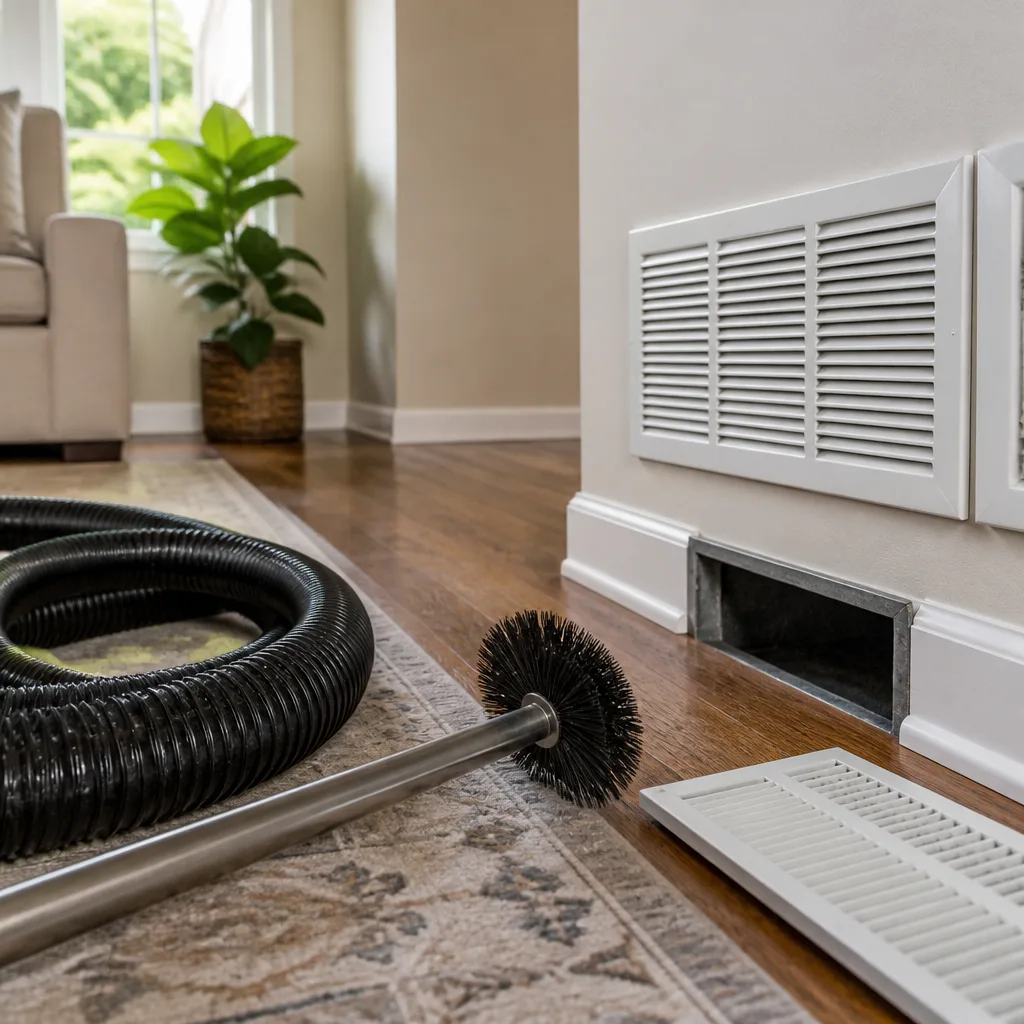 Whole-home duct cleaning
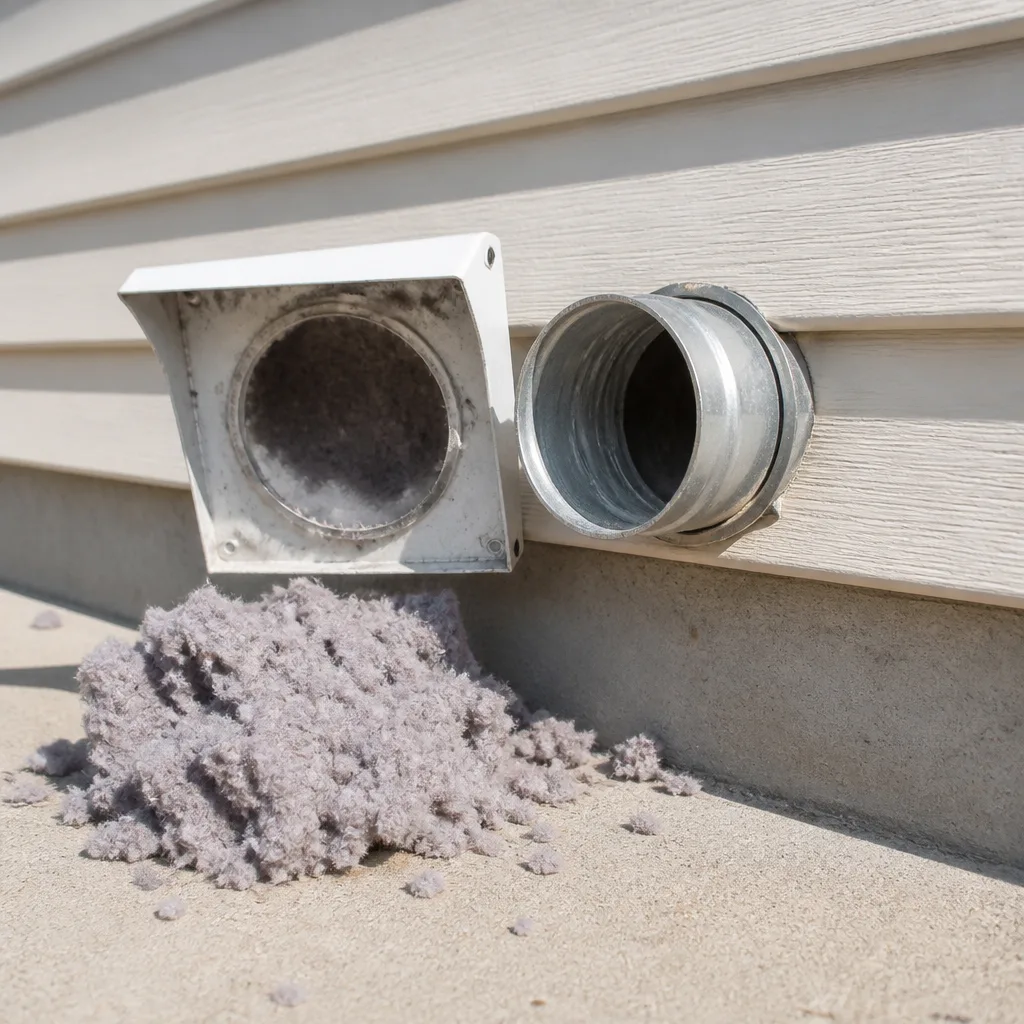 Dryer vent cleaning
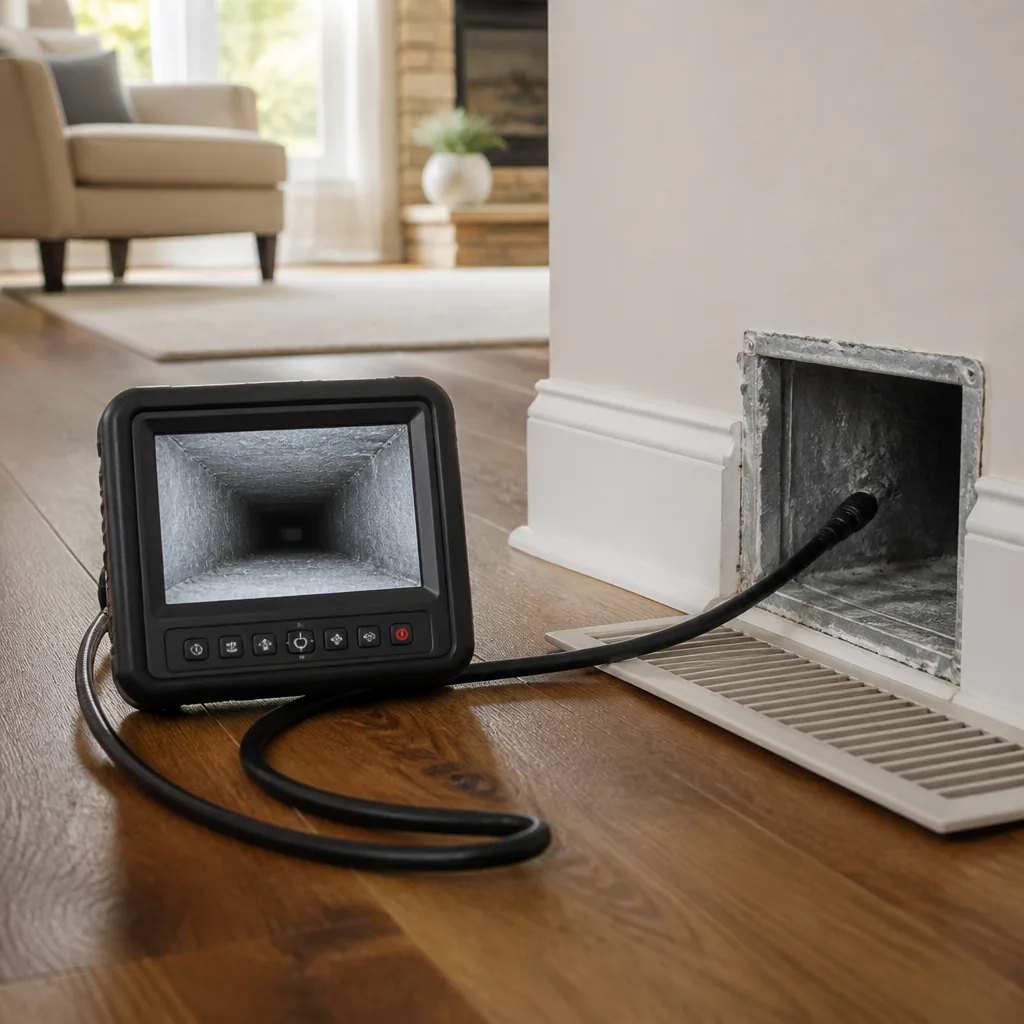 Camera inspection
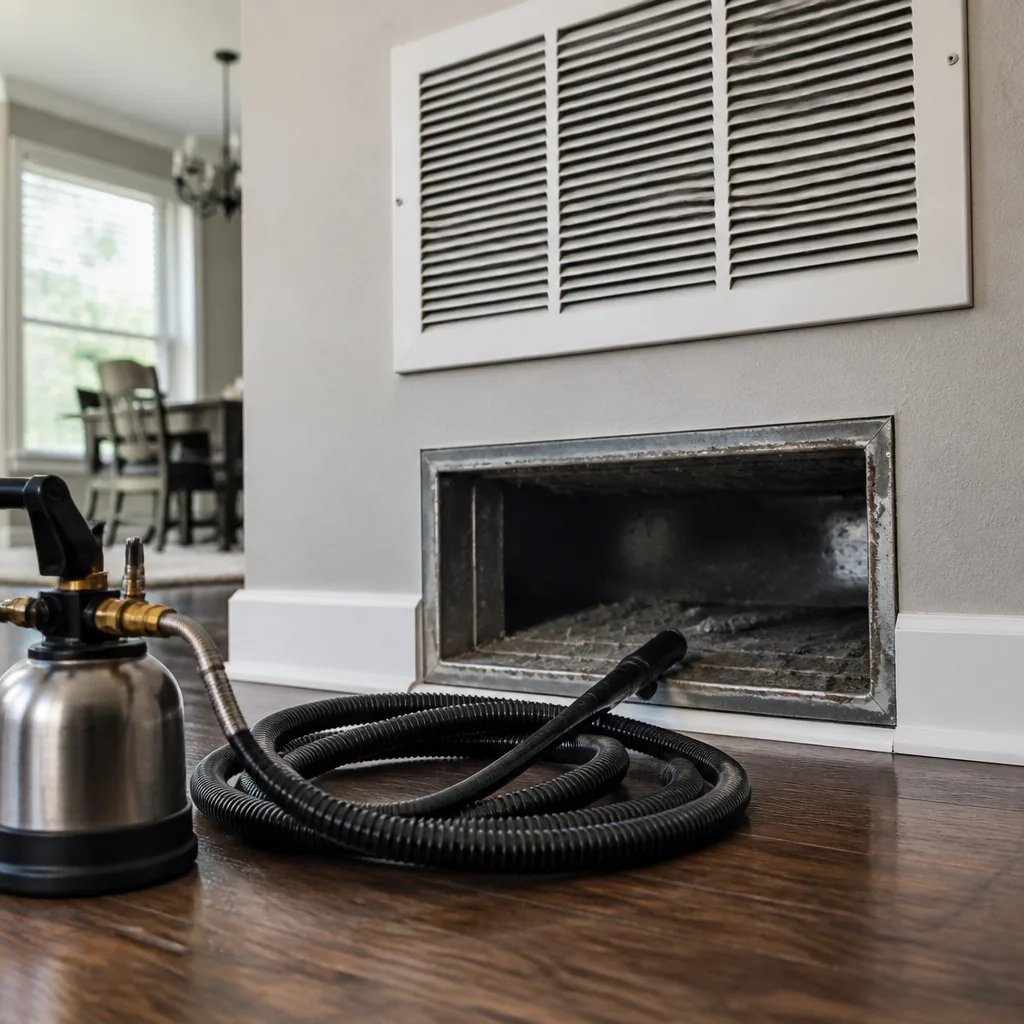 Sanitizing & deodorizing
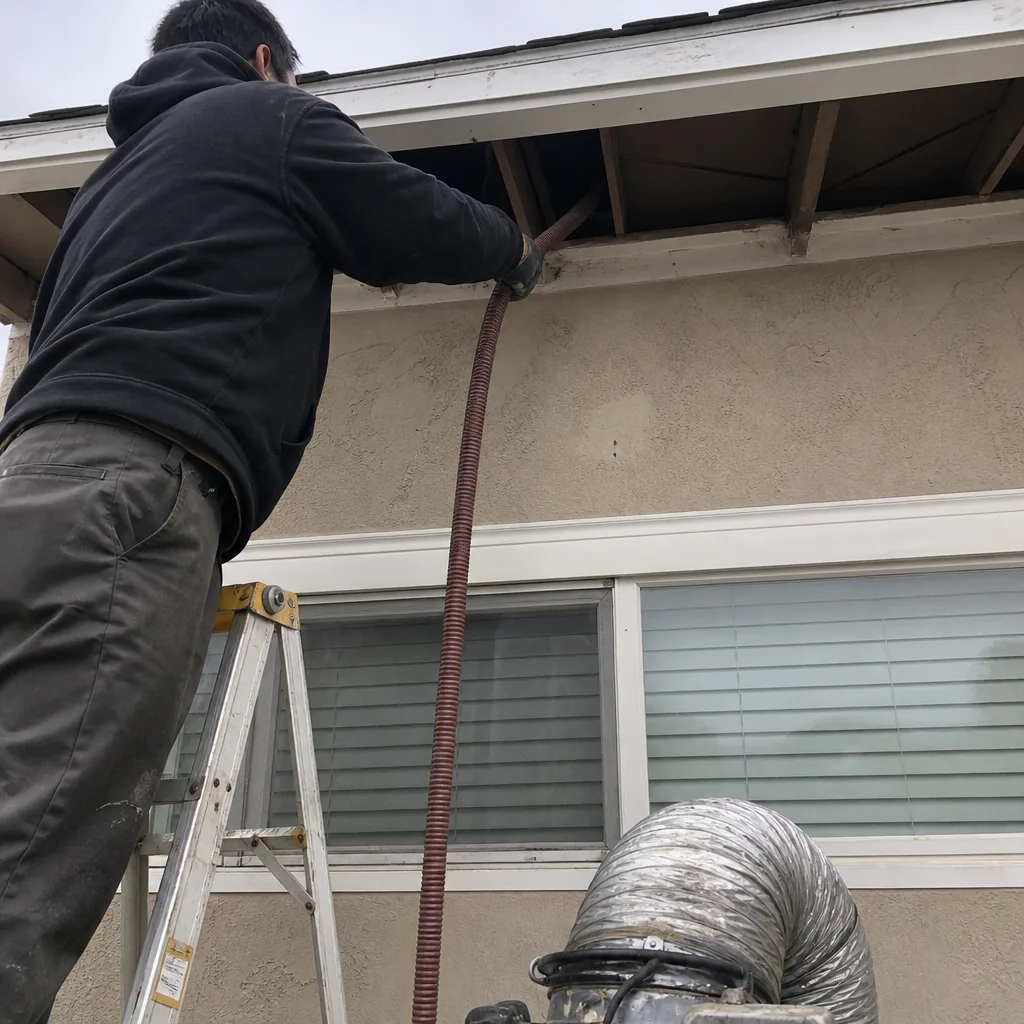
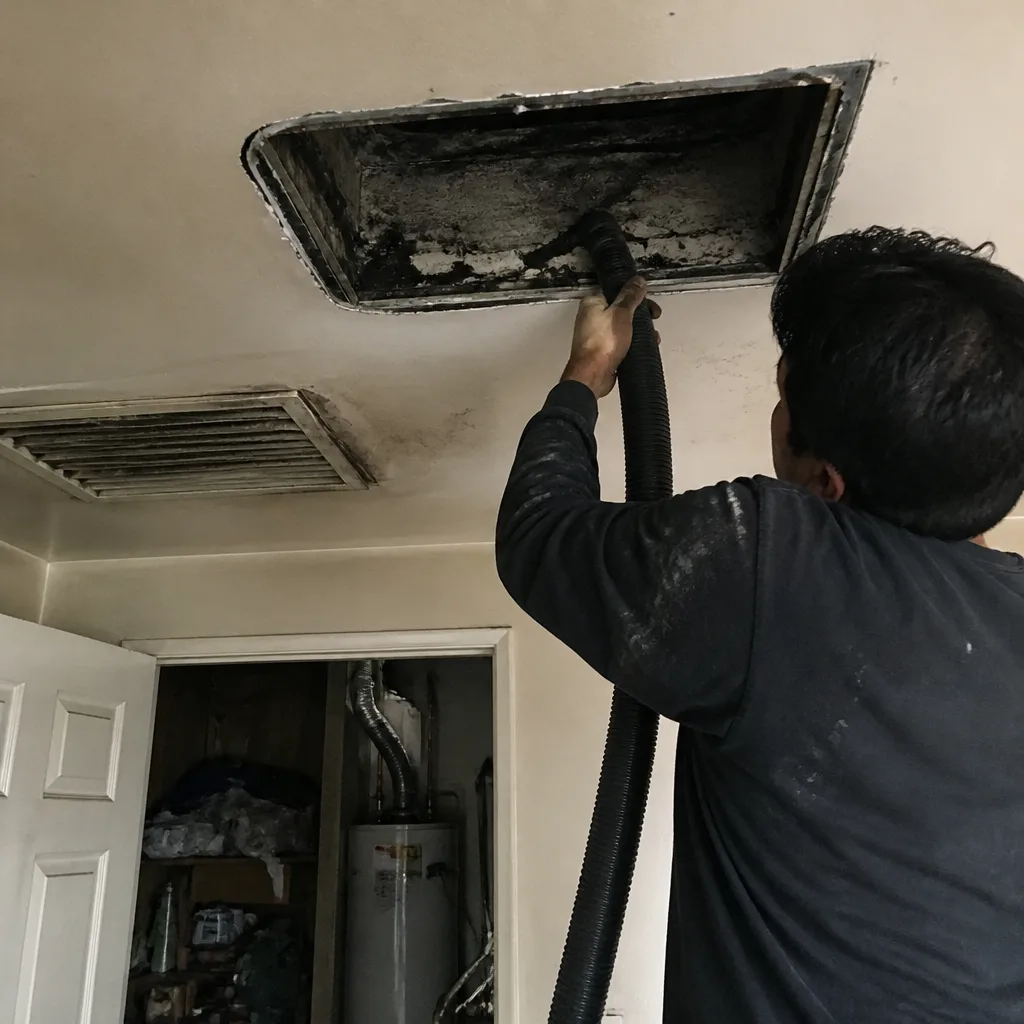
Whole-system duct and dryer vent check with before-and-after photos - you see exactly what came out of your vents
That "$99 whole-house special" is a bait ad - the real number appears once they are in your hallway, or the "clean" is a shop-vac at the register. We photograph the inside of your ducts before and after instead.
Air Duct Cleaning Maintenance Checklist for Mountain View Homeowners
Most homeowners in Mountain View swap out their HVAC filter every three months and figure that covers their duct system. It doesn’t. A filter change addresses what’s about to enter the system. A maintenance checklist addresses what’s already living inside it: the dust caked to return plenums, the hair and dander matted into flex duct, the condensation pooling in a drain pan that never quite dries out. This guide is a month-by-month system for catching those smaller failures before they become expensive ones. You’ll learn what to inspect yourself, what to log, what to leave to a professional, and how Mountain View’s specific climate and seasonal events change the equation.
Styles & brands we work with
- Whole-home duct cleaning
- Dryer vent cleaning
- Camera inspection
- Sanitizing & deodorizing
Quick Answer
An air duct maintenance checklist for Mountain View homeowners should include monthly visual inspections of supply registers and return grilles, quarterly filter replacement with a written log, seasonal checks of the air handler cabinet and condensate drain, an annual dryer vent inspection, and a professional duct cleaning every 3 to 5 years (or sooner after wildfire smoke events, major renovations, or noticing persistent dust or odors). The most overlooked item on any checklist is documentation: logging filter changes, airflow shifts, and odor events gives a technician the trend data they need to diagnose problems rather than guess at causes.
Table of Contents
- Monthly Check: What to Look For in 10 Minutes
- Quarterly Deep Inspection: Registers, Returns, and the Air Handler Cabinet
- The Filter Log: Why Documentation Is a Maintenance Tool, Not Paperwork
- Mountain View Seasonal Triggers: Smoke, Pollen, and Renovation Debris
- The Dryer Vent as a Leading Indicator of Duct System Health
- When to Schedule a Professional Cleaning (and What Should Actually Happen)
- Cleaning vs. Repair: Why Some Duct Problems Need a Fix, Not a Vacuum
- Common Mistakes to Avoid
- When to Call a Professional
- Frequently Asked Questions
- The Bottom Line
Monthly Check: What to Look For in 10 Minutes
The monthly check is the backbone of the whole system. It doesn’t require tools, ladders, or opening any panels. You need a flashlight, your eyes, and about ten minutes. The goal is not to clean anything. The goal is to catch changes before they become failures. A duct system that’s degrading gives off visible signals at predictable locations. You just have to know where to look.
Walk through the house and check every supply register. These are the vents that blow conditioned air into rooms, usually located on walls, floors, or ceilings near windows. Here’s what you’re looking for:
- Dust streaking on the register face or the wall around it. This is called wall staining and it happens when particulates bypass the register because the seal between the register and the drywall has loosened or the register boot is misaligned. It’s not a cleaning failure on your part. It’s a mechanical gap in the system.
- Visible debris on the register louvers. A light film of dust is normal after a few weeks. What you’re watching for is accumulation that looks clumped, fibrous, or dark, which suggests loose insulation fibers, pet hair, or soot particles moving through the ductwork rather than being trapped by the filter.
- Uneven airflow. Hold a tissue or a strip of paper to each register in a room. If one register barely moves the paper while another in the same room pushes it strongly, you’ve got a restriction: a collapsed flex duct section, a damper that’s shifted, or a buildup of debris downstream of that register.
- Odor when the system cycles on. Musty smells usually indicate a condensation issue, either in the drain pan under the evaporator coil or where a supply duct runs through an unconditioned space. A burning smell when the heat first kicks on in fall is often just dust burning off the heat exchanger, but if it persists for more than a few cycles, log it.
Do the same walkthrough for return grilles, which pull air back to the air handler. Returns are typically larger and located in central hallways, stairwells, or on walls near the ceiling. A return grille that’s thick with dust after a month indicates either an undersized filter, a filter that’s installed backwards, or gaps in the filter slot that let unfiltered air bypass the media entirely. In our experience in Mountain View homes from the 1960s and 70s, undersized returns are common, and homeowners often mistake a perpetually dirty return for normal wear when it’s actually a design flaw demanding attention.
Log anything you find. A simple notebook entry works: date, register location, observation. This is the raw material for your filter log and for a technician’s investigation if issues progress.
Quarterly Deep Inspection: Registers, Returns, and the Air Handler Cabinet
Every three months, the inspection deepens. This is when you’ll actually remove register covers and return grilles, inspect what’s behind them, and evaluate the accessible portions of your air handler. This is still a visual inspection, not a cleaning. But it gives you access to surfaces that tell you far more than the face of the vent ever will.
Step 1: Remove a supply register in a representative room. Unscrew the cover (usually two flathead or Phillips screws) and set it aside. Shine a flashlight into the register boot, the metal or plastic collar that connects the duct to the register. What you’re looking for:
- Debris accumulation in the boot itself. The boot is a collection point. Dust, pet hair, and small toys that fall through the register settle here. It’s normal for some debris to be present. What’s not normal is a boot that’s more than lightly dusty, or material that looks caked, damp, or mold-spotted.
- Gaps between the boot and the drywall. You can see the seam where the boot meets the wall opening. If you can see light or feel air moving around the edges of the boot where the register was mounted, that’s an air leak pulling dirty attic or wall-cavity air into your conditioned supply stream. It means your clean, filtered air is being contaminated before it ever enters the room.
- Signs of pest activity. Droppings, shredded insulation, or nesting material in the boot or visible duct section. Rodents and insects enter ducts through gaps in the attic, crawlspace, or at exterior dryer vent terminations. Finding it early in a register boot means a localized intrusion rather than a full-system infestation.
Step 2: Remove a return grille and inspect the filter slot. The filter slot is the one place in the system where bypass is most likely and most damaging. After you slide the filter out:
- Check the fit of the filter in the slot. There should be no visible gap between the filter frame and the filter slot. A half-inch gap means roughly 10 to 20 percent of your return air flows around the filter, completely unfiltered. That unfiltered air is then deposited onto your evaporator coil and blown throughout the house.
- Inspect the filter itself. A filter that’s been in for three months and is still mostly white might be doing its job or it might be the wrong size. A filter that’s dark, bowed, or coated means you either waited too long or something upstream is shedding unusually heavily.
- Look into the return plenum. This is the metal box behind the filter. If you can see dust caked on its interior surfaces, that’s decades of unfiltered air or years of filter bypass. It’s also one of the clearest indicators that a professional duct cleaning is overdue, because that same dust is what returns feed to the rest of the system.
Step 3: Inspect the air handler cabinet. If your air handler is in a closet, garage, or basement and its access panel is safely reachable, inspect the area around the cabinet. You’re looking at the cabinet exterior, the condensate drain line, and the area beneath the unit. Do not open the electrical access panel unless you know what you’re doing and have cut power to the unit. Visual external inspection is enough.
- Condensate drain line. This PVC line carries condensation from the coil pan to a drain or outside. If you see standing water in the line, crusty white mineral deposits at the connection, or water staining on the floor beneath the cabinet, the drain is partially clogged. A clogged drain pan overflows, and standing water inside the cabinet breeds mold that the blower then distributes.
- Water staining beneath the cabinet. Any darkening on the platform or floor under the air handler means the drain pan has overflowed at some point. That water sat inside the cabinet, wicked into insulation, and likely left microbial growth behind. This is a strong indicator that duct cleaning and coil cleaning are overdue.
- Insulation condition inside the blower compartment. If you can safely shine a light into the blower area (power off, access panel opened only if you’re confident), look for insulation that’s peeled, sagging, or missing. Deteriorating internal insulation sheds fibers directly into the supply air stream.
This quarterly inspection takes an hour the first time. After a couple of cycles, it takes 20 minutes. The reason to do it on a schedule is that ducts don’t fail catastrophically. They degrade incrementally, and the only way to catch incremental degradation is to observe at regular intervals and compare.
The Filter Log: Why Documentation Is a Maintenance Tool, Not Paperwork
Most homeowners change filters and never write down when they did it. That’s a missed opportunity. A filter log transforms a routine chore into a diagnostic record. When a technician from Duct Cleaning Mountain View arrives at your home and you can hand them a log showing filter change dates, observed airflow changes, and odor episodes over the last two years, they can diagnose your duct system in minutes instead of guessing. That’s the difference between finding a problem and proving one.
Here’s what a functional filter log looks like:
- Filter installation date. Write the date on the filter frame with a permanent marker before sliding it in. When you pull it out months later, you’ve got the exact timeline.
- Filter brand, model, and MERV rating. If you switch filter types, record it. A shift from MERV 8 to MERV 13 changes system static pressure, which changes airflow, which changes how much dust settles in your ducts. Knowing you switched filters explains the airflow change without any other mystery.
- Condition at removal. Note whether the filter was lightly soiled, heavily soiled, bowed, damp, or damaged. A bowed filter means the system is pulling more air than the filter’s frame can handle, which indicates an undersized filter relative to the blower. A damp filter means condensation is reaching the filter slot, which means your coil is running colder than it should or your drain is backing up.
- Any observations from the monthly check. If you noticed a musty odor in the master bedroom, a dust streak above the living room register, or reduced airflow in the back bedroom, record it. A technician reading that log sees patterns: three odor events in the same season over two years, or a register that’s been losing airflow for six months.
- Drying times stretch from 45 minutes to 90 minutes or longer. The dryer is still producing heat. It just can’t push the moisture out, because the vent is choked with lint.
- The dryer exterior or the laundry room runs noticeably warmer during a cycle. Heat is backing up because it can’t exhaust properly.
- The vent flap on the exterior wall doesn’t open fully or flutters inconsistently. A healthy dryer vent should push the flap wide open with a strong, steady air current.
- A musty or burnt odor during drying. Lint is lightly combustible and, when packed densely near the heating element or exhaust connection, begins to smolder.
- Persistent dust accumulation on surfaces despite regular filter changes. If you’re dusting furniture twice a week and the filter is clean, the dust is not coming through the filter. It’s being picked up from inside the ducts or blowing past a filter bypass gap. That’s a cleaning and inspection issue.
- Visible dust buildup in the return plenum or register boots during your quarterly inspection. You’ve seen it with your own flashlight. That dust is not going to leave on its own.
- After a significant wildfire smoke season. Smoke residue is corrosive and persistent. It’s not just dust. It’s a coating that traps moisture and accelerates degradation of duct liner materials.
- After renovations, construction, or a pest intrusion. Drywall dust, sawdust, and rodent droppings in ducts are not things you want circulating through your air handler and out your registers.
- When airflow has noticeably decreased in specific rooms, and you’ve ruled out register and damper issues. That’s a sign of duct collapse, disconnection, or accumulation that requires cleaning equipment to resolve.
- Visible separation at duct joints. Sheet metal seams and flex duct connections loosen over time from thermal expansion and contraction. A joint that’s separated a quarter-inch pulls attic air into the supply stream forever.
- Crushed or collapsed flex duct. Anything stored on top of duct runs in the attic compresses the flexible inner liner, choking airflow. In Mountain View homes where attic storage is common, this is frequent.
- Duct sections that have pulled loose from register boots. The duct comes off the boot entirely, so conditioned air dumps into the wall cavity or attic instead of entering the room.
- Deteriorated or missing insulation around duct runs. Uninsulated ducts in a hot attic condense moisture on their exterior surfaces in summer, and that moisture soaks into the duct liner, promoting mold growth.
- Assuming the filter handles everything. The filter protects the equipment from debris. It does not clean the ducts. Ducts downstream of the filter accumulate whatever bypasses the filter, plus whatever was already there before you moved in. In a Mountain View home built in the 1960s and never professionally cleaned, that’s decades of material.
- Replacing the filter but ignoring the filter slot. If the filter doesn’t fit snugly, unfiltered air bypasses it. You’re paying for filtration you’re not receiving. Check slot fit at every filter change.
- Using the highest MERV filter available without considering static pressure. A MERV 13 filter traps more particles but also restricts airflow more than a MERV 8. If your system wasn’t designed for the extra pressure drop, the blower works harder, and dust deposition patterns change. Consult a professional before jumping up in MERV.
- Cleaning registers but not the duct behind them. Wiping the visible register face solves the aesthetic problem and none of the contamination problem. The duct is where the action is.
- Ignoring the dryer vent because it’s “just a laundry thing.” A clogged dryer vent is a fire hazard and a clear signal that lint is accumulating somewhere it shouldn’t. If the dryer vent is restricted, the HVAC ducts probably haven’t been maintained either.
- Waiting for a smell or visible mold before investigating. By the time you can smell microbial growth in the ventilation system, the colony has been present for months. The whole point of the checklist is to catch conditions before they become odor events.
In our experience, the homeowners who keep filter logs are the ones we diagnose fastest. They’re also the ones who catch problems before they become system-wide. A log turns anecdotal memory (“the house has always been kind of dusty”) into a timeline (“dust accumulation at registers has increased noticeably since the filter switch in March”). That specificity is what separates a maintenance routine from a maintenance system.
Mountain View Seasonal Triggers: Smoke, Pollen, and Renovation Debris
Mountain View has a specific seasonal rhythm that changes what your duct system collects and when. The homeowners who understand this rhythm adjust their checklist accordingly. Those who follow a generic national checklist miss the events that actually matter here.
Wildfire smoke season (typically August through November). Smoke particles from Northern California wildfires are extraordinarily fine, measuring 0.4 to 0.7 microns. They’re small enough to pass through many standard filters and small enough to lodge deep inside duct surfaces, where they persist long after the sky clears. During and after smoke events, we recommend checking your filter weekly rather than monthly. A filter that was white in July can be charcoal-black in September, even with the house sealed and the system running on recirculate. That smoke loading is not just a filter problem. It’s proof that smoke particulates are entering the duct system itself. After a significant smoke season, pulling and inspecting a return register often shows a fine gray film coating the return plenum, a film that will remain there until a professional cleaning removes it.
Spring pollen load (March through May). Mountain View’s mature tree canopy, especially the oaks and liquidambars in established neighborhoods like Old Mountain View and Waverly Park, produces a heavy spring pollen drop. Pollen grains are large (10 to 100 microns) and sticky, so they coat the upstream side of your filter quickly. But if your filter slot has any bypass gaps, pollen slips around and deposits on the evaporator coil, where it combines with condensation into a paste that reduces coil efficiency and harbors microbial growth. After a heavy pollen season, it’s worth removing a return grille and inspecting the filter slot for yellow-green residue around the edges, which indicates pollen bypass.
Post-renovation debris. Mountain View has a significant amount of older housing stock being remodeled, from Eichler homes to 1970s ranchers. Renovation generates drywall dust, sawdust, and paint particulates that are incredibly fine and highly mobile. If you’ve had any work done inside your home in the last 12 months, even just cabinet refinishing or flooring replacement, that dust entered your return ducts during the project. The time to inspect registers and returns is immediately after the project wraps. The time to schedule a professional duct cleaning is before you’ve been breathing that construction residue for another year.
The Dryer Vent as a Leading Indicator of Duct System Health
Your dryer vent is not part of your HVAC duct system. The two are separate networks. But the dryer vent is often the first place debris and restriction show up, because it handles the highest lint load in the shortest run. If your dryer vent is clogged, it’s a signal that your attention to the rest of the ductwork has probably lapsed too. In that sense, the dryer vent is the canary in the duct mine.
A dryer vent that’s restricted announces itself in specific ways:
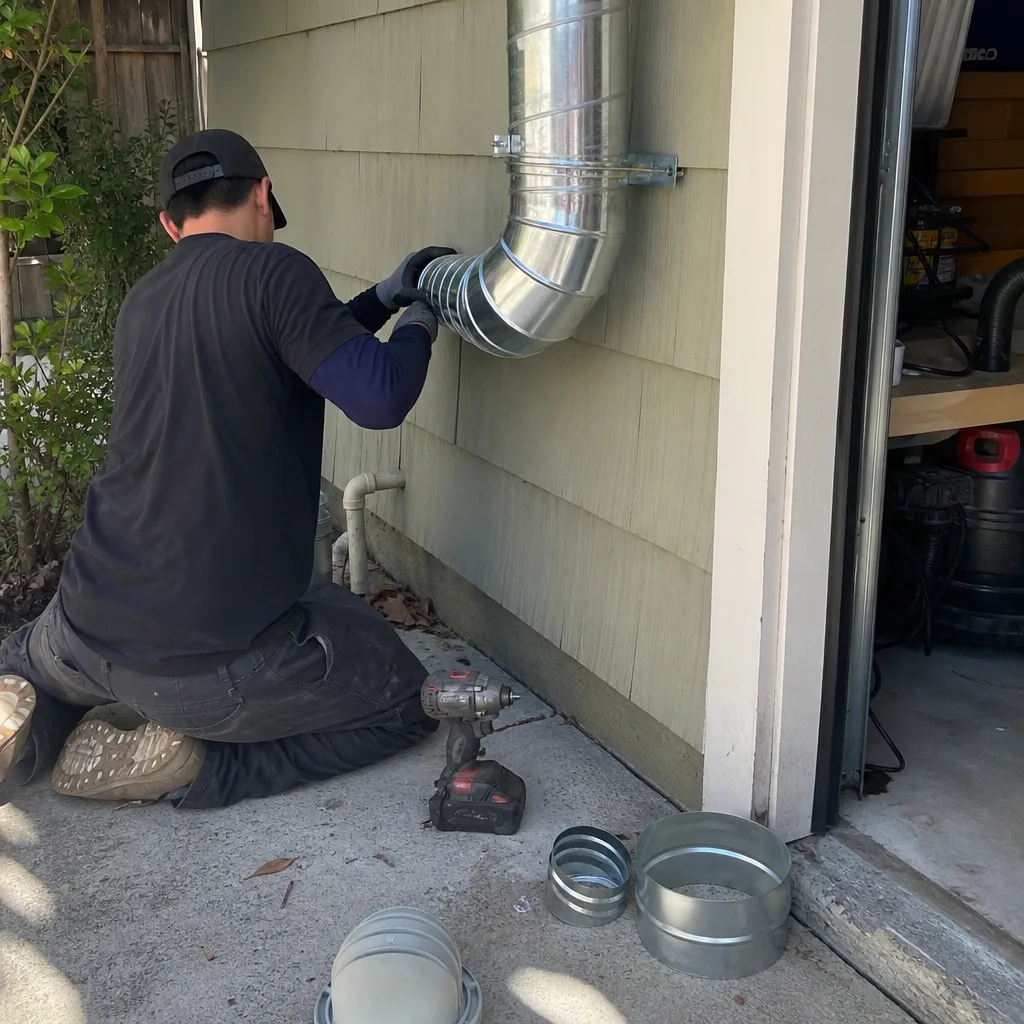
The same neglect that allows a dryer vent to clog also allows HVAC return plenums to cake with dust and supply boots to fill with debris. We recommend an annual dryer vent cleaning, more often if you have a long vent run (over 15 feet), multiple elbows, or a household with dogs that shed heavily. Dryer Vent Cleaning in Mountain View is a separate service from HVAC duct cleaning and requires different tools, but the inspection cadence should be the same: regular, documented, and responsive to what you observe.
When to Schedule a Professional Cleaning (and What Should Actually Happen)
The industry standard for residential duct cleaning is every 3 to 5 years. That’s a broad range, and the right interval for your Mountain View home depends on filter quality, household composition, and seasonal events. Here’s the thing most homeowners discover too late: a professional cleaning should be scheduled when you have evidence, not just when the calendar says so.
Schedule a professional Air Duct Cleaning in Mountain View when you observe any of these conditions:
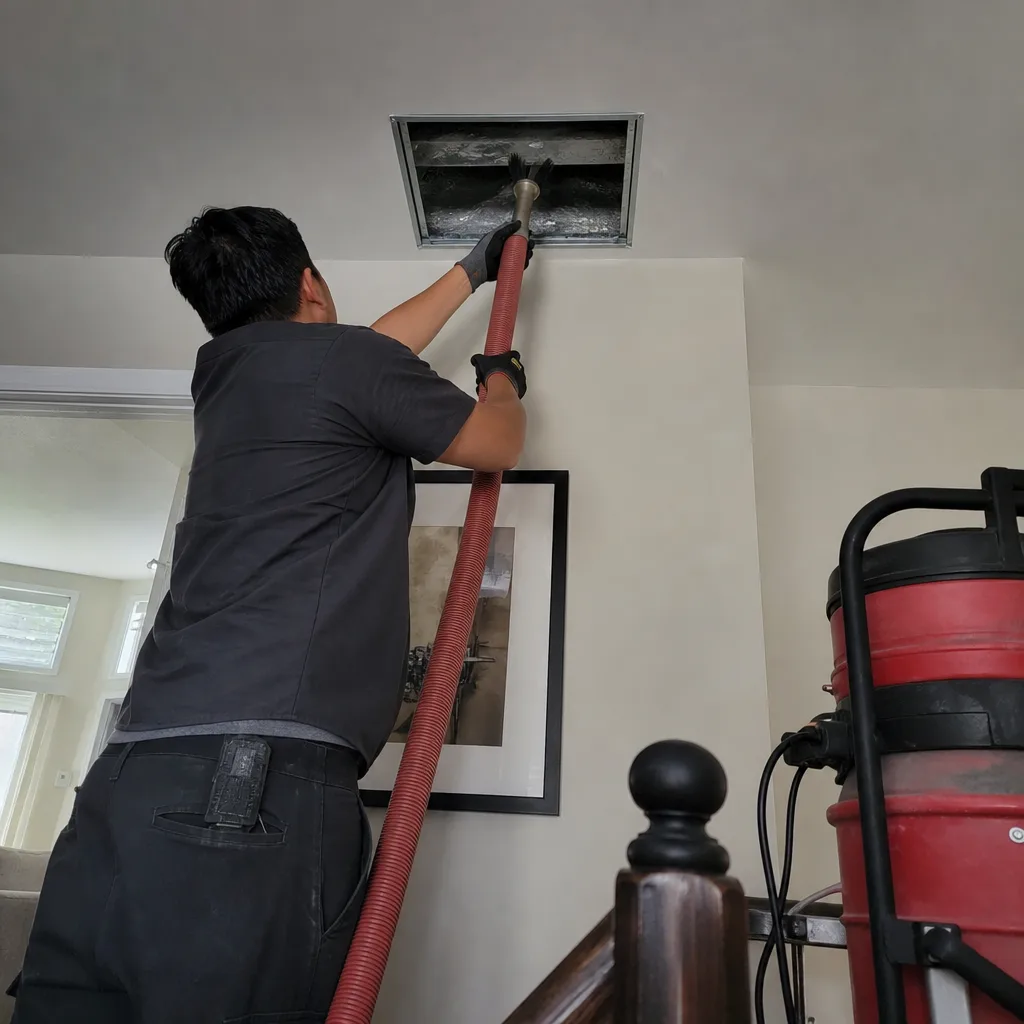
What should a professional cleaning actually involve? This matters, because not all duct cleaning is equal. A proper cleaning uses professional-grade equipment, specifically Rotobrush and Nikro systems, not a shop vacuum with a long hose. These systems agitate the duct walls and extract debris simultaneously, reaching deep into the duct runs. Just as important is containment: a quality cleaning uses HEPA filtration from Abatement Technologies to capture dislodged contaminants at the point of agitation, so the dust that comes off the duct walls doesn’t end up in your living room or re-enter the air stream. That’s the difference between cleaning a duct system and just moving dust around inside it.
If the company arrives with a consumer-grade vacuum and a brush, that’s not professional duct cleaning. That’s the truck-mounted equivalent of waving a broom in a warehouse.
Cleaning vs. Repair: Why Some Duct Problems Need a Fix, Not a Vacuum
Here’s a truth that surprises many Mountain View homeowners: cleaning removes accumulation. It does not fix structural defects. And in some duct systems, structural defects are the reason accumulation recurs so quickly. If you have a 4-foot section of flex duct that’s sagging, pinched, or disconnected in the attic, cleaning the duct won’t help. The debris will come right back, because the gap that lets dusty attic air in is still there.
Air Duct Repair in Mountain View is a distinct service that addresses root-cause integrity problems. Indications you need repair, not just cleaning:
At Duct Cleaning Mountain View home services, we clean the duct. We also fix it if it’s broken. The maintenance checklist should not default to “schedule a cleaning” when the problem is structural. The right response to a collapsed duct is removal and replacement. The right response to separated joints is reconnection and sealing. Cleaning is what you do after the structure is sound.
Common Mistakes to Avoid
When to Call a Professional
Call a professional when your observations cross from “noted and logged” into “affecting system function.” That means persistent musty odor that doesn’t clear after a filter change, visible dust accumulation in the return plenum or deep in register boots, water staining around the air handler, a dryer vent that’s been restricted for more than a month, or airflow in a room that’s dropped noticeably with no damper cause. If you suspect structural damage to ducts, whether from a renovation, a pest intrusion, or simply age, don’t try to patch it yourself. Duct repair requires access to the attic or crawlspace, proper sealing materials, and an understanding of airflow dynamics. Duct Cleaning Mountain View offers free estimates in Mountain View. Call (866) 528-3938 to schedule an inspection.
Frequently Asked Questions
Every 3 to 5 years under normal conditions, but more frequently after significant wildfire smoke seasons, home renovations, pest intrusions, or if you observe persistent dust accumulation despite regular filter changes. Mountain View’s wildfire smoke exposure can justify cleaning more often than the national average.
Visible dust coating the interior of the return plenum or register boots, musty or burning odors when the system runs, water staining around the air handler, reduced airflow in specific rooms, or a dryer that’s taking twice as long to dry clothes are all signs that professional inspection is needed now.
Yes, eventually. Regular filter changes slow the accumulation of new debris but do not remove existing material that’s already deposited in the ducts. Every duct system accumulates some dust over time, especially downstream of the filter. A filter log helps you track when professional cleaning is warranted.
A professional duct cleaning company should use professional-grade agitation and extraction systems like Rotobrush and Nikro, along with HEPA containment equipment such as Abatement Technologies filtration systems. This ensures debris is captured rather than redistributed. Consumer-grade vacuums cannot effectively clean duct interiors.
No. Air duct cleaning and dryer vent cleaning are separate services with separate networks. Duct Cleaning Mountain View offers both, along with Air Duct Repair in Mountain View for structural duct issues. The dryer vent handles the highest lint load and often needs annual service independent of HVAC ducts.
Not effectively, and partially. You can clean register faces, vacuum visible debris in register boots, and replace filters. But the duct network itself runs through walls, ceilings, and crawlspaces, and requires professional-grade equipment to agitate and extract embedded debris safely. Improper DIY cleaning can damage duct seams, dislodge insulation, or release contaminants into living spaces.
Look for a specialist who treats duct cleaning as a distinct trade, not an add-on to general HVAC service. Ask what equipment they use, request before-and-after documentation, and verify they address duct integrity issues, not just debris removal. Specialist focus on air ducts only, as offered by Duct Cleaning Mountain View home, is a strong signal of depth.
The Bottom Line
A real air duct maintenance checklist is a system for observation and documentation, not just a schedule of cleanings. The monthly check catches visual changes at registers and returns. The quarterly inspection goes deeper into boots, filter slots, and the air handler cabinet. The filter log turns individual observations into a trend record that makes professional diagnosis fast and precise. Mountain View’s seasonal triggers, especially wildfire smoke and spring pollen, demand more frequent attention than generic national guides suggest. And when the system needs more than cleaning, Air Duct Repair in Mountain View addresses structural root causes that cleaning alone cannot fix. Run the checklist consistently, log what you find, and call (866) 528-3938 when observations indicate a professional look is warranted.
Written by the team at Duct Cleaning Mountain View, serving Mountain View since 2015.
See the difference
 Before
 After
 Before
 After
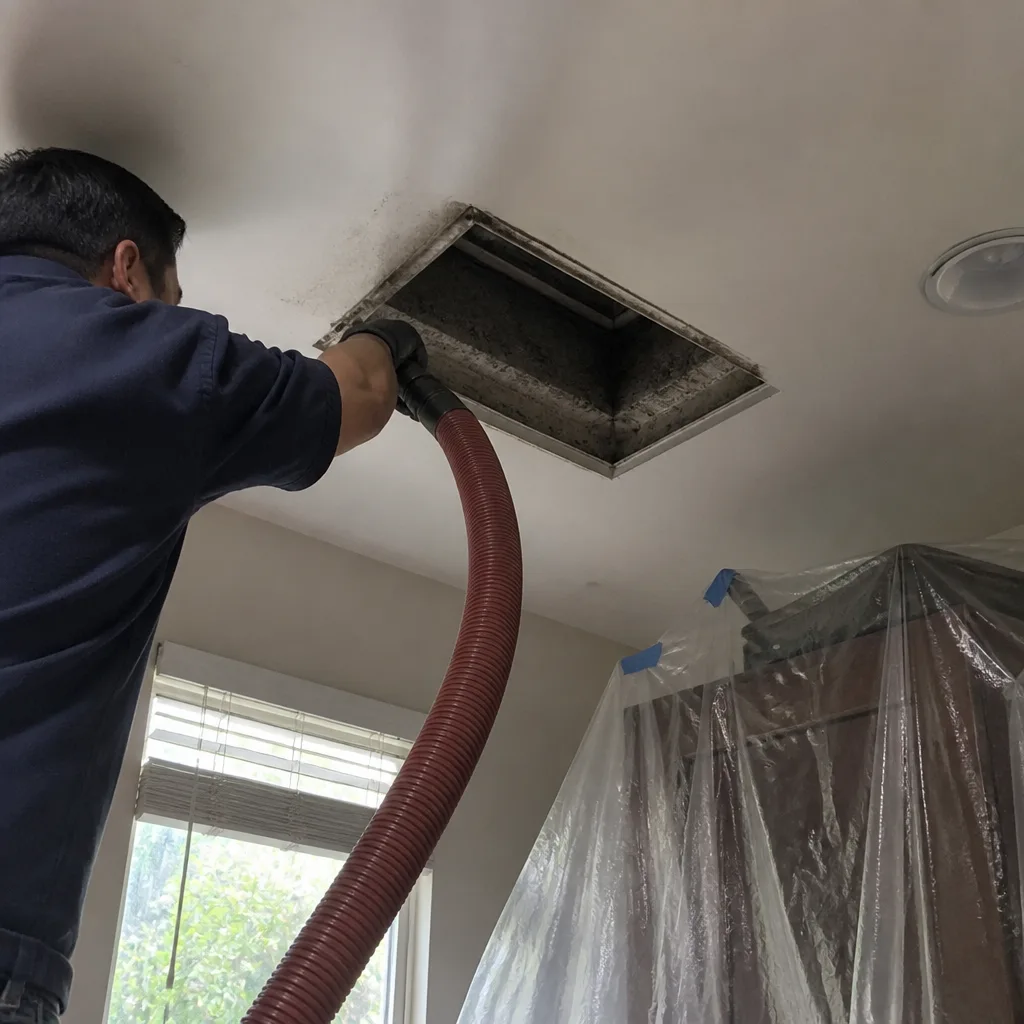 Before
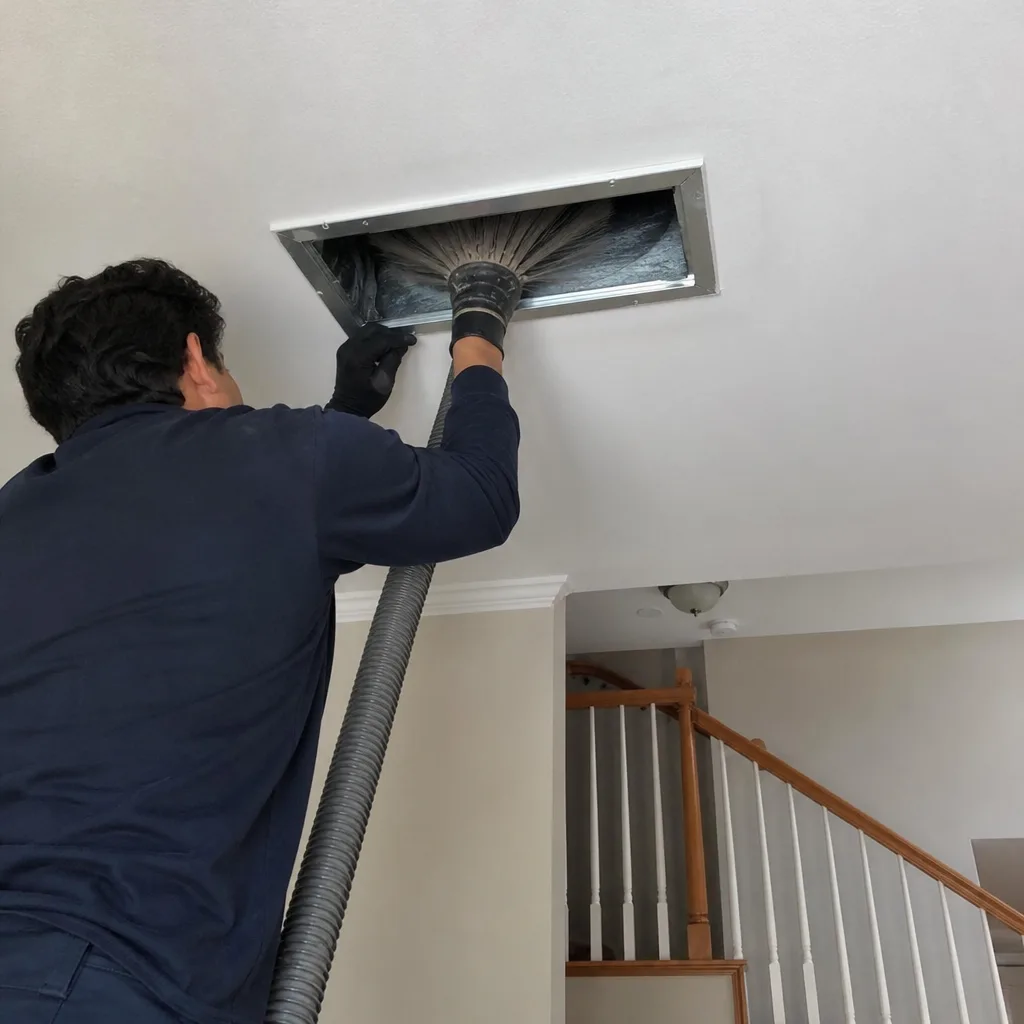 After