
Last updated November 2, 2026
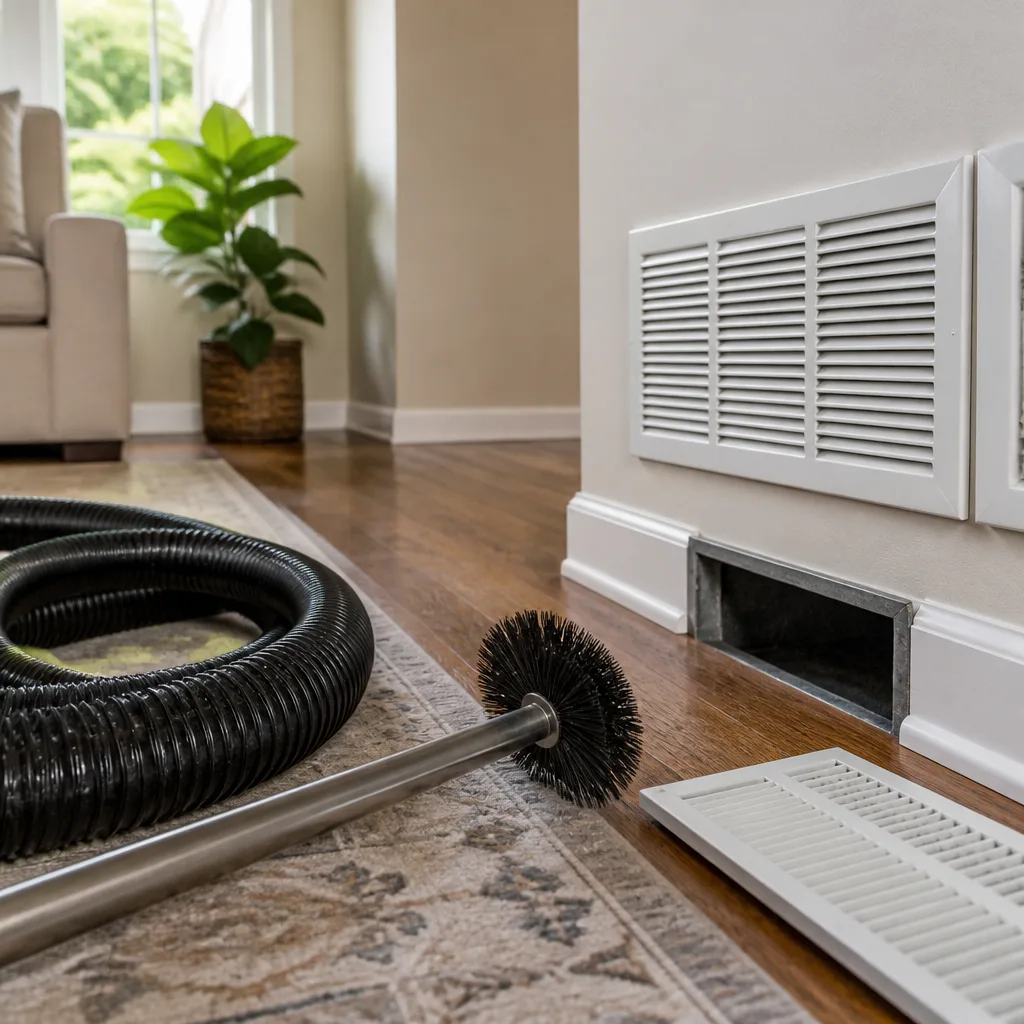 Whole-home duct cleaning
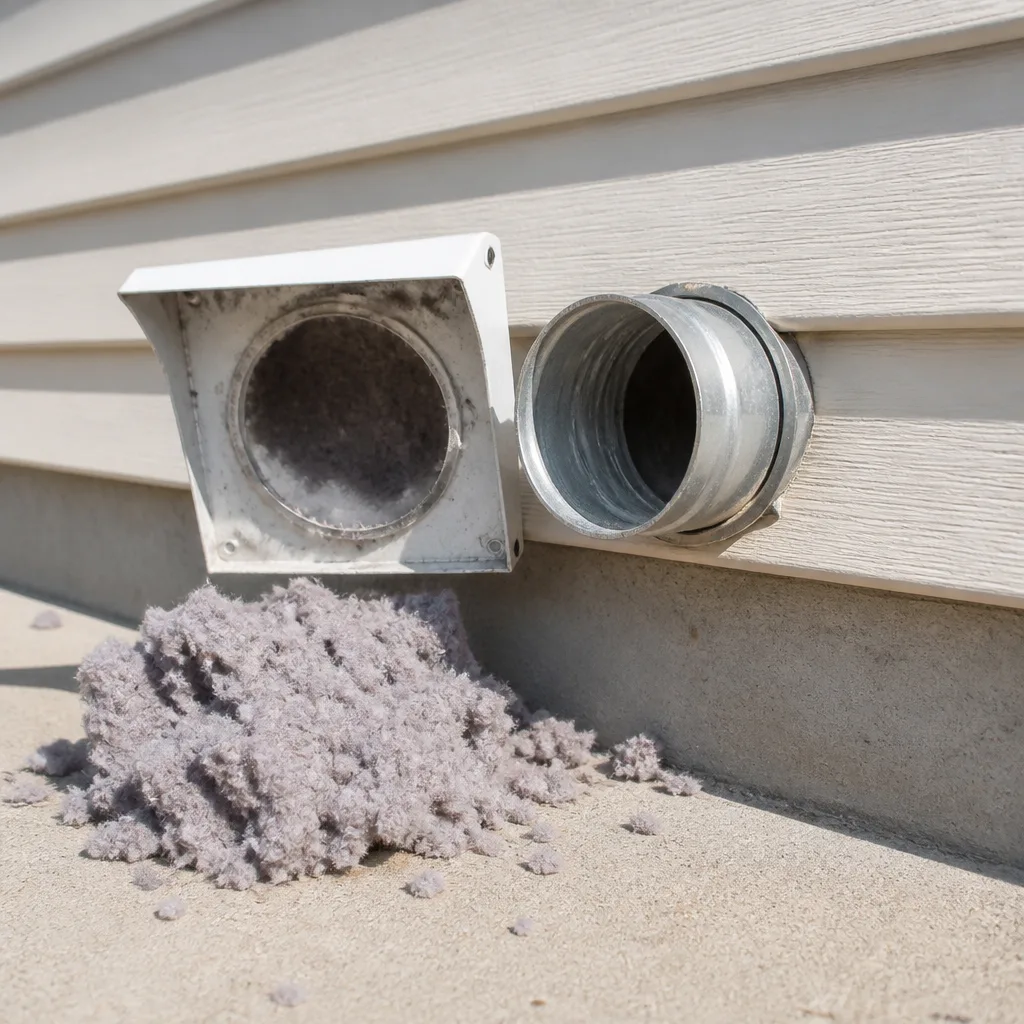 Dryer vent cleaning
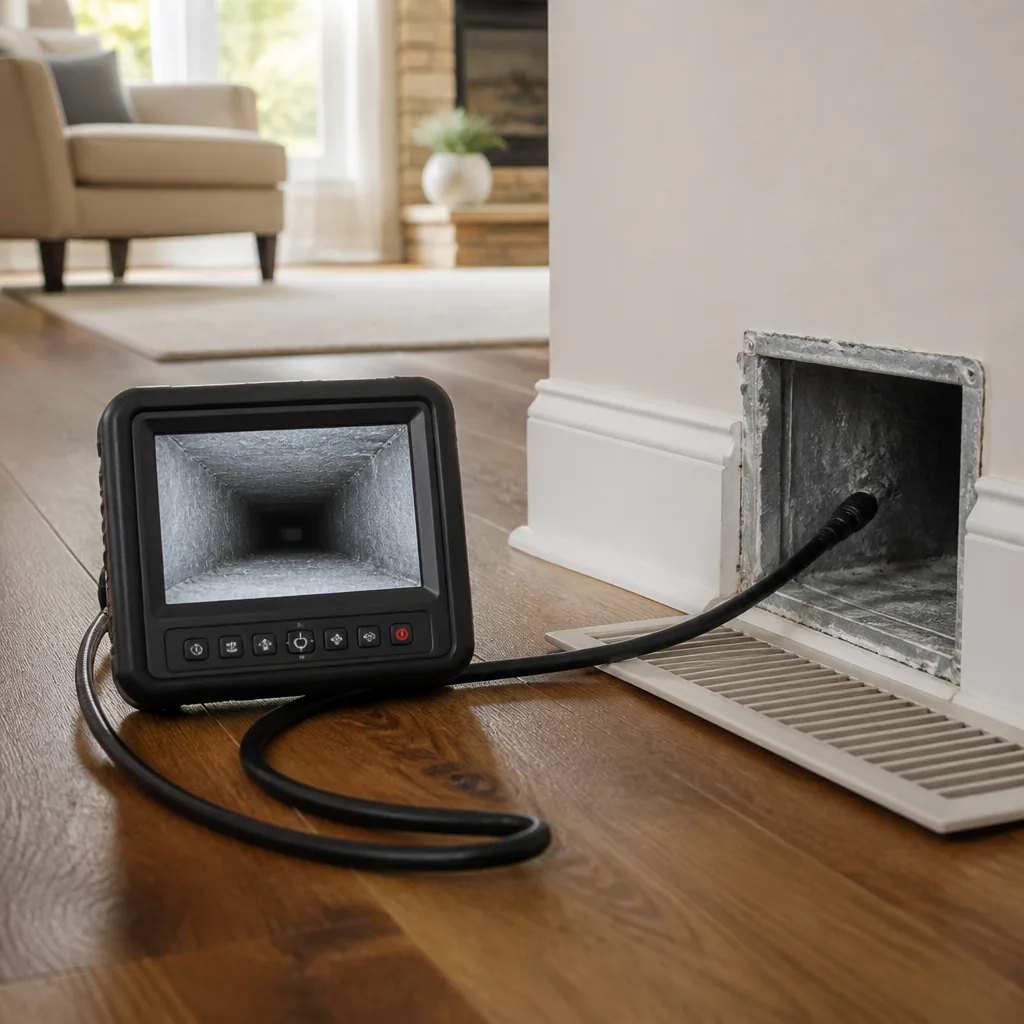 Camera inspection
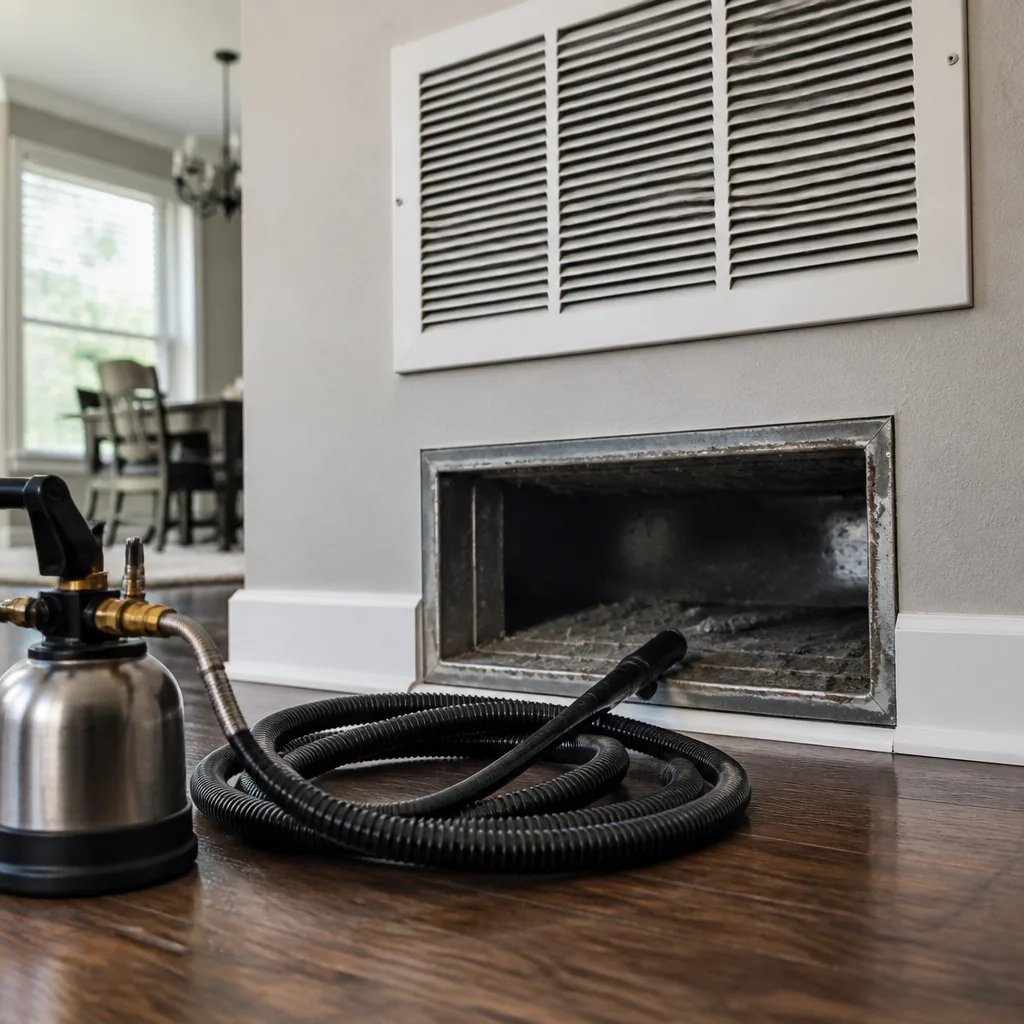 Sanitizing & deodorizing
Whole-system duct and dryer vent check with before-and-after photos - you see exactly what came out of your vents
That "$99 whole-house special" is a bait ad - the real number appears once they are in your hallway, or the "clean" is a shop-vac at the register. We photograph the inside of your ducts before and after instead.
DIY vs Professional Air Duct Cleaning: The Mountain View Homeowner’s Decision Guide
You can buy a dryer vent cleaning kit at Home Depot for $30 and do a perfectly adequate job. You cannot replicate 10,000 CFM of truck-mounted negative pressure suction with anything available at retail. That gap matters more than most DIY guides admit, because it determines whether the debris inside your ducts actually leaves your home or just gets loosened and pushed further down the line. This guide maps exactly where the DIY-versus-professional line falls for Mountain View homeowners, so you can spend money only where it produces a measurable result.
What you’ll learn: which tasks a homeowner with basic tools can handle, which ones require professional-grade Rotobrush and Nikro equipment, how to inspect your own ducts before deciding, and what Mountain View’s specific housing stock and climate mean for that decision.
Duct Cleaning Mountain View home is our main page if you want to see the full scope of what we do. For now, let’s get into the guide itself.
Styles & brands we work with
- Whole-home duct cleaning
- Dryer vent cleaning
- Camera inspection
- Sanitizing & deodorizing
Quick Answer
DIY air duct cleaning is genuinely useful for narrow tasks: wiping down register covers, brushing out the first few feet of a dryer vent, and cleaning around the air handler. It is not sufficient for cleaning the interior of full duct runs, because consumer vacuums and brushes simply don’t generate the airflow or agitation needed for source removal. In Mountain View, where many homes are 1950s-1970s construction with decades of accumulated dust, the professional route is the one that actually changes your indoor air quality. The practical answer: DIY for surface-level maintenance, professional for anything deeper than what you can see and reach with your arm.
Table of Contents
- What DIY Can Actually Handle
- The Physics of Source Removal: Why CFM Matters
- Mountain View Housing Stock and What It Means for Ductwork
- How to Inspect Your Own Ducts Before Spending a Dollar
- Cost Comparison: DIY Kits vs Professional Cleaning
- When DIY Makes Financial Sense
- When Professional Equipment Is Non-Negotiable
- Common Mistakes to Avoid
- When to Call a Professional
- Frequently Asked Questions
- The Bottom Line
What DIY Can Actually Handle
Let’s be honest about what a homeowner can do with a screwdriver, a flashlight, and a vacuum. Some duct maintenance tasks are genuinely well-suited to DIY, not because they’re trivial, but because the equipment required is simple and the surfaces are accessible.
Here’s a task-by-task breakdown of what falls into the DIY-appropriate category:
- Register and grille cleaning: Unscrew the covers from your floor or wall registers, wash them in warm soapy water, and wipe down the visible duct opening. This removes surface dust and pet hair that accumulates right at the airflow exit. It’s the single highest-value DIY task, because register covers catch a lot of debris and are easy to clean thoroughly.
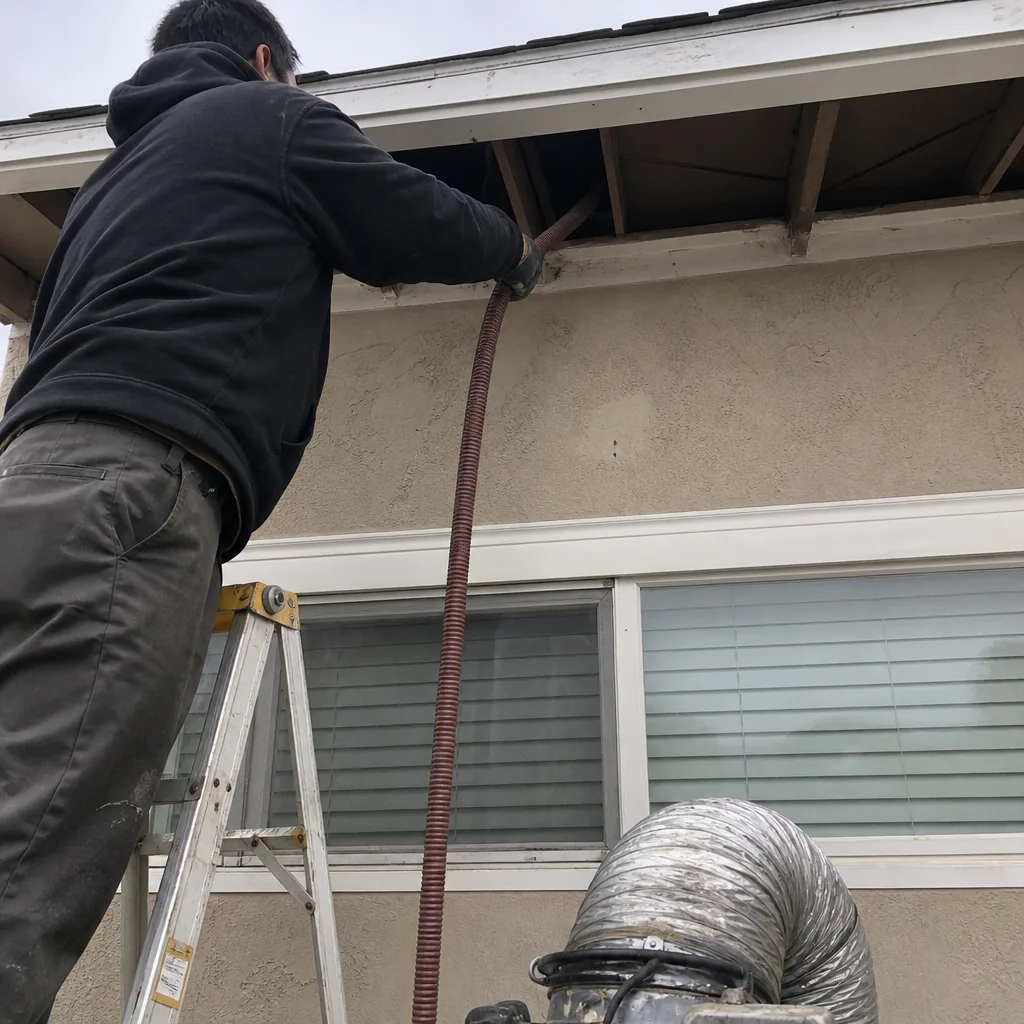
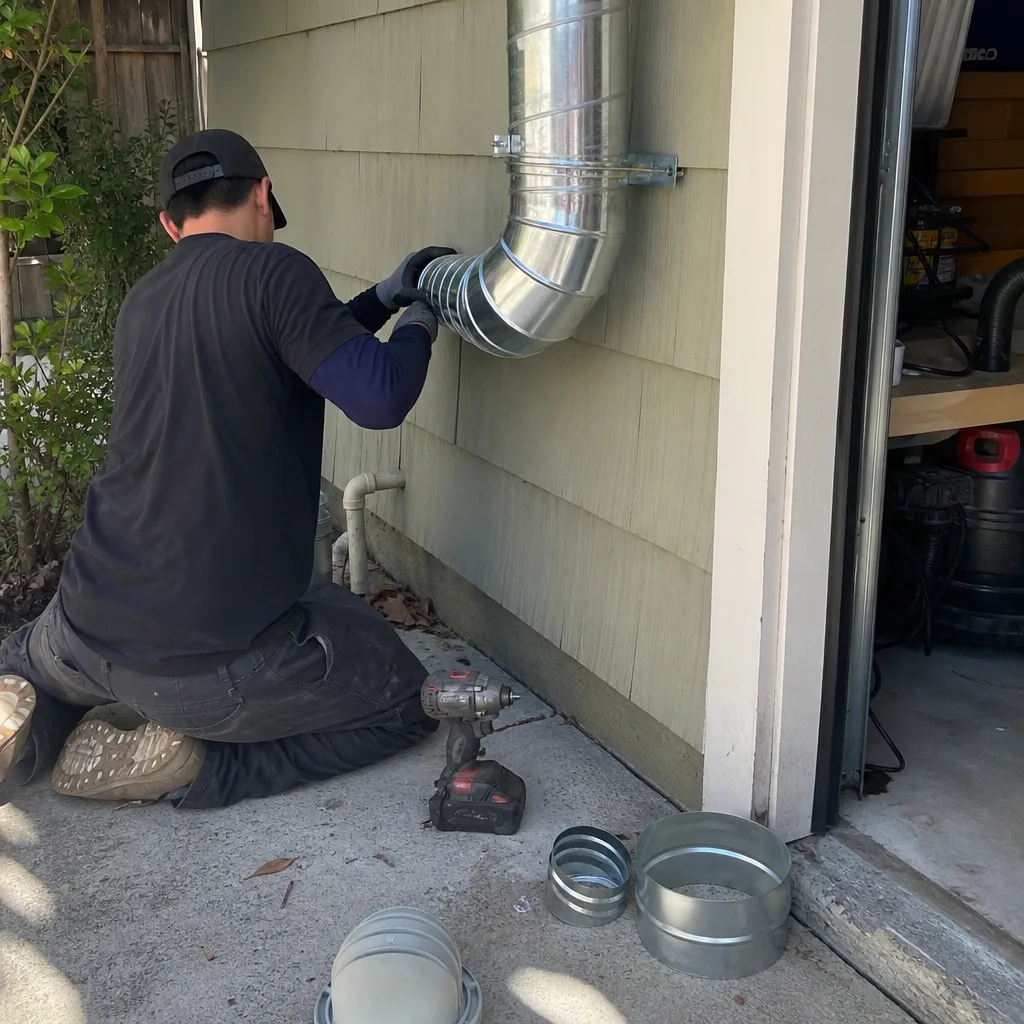
- Dryer vent brushing (first few feet): A $30 dryer vent brush kit with flexible rods can clear lint from the first 3-4 feet of the vent run, especially if your dryer backs directly onto an exterior wall. This is a legitimate maintenance task, and it’s where our Dryer Vent Cleaning in Mountain View page notes what homeowners often miss further down the line.
- Filter housing wipe-down: Remove your HVAC filter, wipe the housing with a damp cloth, and vacuum any visible dust around the filter slot. This keeps the filter seating clean and prevents bypass air from pulling dust around the filter edges.
- Air handler exterior surface cleaning: The outside of the air handler unit can be wiped down and the area around it vacuumed. This is cosmetic but reduces the dust load entering the system.
- Return air grille vacuuming: The return air grille in the hallway is where air enters your system. Vacuuming its surface and wiping the wall around it is quick and effective.
What these tasks have in common: they’re all surface-level, they’re all visible, and you can complete each one in under an hour with basic tools. None of them require inserting anything more than a few feet into a duct run. That limitation is the entire point.
The Physics of Source Removal: Why CFM Matters
Duct cleaning done right is called “source removal.” The goal isn’t to knock dust loose. The goal is to knock dust loose and immediately extract it from the system before it can resettle elsewhere. That requires two things working simultaneously: mechanical agitation to dislodge debris stuck to duct walls, and sufficient airflow to carry that debris out of the duct entirely.
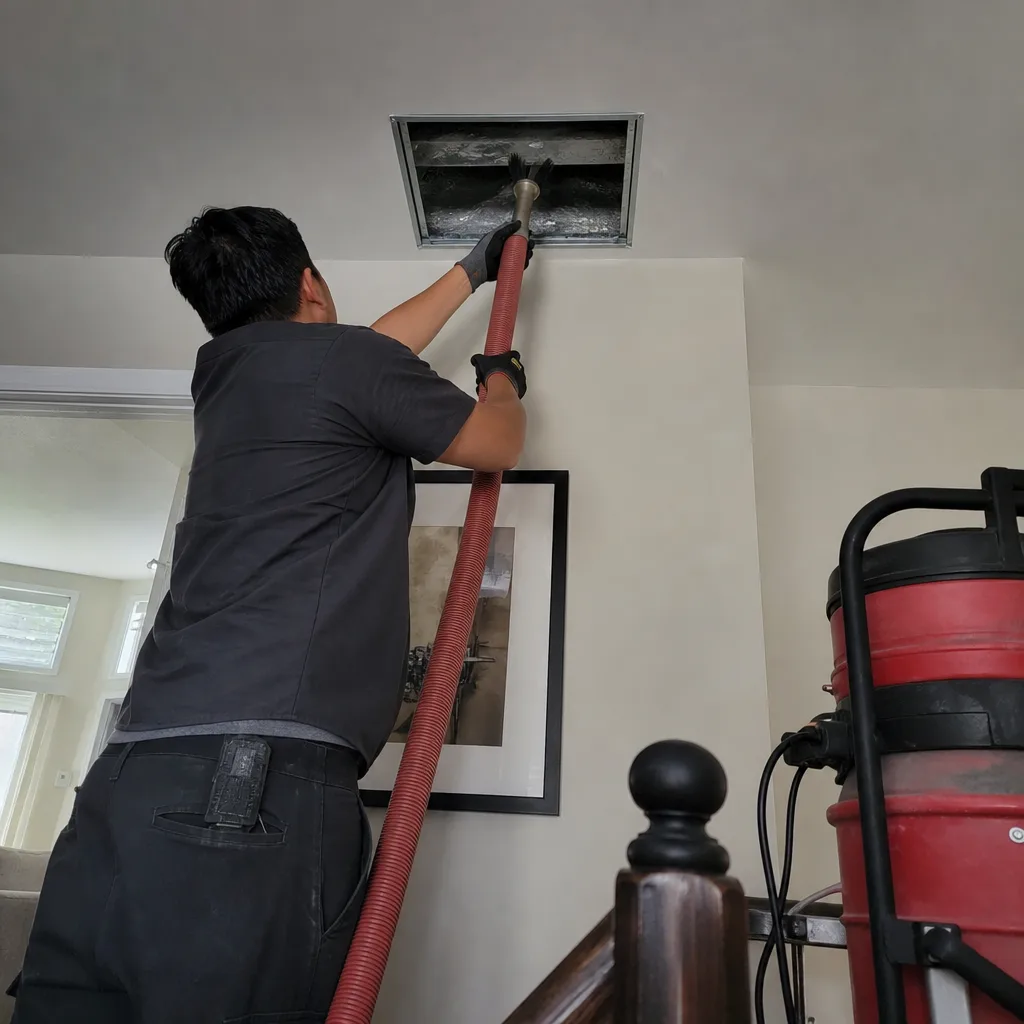
This is where CFM, or cubic feet per minute of airflow, becomes the dividing line. A standard shop vac moves 100-200 CFM. A consumer carpet cleaning machine might move 200-400 CFM. A professional truck-mounted duct cleaning system, like the Rotobrush and Nikro equipment we run on every job, moves 8,000-12,000 CFM. That’s not a small difference. That’s the difference between dislodging a dust clump and letting it drift 10 feet down the duct, versus dislodging it and having it pulled 30 feet through the system and into a HEPA-filtered collection unit.
Here’s the issue with low-CFM DIY attempts: you can absolutely knock debris off the duct walls with a brush. But if your vacuum can’t pull it out, you’ve just repositioned the debris. It’s now loose in the airstream, ready to be blown into your living room when the system kicks on, or to settle in a lower section of ductwork where it’s even harder to reach. In our work throughout Mountain View, we’ve seen DIY attempts that left duct runs looking clean near the registers but packed with loosened debris in the trunk line, where the homeowner’s brush never reached and the shop vac never pulled.
Abatement Technologies HEPA filtration is the other half of the equation. When a professional system is running, the cleaning head agitates the duct walls while the negative pressure simultaneously pulls airborne particles through a HEPA filter. That’s the containment piece. HEPA containment means what comes off your duct walls doesn’t go back into your air. Consumer vacuums without proper filtration end up exhausting fine particles right back into the room, which is counterproductive if you’re cleaning ducts for air quality reasons.
Mountain View Housing Stock and What It Means for Ductwork
Mountain View’s housing stock runs the full range: 1950s ranch homes in the Rex Manor and Monta Loma neighborhoods, 1960s-70s Eichler-inspired builds with flat roofs and radiant heating (later retrofitted with forced air), and newer 2000s-era construction in the North Bayshore and Whisman Station areas. Each era presents different duct cleaning challenges.
The older homes, particularly those built before 1980, share a common issue: asbestos. Duct insulation, duct tape, and even some duct board used in that era can contain asbestos fibers. When you start brushing and agitating duct interiors, you risk disturbing that material. If you have a pre-1980 Mountain View home and you’ve never had the ducts inspected, testing for asbestos before any aggressive cleaning is not paranoia. It’s the difference between a maintenance task and a contamination event. Professional duct cleaners working in older Mountain View homes should be prepared to identify potential asbestos-containing materials and pause work if testing hasn’t been done. A DIY homeowner with a brush and a shop vac has no way to assess that risk.
Newer Mountain View construction has its own issue: construction debris. Drywall dust, sawdust, and even plastic wrappers end up in duct systems during the building phase. In homes built in the last 3-5 years, a professional first-cleaning can pull out a surprising volume of construction material that’s been circulating or sitting in the ducts since move-in day. This is also a scenario where DIY cleaning simply can’t reach the material, because it’s often lodged deep in the trunk lines and branch runs, not near the registers.
The other Mountain View-specific factor is coastal influence. We’re close enough to the bay that humidity levels shift noticeably through the year, and duct interiors in homes without whole-home dehumidification can develop a fine film where dust adheres more stubbornly than in drier climates. That adhered dust requires more aggressive agitation to remove, which again pushes toward professional equipment rather than a homeowner’s brush.
How to Inspect Your Own Ducts Before Spending a Dollar
Before you decide between DIY and professional cleaning, do a basic inspection. This takes about 20 minutes and requires nothing more than a phone and a flashlight. The goal is to figure out whether there’s actually a problem worth solving.
- Turn off your HVAC system at the thermostat. You don’t want air blowing while you’re looking into registers, and you don’t want to drop anything into the system while it’s running.
- Remove a floor register in a high-traffic area. Use your phone’s camera with the flash on, or a flashlight, and look down into the duct. You’re checking for visible dust accumulation on the duct walls, especially in the first few feet where debris tends to settle. A thin film of dust is normal. A visible layer, or debris covering more than about 25% of the surface you can see, suggests the system needs attention.
- Check the return air grille near the air handler. This is the most dust-loaded location in most homes. If the return grille and the duct immediately behind it are caked with dust, that’s a strong signal the rest of the system likely needs cleaning too.
- Photograph what you see. This is genuinely useful for deciding later. Photos give you a baseline. If you call a professional, you can send them the photos and get a more honest conversation before anyone shows up at your door.
- Check your filter. If your filter is heavily loaded on one side, or if you see dust trails around the filter frame, you have bypass air pulling dust around the filter. That’s worth addressing regardless of what else you find.
If your inspection shows clean duct surfaces with just a light dust film, you probably don’t need professional cleaning right now. Drop in a fresh filter, wipe your registers, and check again in six months. If you see visible accumulation, debris, or anything that looks like mold or pest activity, that’s where the conversation changes.
Cost Comparison: DIY Kits vs Professional Cleaning
Let’s talk actual numbers, because Mountain View pricing for duct cleaning runs higher than the national average, and you should know what you’re comparing.
DIY costs are straightforward:
- Dryer vent brush kit: $25-$40 at Home Depot or Lowe’s in Mountain View.
- Register cleaning supplies: $10-$20 for cleaning solution, microfiber cloths, and a basic brush.
- Shop vac rental or purchase: $40-$120 depending on whether you already own one.
- Inspection tools: $0 if you use your phone camera.
Total DIY investment: roughly $75-$180, and most of that is reusable equipment.
Professional air duct cleaning in Mountain View typically runs $400-$800 for a full system, depending on the number of returns and the complexity of the ductwork. That’s a significant difference, and it’s exactly why homeowners hesitate.
But here’s what the professional price actually buys. We run a Rotobrush or Nikro system with a HEPA-filtered negative air machine, meaning the debris is removed from the home rather than redistributed. The cleaning reaches the full duct run, not just the first few feet. And if the technician finds damage, you get a repair recommendation rather than discovering the problem months later when airflow drops. Air Duct Cleaning in Mountain View includes this full-system approach on our service page.
The comparison isn’t really $75 versus $600. It’s “$75 for surface maintenance I can do myself” versus “$600 for full-system source removal I can’t replicate with any retail tool.” Both have legitimate places in a homeowner’s maintenance plan.
When DIY Makes Financial Sense
There are specific scenarios where DIY duct maintenance is the honest, correct choice, and spending professional money would be wasteful. Here’s where that line falls:
- Rental properties you own and manage. Landlords with multiple Mountain View rental units often handle register cleaning and filter changes themselves between tenancies. It keeps costs down on properties where tenants may not maintain filters properly. For deeper cleaning between tenants, professional service and Air Duct Repair in Mountain View work are worth scheduling as part of unit turnover, but the routine maintenance is manageable DIY.
- Recent new construction (built within the last 2 years). If you bought a new-build home in Mountain View, your ducts are clean at move-in. Register wiping, filter changes, and dryer vent brushing are all you need for the first few years. Professional cleaning is premature.
- Systems cleaned within the last 18 months. If you had the full system professionally cleaned recently, DIY maintenance between cleanings extends the interval. Brush your dryer vent, wipe your registers, and keep the filter fresh. Professional cleaning every 18-24 months is overkill in most Mountain View homes without pets or renovation activity.
- Accessible dryer vent runs under 10 feet. If your dryer backs directly onto an exterior wall, a DIY brush kit handles that short run effectively. This is the single best-supported DIY task in the duct cleaning world, and we say so honestly.
In these scenarios, DIY isn’t a compromise. It’s the appropriate level of maintenance for the condition of the system. Spending $600 on professional cleaning for a 2-year-old home with clean ducts is paying for equipment you don’t need.
When Professional Equipment Is Non-Negotiable
Now the other side. There are situations where DIY duct cleaning approaches the line between ineffective and counterproductive, and professional equipment is the only honest answer.
1. Renovation with drywall work. If you’ve done any renovation in your Mountain View home that involved cutting drywall, sanding, or demolition, fine dust has entered your duct system. This dust is extremely fine, settles deep in duct runs, and gets pulled back into living spaces every time the HVAC runs. A shop vac cannot pull this material from 20 feet down a duct run. Professional negative-pressure cleaning is the only method that removes it.
2. Pet hair in the system. Mountain View homes with multiple pets, especially long-haired breeds, accumulate hair in ductwork faster than most homeowners expect. That hair binds with dust and creates mats that adhere to duct walls. Consumer brushes push these mats around; professional agitation heads with paired negative pressure actually remove them.
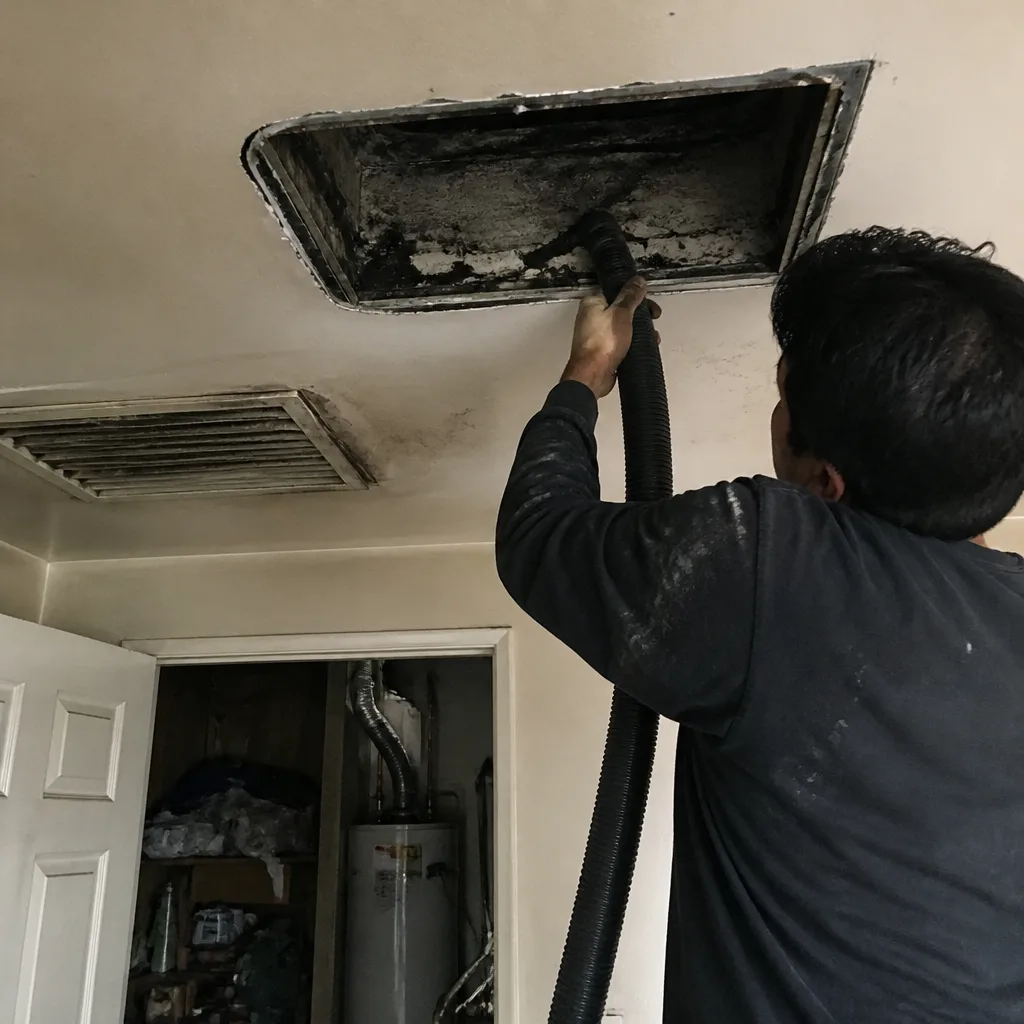
3. Visible mold or moisture damage. If your inspection reveals any darkened, fuzzy growth on duct surfaces, or if you’ve had a water event in the home, stop. This is not a DIY situation. Disturbing mold in ductwork without containment spreads spores through the entire home. Professional assessment is required, and in many cases the ductwork needs repair or replacement, not just cleaning. That’s the territory of our Air Duct Repair in Mountain View service.
4. Pre-1980 construction without asbestos testing. As covered above, disturbing duct insulation or duct tape from the asbestos era is a genuine health risk. Professional cleaners know what to look for and when to recommend testing before proceeding. DIY homeowners generally don’t.
5. Airflow problems you can’t diagnose. If you notice weak airflow from specific registers, unusual noise when the system runs, or rooms with persistent temperature differences, those are duct integrity or design issues, not just cleaning issues. Professional inspection identifies whether cleaning, repair, or both are required.
6. Allergies or respiratory conditions in the household. When someone in the home has asthma, COPD, or severe allergies, the stakes are higher. Partial DIY cleaning that leaves loosened debris in the system can make symptoms worse. Professional cleaning with HEPA containment, using an Abatement Technologies unit to capture what’s dislodged, is the only approach that improves air quality rather than temporarily worsening it.
Professional-grade equipment, Rotobrush and Nikro systems on our trucks, exists specifically because these scenarios cannot be addressed with consumer tools. That’s not marketing language. It’s a physical limitation of airflow and agitation capacity.
Common Mistakes to Avoid
- Using a leaf blower to “blast out” the ducts. We’ve seen this in Mountain View homes. It pressurizes the system rather than creating negative pressure, which blows dust out of every register, seam, and gap into the living space. The dust you’re trying to remove ends up on your furniture, walls, and in your lungs.
- Buying a borescope and immediately scheduling professional cleaning based on what you see. A borescope shows you a close-up view that always looks dramatic. Dust that appears thick at 10x magnification may be a normal thin film. Compare borescope images with your own visual inspection before spending money.
- Trusting a $99 whole-house duct cleaning ad. Bait-and-switch pricing is prevalent in this industry. A company advertising below cost will either upsell you aggressively on arrival, do a deliberately incomplete job, or both. In Mountain View’s market, any legitimate full-system cleaning should be quoted as a flat per-system price agreed before work starts.
- Skipping the dryer vent because “it’s separate.” It is separate, and that’s why it matters. A clogged dryer vent is a fire risk and a drying performance problem, and it won’t be addressed by a standard duct cleaning. It’s serviced separately. Both systems need attention on different schedules.
- Assuming the air handler is off during DIY work because you flipped the thermostat to “off.” Pull the disconnect at the unit or flip the breaker. Thermostats fail, and a brush in a spinning blower is a genuinely expensive mistake.
- Cleaning registers without checking the duct behind them first. If the duct behind the register is heavily loaded, wiping the register alone does nothing for air quality. You’ve cleaned the visible surface while ignoring the source of the contamination.
- Using duct cleaning as a substitute for filter maintenance. A clean system with a clogged filter is a dirty system within weeks. Professional cleaning is not a one-time fix; it’s the reset point for ongoing maintenance.
When to Call a Professional
Call a professional when your inspection shows visible accumulation deep in the ducts, when you’ve had renovation or water damage, when you’re in a pre-1980 home without asbestos documentation, when airflow problems suggest duct damage rather than just dust, or when anyone in the household has respiratory issues that make air quality a health question rather than a maintenance question.
If any of these apply, Air Duct Cleaning in Mountain View covers what a full professional cleaning involves, and Air Duct Repair in Mountain View addresses the structural issues cleaning alone won’t fix. Duct Cleaning Mountain View offers free estimates in Mountain View. Call (866) 528-3938 and we’ll tell you honestly whether your system needs professional attention or whether DIY maintenance is sufficient right now.
Frequently Asked Questions
Professional air duct cleaning in Mountain View typically runs $400-$800 for a full system in a standard single-family home, depending on the number of returns and complexity of the ductwork. DIY maintenance costs $75-$180 in tools and supplies. The professional price includes full-system source removal with HEPA containment, while DIY covers only surface-level tasks and the first few feet of duct runs.
No, a shop vac cannot clean your air ducts, because it generates 100-200 CFM of airflow while source-removal cleaning requires 8,000-12,000 CFM to pull dislodged debris through long duct runs and out of the home. A shop vac can handle register cleaning and the first few feet of a duct opening, but attempting deeper cleaning with one only knocks debris loose and repositions it further into the system.
Yes, DIY dryer vent cleaning is safe and effective for short vent runs under 10 feet, using a brush kit designed for the purpose and feeding the brush from the exterior vent opening toward the dryer. For longer runs, vertical runs, or vents that exit through the roof, professional cleaning is recommended because partial cleaning creates a false sense of security while lint remains trapped mid-run.
Air ducts in Mountain View homes should be professionally cleaned every 3-5 years under normal conditions, and every 18-24 months in homes with multiple pets, smokers, recent renovation work, or residents with severe allergies. Homes built within the last 2-3 years don’t need professional cleaning unless renovation occurred after construction.
Visible dust accumulation on duct walls beyond a light film, debris visible behind the first few feet of registers, a heavily loaded return air grille, dust trails around the filter frame indicating bypass air, and any signs of mold or moisture damage are all signs professional cleaning is needed. A thin, even dust film seen during a basic inspection is normal and does not require immediate professional service.
Yes, professional duct cleaning with HEPA containment improves indoor air quality by removing accumulated dust, pet dander, and construction debris from the system that circulates air through your living spaces, but only when paired with ongoing filter maintenance. Honeywell and Aprilaire filtration products can help maintain that improvement after cleaning, extending the interval between professional services.
The Bottom Line
DIY duct cleaning has a legitimate place, and pretending otherwise is dishonest. Register cleaning, short-run dryer vent brushing, filter housing maintenance, and basic inspection are all tasks a Mountain View homeowner can handle with a $50 toolkit and 20 minutes. What DIY cannot do is reach the full duct run, generate professional-grade airflow, or contain what it dislodges. When the job requires source removal beyond the first few feet of ductwork, Rotobrush and Nikro systems with Abatement Technologies HEPA containment are not optional upgrades. They’re the minimum equipment required to actually change what’s in your air. Use DIY inspection to know the difference, use DIY maintenance to extend intervals between professional cleanings, and call (866) 528-3938 when the inspection shows you something a brush from Home Depot can’t reach.
Written by the team at Duct Cleaning Mountain View, serving Mountain View since 2015.
See the difference
 Before
 After
 Before
 After
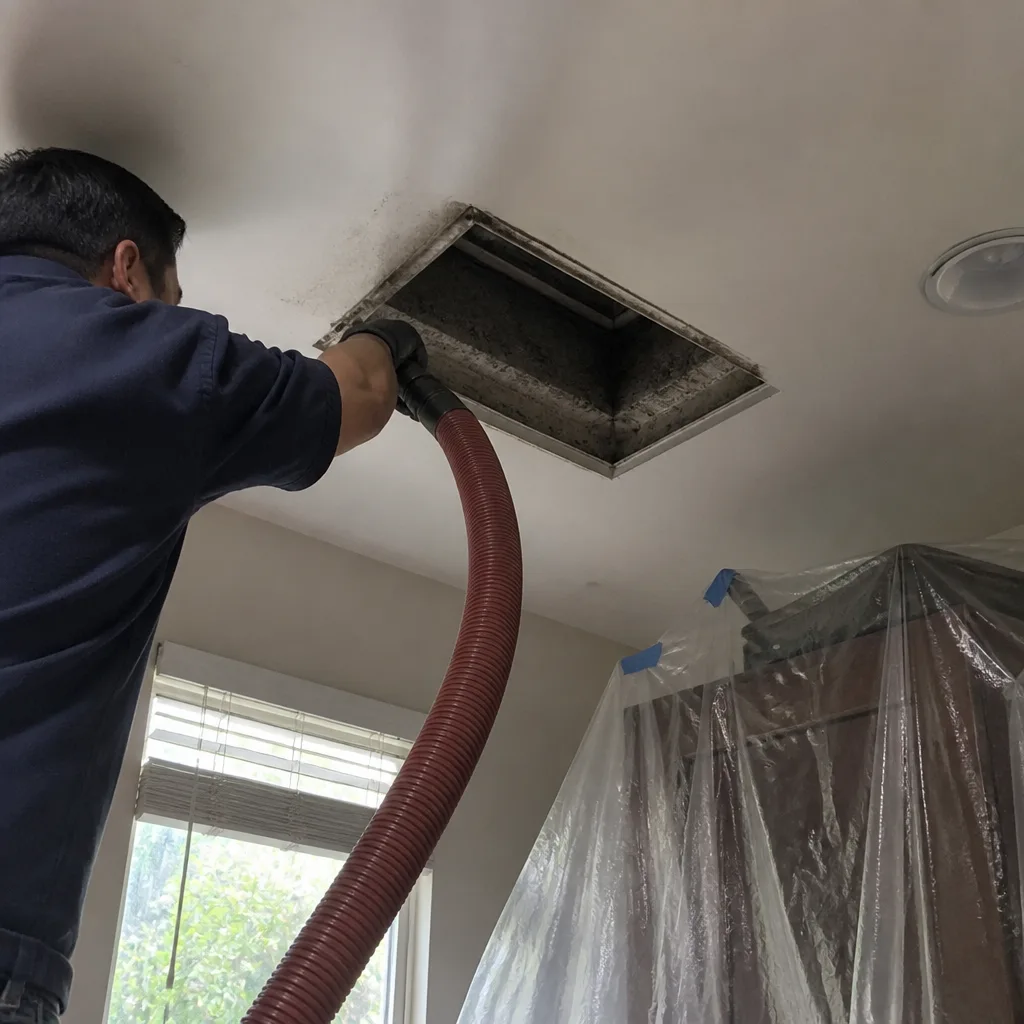 Before
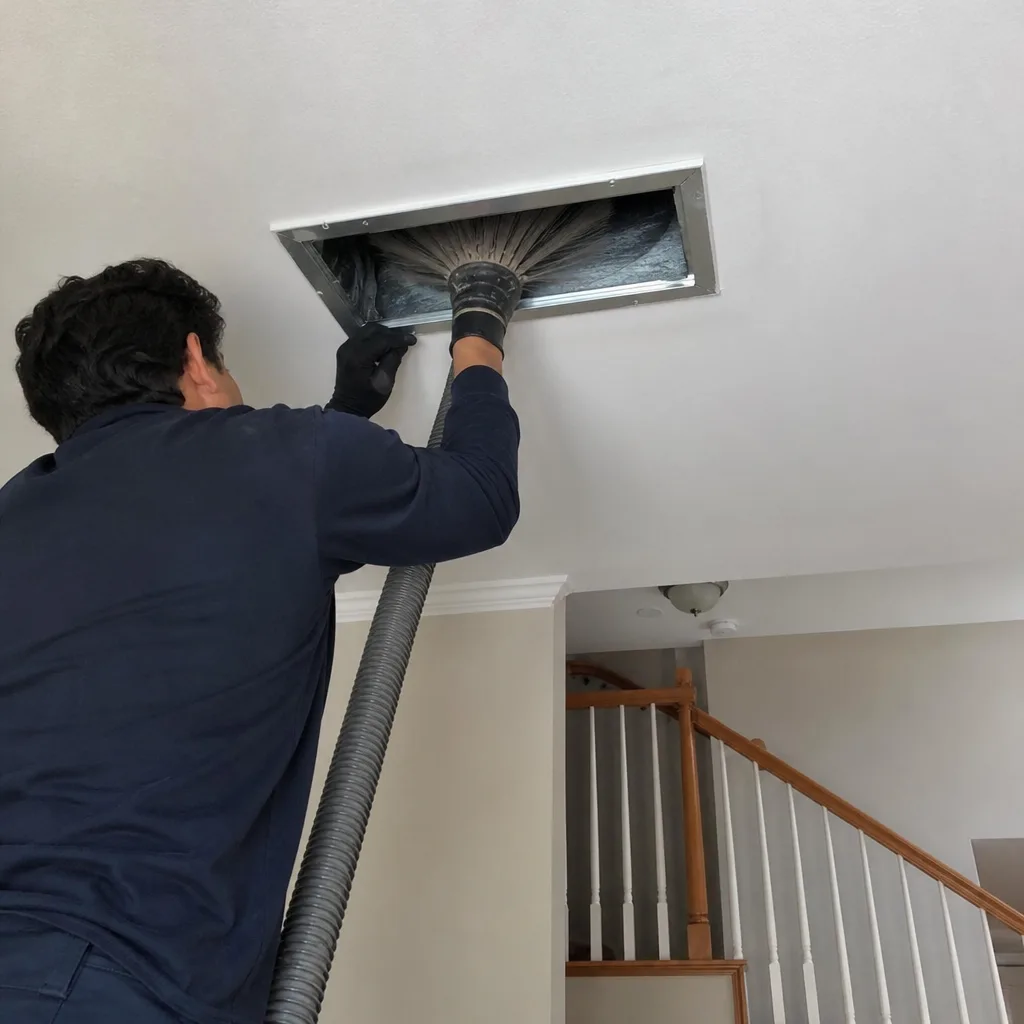 After