
Last updated November 2, 2026
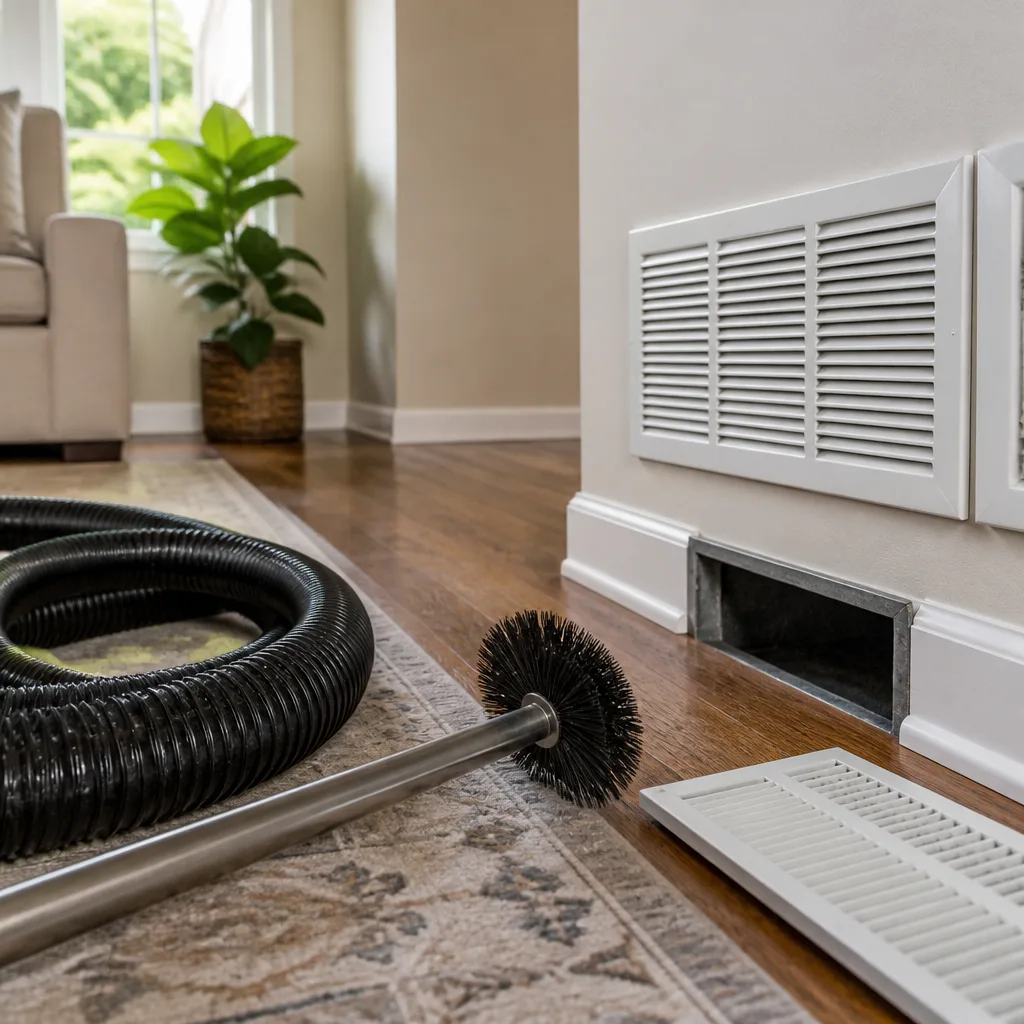 Whole-home duct cleaning
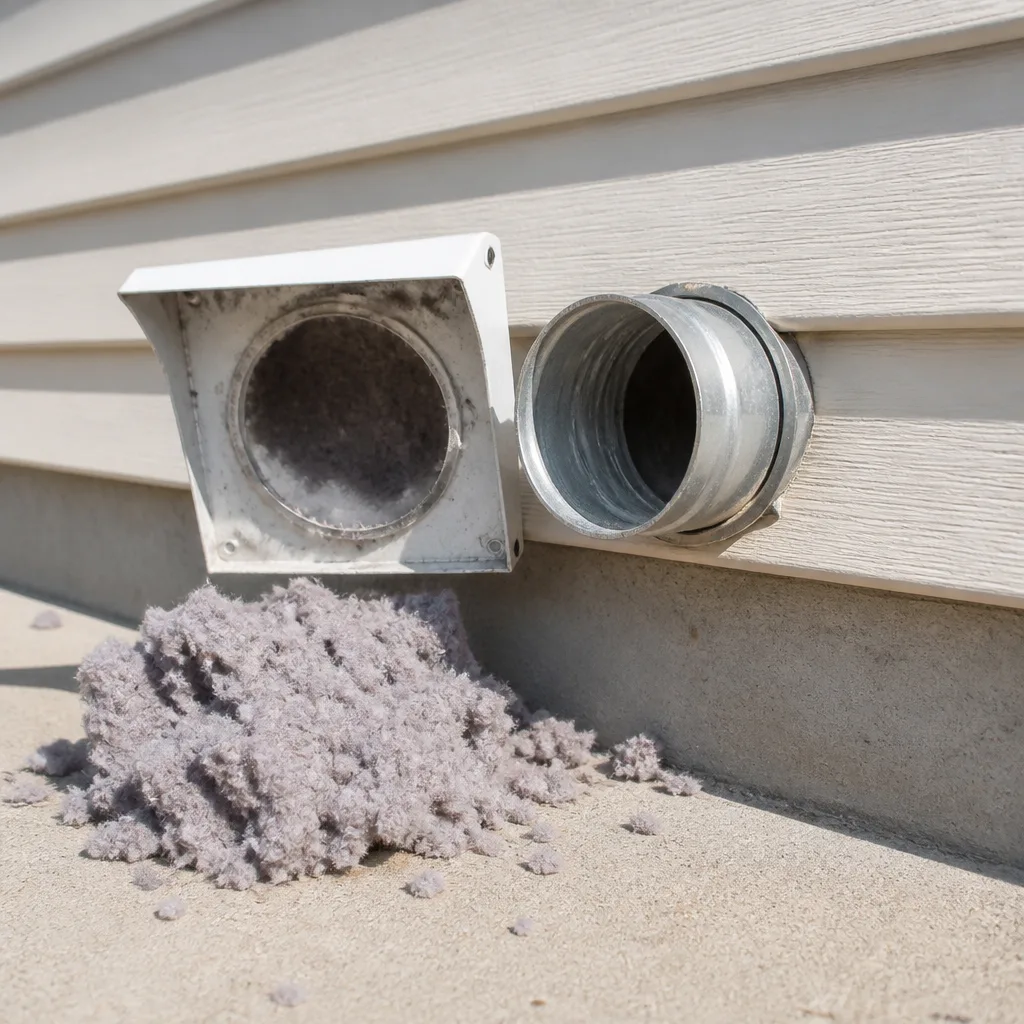 Dryer vent cleaning
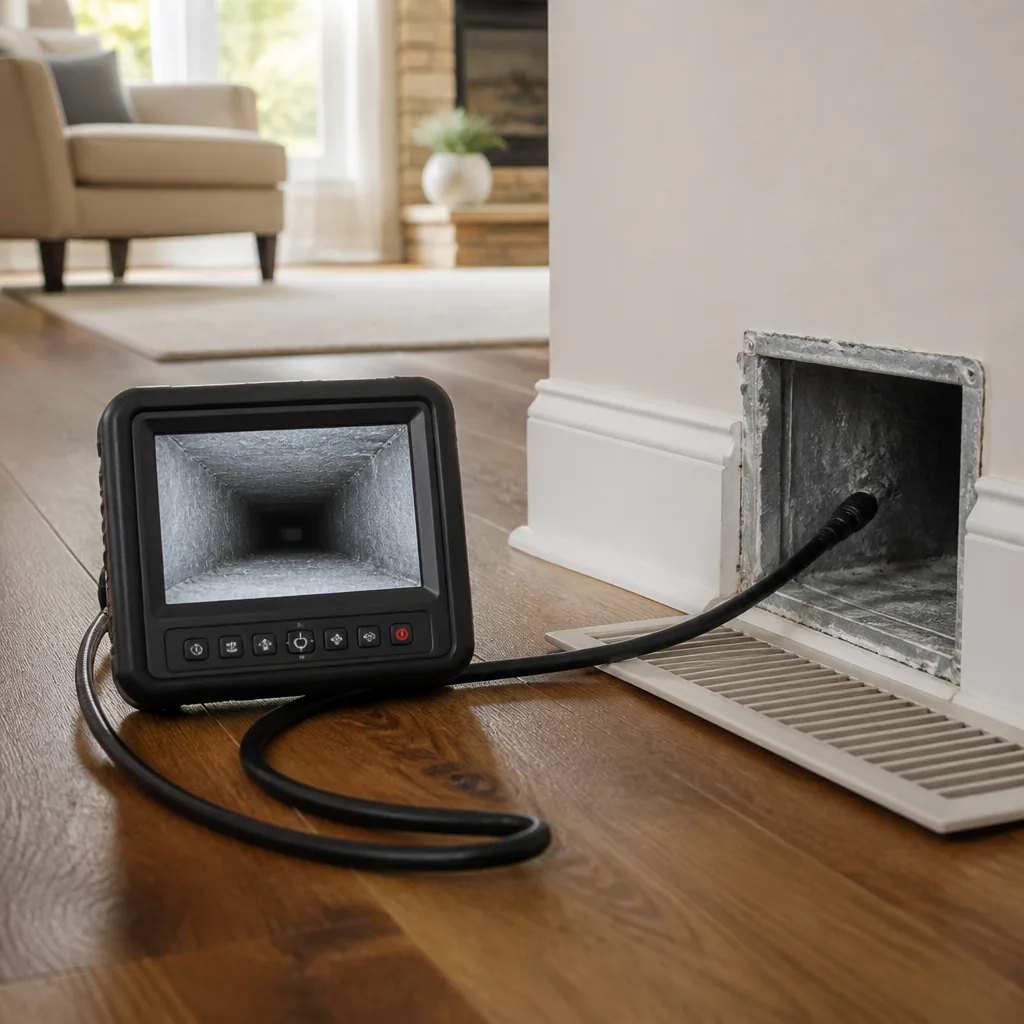 Camera inspection
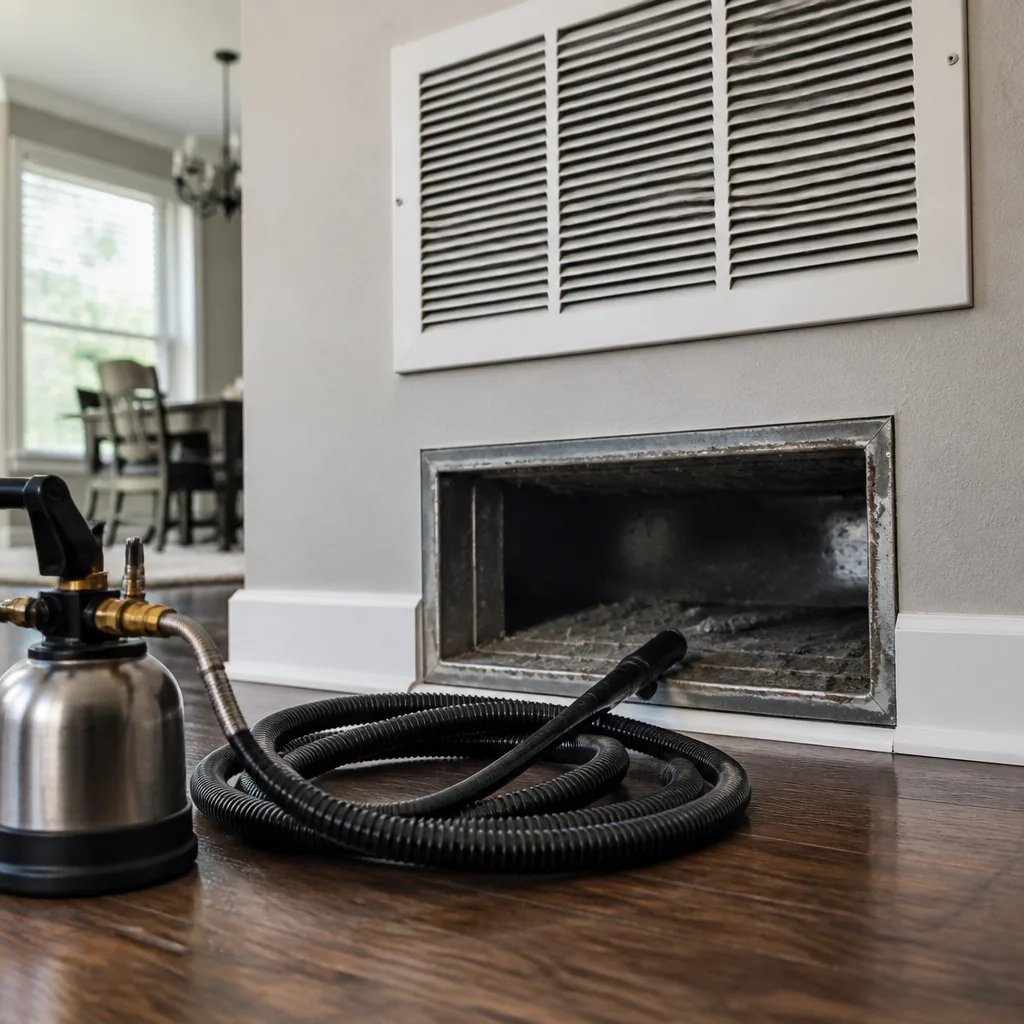 Sanitizing & deodorizing
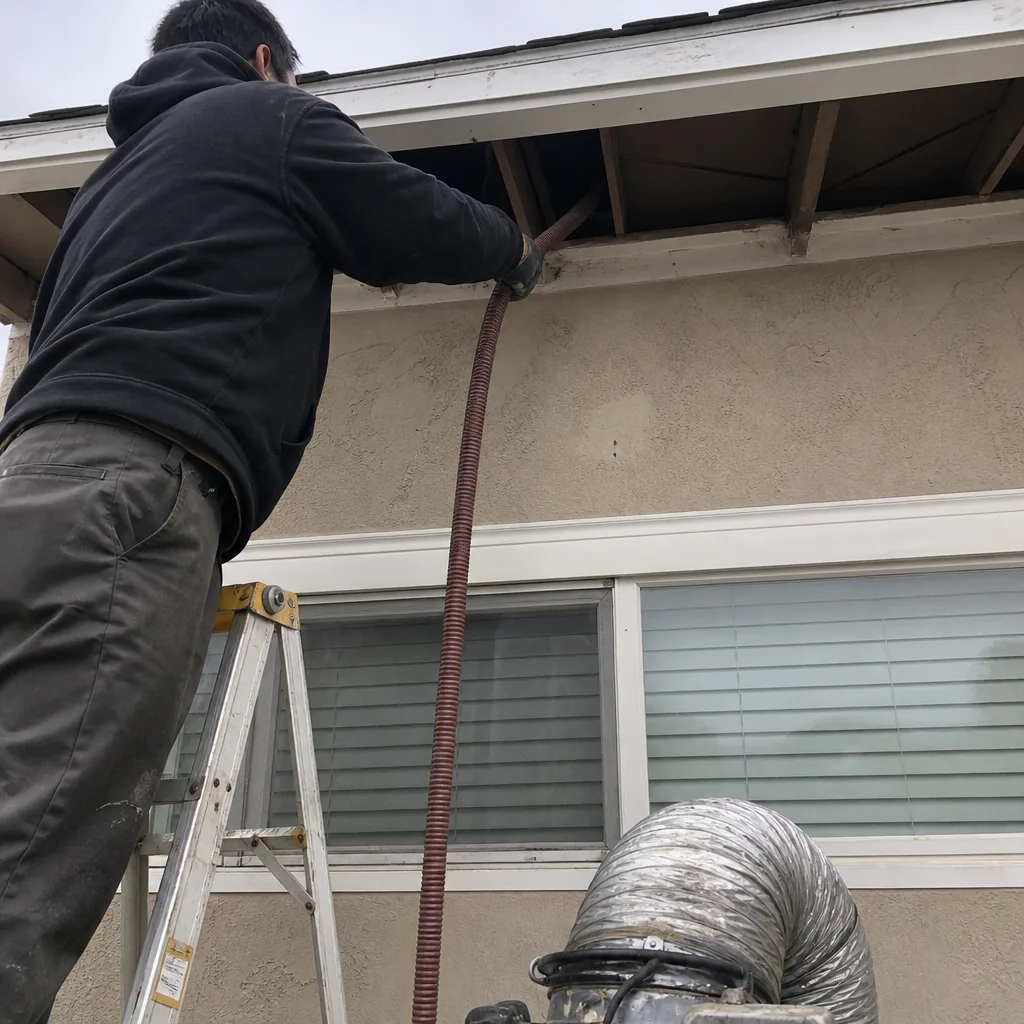
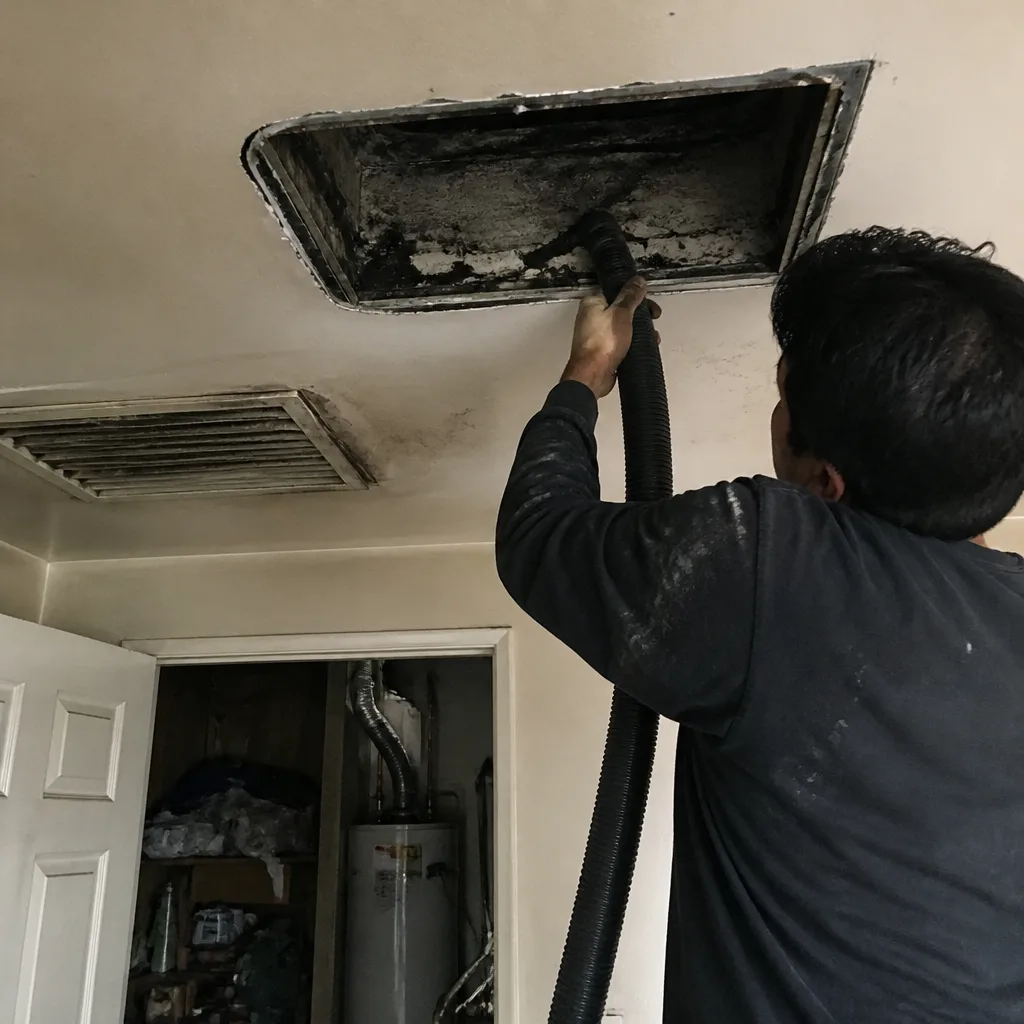
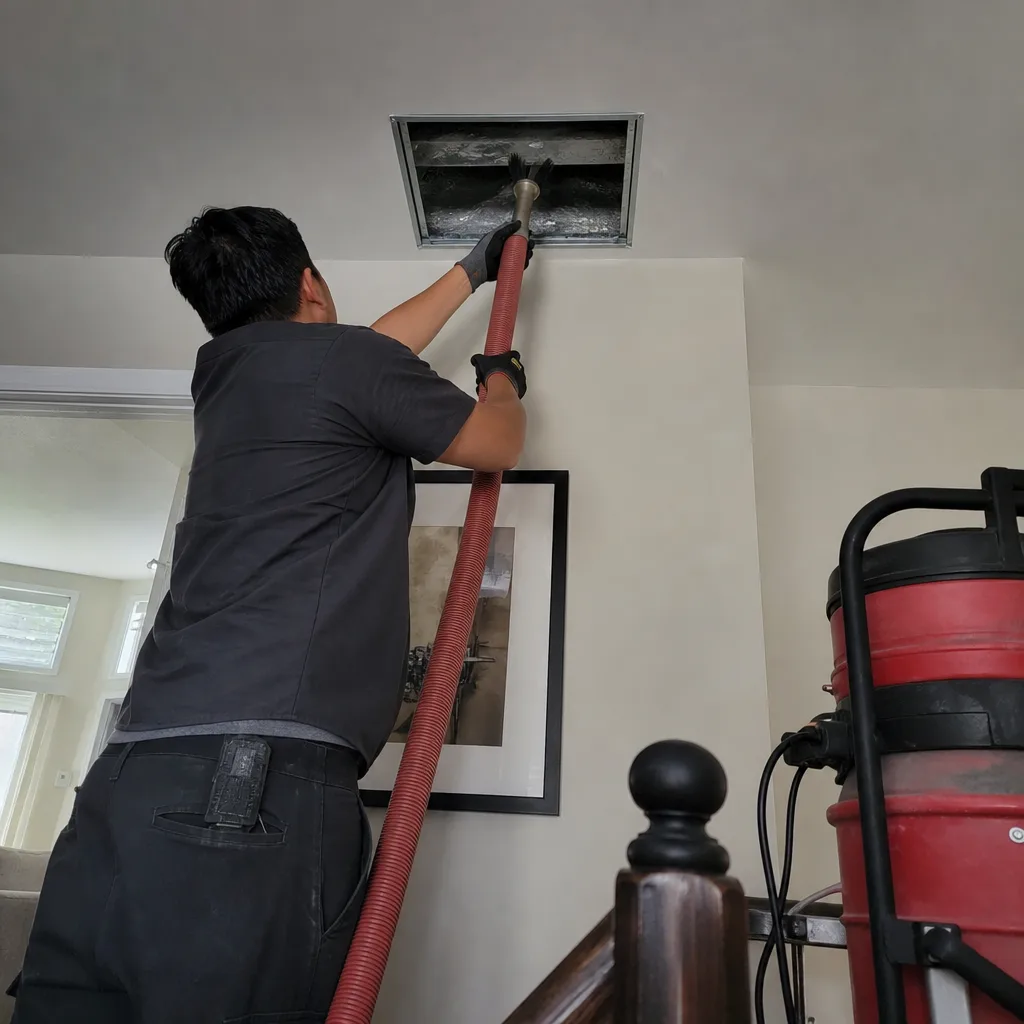
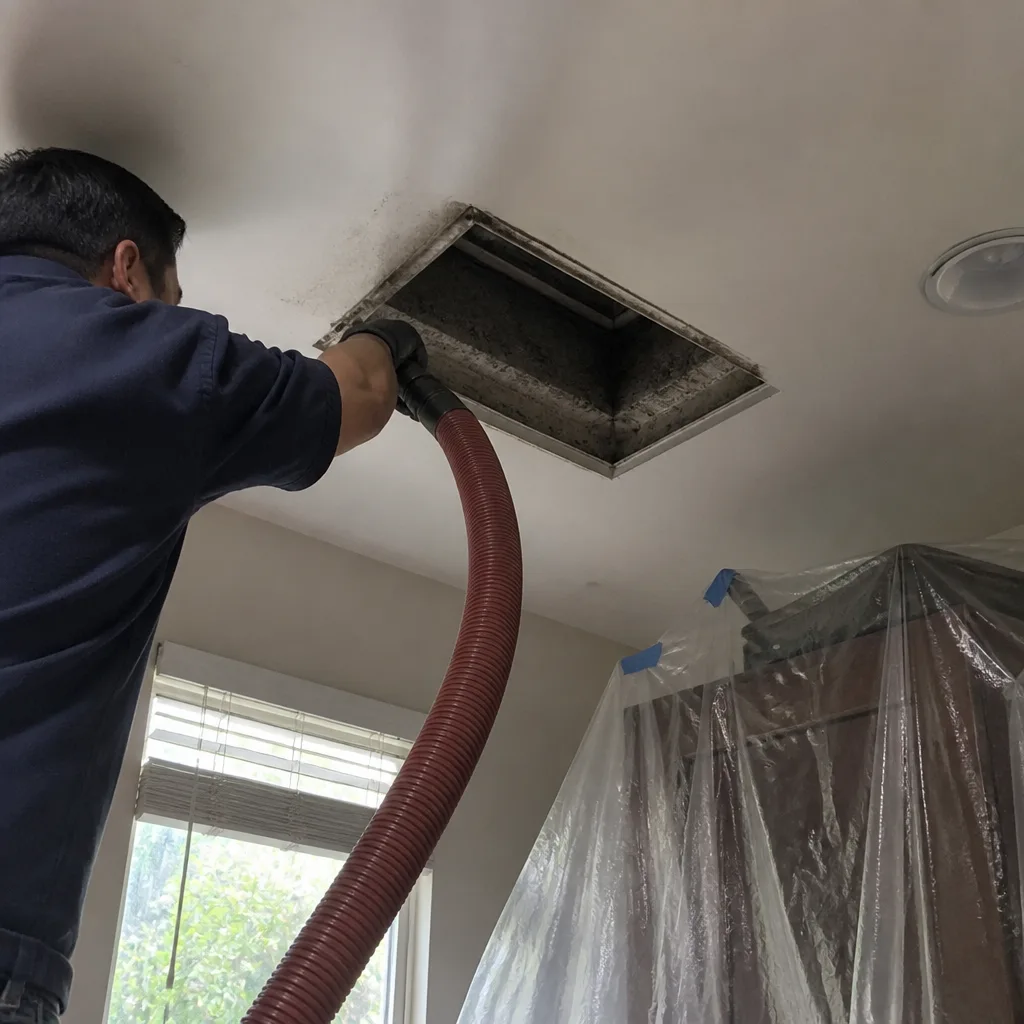
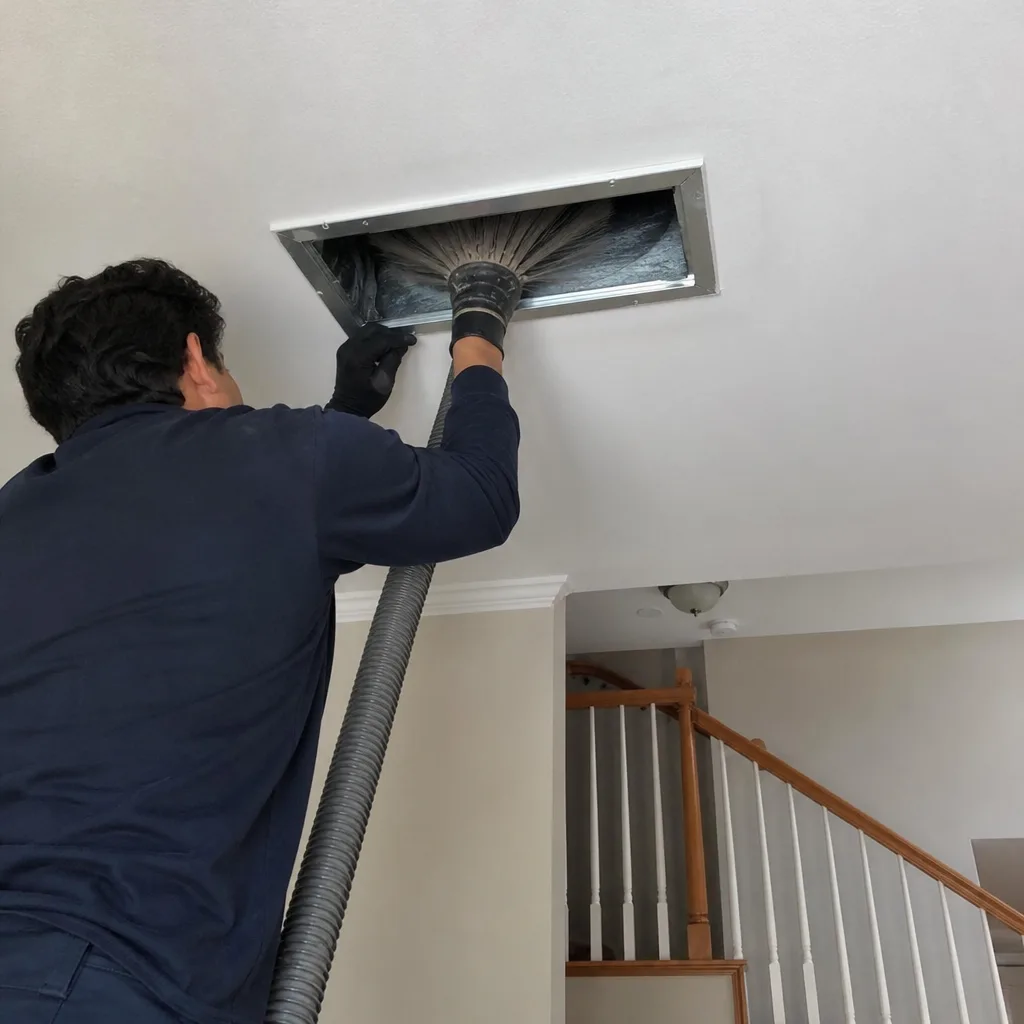
Whole-system duct and dryer vent check with before-and-after photos - you see exactly what came out of your vents
That "$99 whole-house special" is a bait ad - the real number appears once they are in your hallway, or the "clean" is a shop-vac at the register. We photograph the inside of your ducts before and after instead.
How to Hire an Air Duct Cleaning Contractor in Mountain View: A Step-by-Step Guide
The Better Business Bureau logs dozens of air duct cleaning complaints across the Bay Area every year, and almost none of them involve outright theft. They involve homeowners who didn’t know what questions to ask before the van pulled up. Hiring a duct cleaning contractor in Mountain View isn’t about finding someone honest on paper. It’s about asking three or four questions that separate equipment-serious operators from low-bid crews in about ninety seconds. This guide gives you those questions, the answers that disqualify, and a step-by-step process for hiring with confidence. For a deeper look at the service itself, see our Air Duct Cleaning overview.
Styles & brands we work with
- Whole-home duct cleaning
- Dryer vent cleaning
- Camera inspection
- Sanitizing & deodorizing
Quick Answer
To hire an air duct cleaning contractor in Mountain View, ask what equipment they use (professional-grade systems like Rotobrush or Nikro, not consumer shop vacuums), what their vacuum’s CFM rating is, whether they run HEPA containment during the job, and whether they provide a written scope of work before you sign. Then compare at least two quotes on scope of service, not price. A legitimate operator will answer equipment questions immediately and put every line item in writing.
Table of Contents
- The Three Questions That Disqualify Most Contractors Instantly
- Step 1: Know Your Duct System Before You Call Anyone
- Step 2: Vet Equipment, Not Just Credentials
- Step 3: Understand What a Legitimate Inspection Looks Like
- Step 4: Structure a Multi-Quote Comparison That Evaluates Scope
- Step 5: What Should Be in the Written Scope of Work
- Step 6: Day-of-Job Expectations and Verification
- Common Mistakes to Avoid
- When to Call a Professional
- Frequently Asked Questions
- The Bottom Line
The Three Questions That Disqualify Most Contractors Instantly
Before we get into the full step-by-step process, here’s the core of this guide. These are the questions we’d want any Mountain View homeowner to ask. A contractor who hesitates, deflects, or gives a vague answer on any of these three is not equipment-serious.
- “What cleaning system do you use?” If the answer is “a powerful vacuum” or anything that sounds like a shop vacuum on a truck, disqualify. Professional duct cleaning requires professional-grade systems. We run Rotobrush and Nikro systems on every job. These are industry-recognized rotary brush and high-CFM systems built specifically for duct interiors. A contractor should be able to name their equipment brand without pausing. If they can’t, they’re using consumer-level tools and charging professional rates.
- “What’s your vacuum’s CFM rating?” This is the single most diagnostic question in duct cleaning. CFM stands for cubic feet per minute, and it measures how much air the vacuum moves. A proper duct cleaning vacuum should move at least 2,000 CFM. Anything less than that and you’re not cleaning ducts, you’re stirring dust around. We’ve had Mountain View homeowners tell us they watched a previous crew run a 400 CFM portable unit and call it done. That’s not cleaning. That’s redistribution.
- “Do you run HEPA containment during the job?” The negative air pressure from cleaning dislodges contaminants from duct walls. Without HEPA filtration, those contaminants go into your living space. We deploy Abatement Technologies HEPA filtration systems on every cleaning. HEPA containment means what comes off your duct walls doesn’t go back into your air. If a contractor can’t answer this question directly, the answer is no.
Three questions. About ninety seconds. Most of the low-bid crews in the Bay Area market fail all three.
Step 1: Know Your Duct System Before You Call Anyone
You can’t evaluate a contractor’s scope if you don’t know what you’re hiring them to clean. Mountain View homes range from 1950s ranchers in Monta Loma to newer construction in Whisman Station, and the duct systems vary just as widely. Some have flexible duct in crawl spaces. Some have rigid metal duct in attics. Some have a mix. Before you pick up the phone, spend fifteen minutes doing a basic walkthrough.
Here’s what you need to know:
- How many supply registers do you have? Count them. Every room that gets air pushed in has one. This number matters for quoting and it matters for verifying the job was done.
- How many return registers do you have? Usually fewer than supplies, often one or two larger grilles in central areas. These pull air back to the furnace or air handler.
- Where is your air handler or furnace? Garage, attic, closet, or crawl space in older Mountain View homes. The location matters for access and for understanding your system layout.
- What kind of duct material can you see? If you can see duct in your garage or attic, is it flexible (insulated, wire-coiled) or rigid sheet metal? Knowing this helps you spot a contractor who quotes without ever looking.
- When was the last cleaning, if ever? If you bought the home recently and have no records, assume it hasn’t been done. Many Mountain View homes have never had their ducts cleaned.
This walkthrough isn’t busywork. When a contractor asks how many registers you have and you can answer immediately, the conversation shifts. You’re no longer a homeowner they can quote vaguely. You’re a buyer who knows the scope.
Our full guide to Air Duct Cleaning in Mountain View walks through what a complete cleaning actually covers, room by room and duct by duct.
Step 2: Vet Equipment, Not Just Credentials
NADCA membership is the baseline floor in this industry. The National Air Duct Cleaners Association sets standards for cleaning methodology, and membership signals a contractor has at least committed to following them. But here’s what most hiring guides won’t tell you: NADCA membership on its own is not a quality signal. It’s a checkbox. Some of the worst cleaning jobs we’ve seen in Mountain View were performed by NADCA-member companies running undersized portable equipment and quoting per-vent pricing.
Certification tells you the contractor knows the standards. Equipment tells you whether they can actually hit them. Here’s what to look for beyond the badge:
- Named equipment brands. Ask what they run. We run Rotobrush and Nikro systems. These are not interchangeable with “commercial-grade” or “truck-mounted” as vague descriptions. A contractor using professional equipment will name it. A contractor using consumer tools will describe it generically.
- HEPA containment capability. This is the difference between cleaning and redistributing. We run Abatement Technologies HEPA filtration during every job. The contaminants we dislodge from your duct walls get captured, not blown into your living room.
- Full-system coverage. Duct cleaning is not just the supply ducts. A real scope includes supply ducts, return ducts, the air handler or furnace interior, registers, and grilles. If a contractor’s quote only mentions “vents,” that’s a scope red flag.
- Repair capability. Cleaning dislodges dust but it doesn’t fix disconnected duct runs, crushed flex duct, or leaking joints. A specialist who also offers Air Duct Repair in Mountain View can identify and address those issues. A cleaning-only crew will either miss them or upsell you to a subcontractor.
Here’s a practical test. When you call a contractor in Mountain View, say this: “Before we talk price, what cleaning system do you run and what’s the CFM rating on your vacuum?” We’ve had homeowners tell us the line went quiet for a few seconds and then the contractor started talking about “satisfaction guarantees.” That’s your answer. An equipment-serious operator answers the question immediately because they know their numbers.
Step 3: Understand What a Legitimate Inspection Looks Like
There are two kinds of pre-quote visits in duct cleaning. There’s a legitimate inspection, and there’s a sales walk. Knowing the difference saves you from hiring the wrong company.
A legitimate inspection takes 30 to 60 minutes and involves the technician actually looking at your system. Here’s what should happen:
- The technician removes at least one register or grille. Not all of them, but at least one supply and one return. They should look inside with a flashlight or borescope camera. If nobody removes a register cover, they’re not inspecting anything. They’re price-shopping your house.
- They access the air handler or furnace. The blower compartment and coil are part of the cleaning scope. A technician who never opens the equipment cabinet isn’t going to clean it either.
- They photograph what they find. Before photos are how you verify the job was done. A legitimate operator will show you the inside of your ducts. In Mountain View homes with pets, we routinely photograph ducts with visible hair and dust accumulation. If the tech can’t show you a problem, they can’t prove a cleaning solved it.
- They measure rather than estimate. Register counts, duct run lengths, access points. These should be written down, not rounded up.
A sales walk looks different. The technician stays mostly in the main living area of the house, doesn’t open anything, and spends more time talking about mold, allergens, and “your family’s health” than about your actual duct system. The quote comes out of a binder or a tablet with per-vent pricing already printed. In the Bay Area market specifically, be suspicious of any contractor who quotes a duct cleaning without ever putting a flashlight into a duct.
One more thing: a legitimate inspection in Mountain View will note whether your ducts are accessible from the attic, crawl space, or garage. Some older homes in the Cuesta Park and Martens-Carmelita areas have ductwork in tight crawl spaces that genuinely requires more labor. A real quote accounts for that. A generic quote pretends it doesn’t exist.
Step 4: Structure a Multi-Quote Comparison That Evaluates Scope
Most homeowners compare quotes by looking at the bottom-line number. That’s the wrong way to hire a duct cleaner, and the low-bid crews in the Bay Area know it. They win on price because their scope is smaller than the job actually requires.
Here’s how to structure a comparison that evaluates scope of service rather than price:
- Send each contractor the same information. Number of supply registers, number of return registers, furnace location, approximate home square footage, and duct type if you know it. Same inputs, same job. If quotes come back with wildly different assumptions, ask why.
- Require a line-item breakdown. Every quote should list exactly what’s included: supply duct cleaning, return duct cleaning, air handler cleaning, register cleaning, grille cleaning, and any sanitizing or sealing steps. If a quote is a single number with no line items, you can’t compare it to anything.
- Ask about equipment in writing. Have every contractor confirm in the quote what system they will use and whether HEPA containment is included. A contractor who won’t put that in writing is planning to show up with something smaller.
- Ask about excluded work. Some quotes exclude the air handler. Some exclude the return ducts. Some charge extra for dryer vent cleaning. Exclusions are where low quotes hide their true scope. We’ve seen Mountain View quotes that were $200 lower than ours until you added the line items the low bidder quietly left out.
- Ignore the $99 specials. The Bay Area market has a particular problem with bait pricing: a $99 or $149 whole-house special that becomes a $600 invoice once the tech is in your driveway. The math doesn’t work. Professional equipment, HEPA containment, and a trained two-person crew cannot be delivered for $99. If the price is that far below the market floor, the scope is fake.
When you structure the comparison this way, the evaluation stops being about price and starts being about what’s actually being cleaned. That’s the comparison that matters. Our Duct Cleaning Mountain View home page outlines exactly what our standard scope includes so you can use it as a baseline when comparing quotes.
Step 5: What Should Be in the Written Scope of Work
Before you sign anything, the scope of work should be in writing and it should be specific. Here’s the minimum line-item list we’d want to see as a Mountain View homeowner:
- Supply duct cleaning: Every supply run from air handler to register. Method should be specified (rotary brush, negative air, or both).
- Return duct cleaning: Every return run. This is where a lot of the worst accumulation lives, and some contractors skip it to save time.
- Air handler or furnace interior: Blower compartment, blower wheel, and coil if accessible. This is part of the system. It should be part of the scope.
- Register and grille cleaning: Every supply register and return grille removed, cleaned, and reinstalled.
- Containment method: HEPA filtration during cleaning. Written specifically. Not “negative air” as a vague term but the actual method.
- Any sanitizing or sealing steps: If the quote includes antimicrobial fogging or duct sealing, the product used should be named. We incorporate Guardsman-brand products into our protective finishing steps. A quote that says “sanitizing” without naming a product is vague enough to mean nothing.
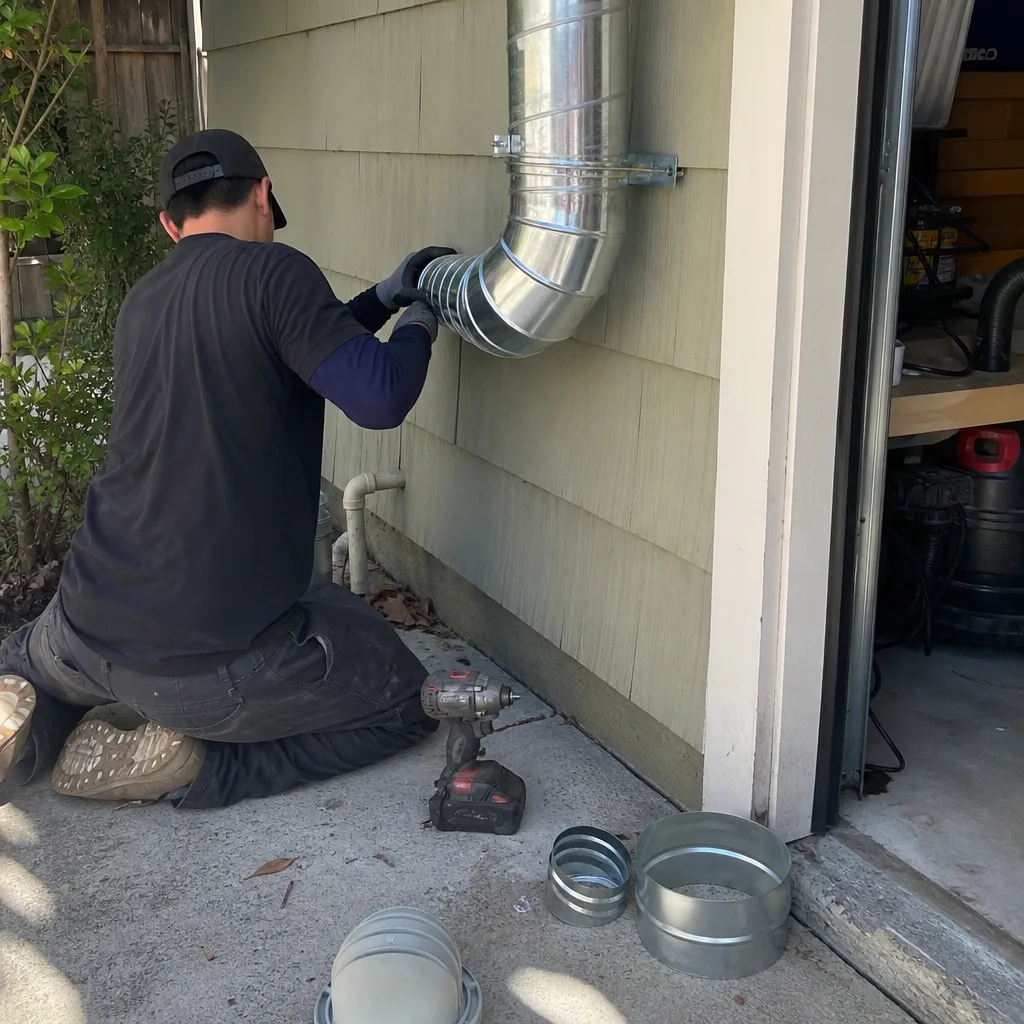
- Dryer vent if included: A separate line item, not bundled vaguely into “full system.” We run Dryer Vent Cleaning in Mountain View as a distinct service with its own scope and verification.
If a contractor’s quote doesn’t look like this, ask them to revise it. If they won’t, that’s information. A company that can’t specify scope before the job won’t be more specific during it.
Step 6: Day-of-Job Expectations and Verification
You’ve vetted equipment, structured the comparison, and signed a detailed scope. The job itself should verify what was promised. Here’s what a legitimate cleaning day looks like and what you should check before paying.
What should happen during the job:
- Equipment on site matches the quote. If the quote said professional-grade rotary brush system and HEPA containment, that’s what should come through your door. You don’t need to be technical about it. If the equipment looks like something you could buy at a hardware store, ask questions.
- The technician accesses the air handler. If the scope includes air handler cleaning and nobody opens the equipment cabinet, the scope wasn’t delivered.
- Registers are removed and cleaned. Not just wiped down from the front. Removed. The buildup on the back side of a register is part of what you’re paying to remove.
- The job takes a reasonable amount of time. A full duct cleaning on a 1,500 to 2,500 square foot Mountain View home takes several hours with a two-person crew. If the crew is in and out in 45 minutes, the math doesn’t add up.
What to verify before you pay:
- Before-and-after photos. A legitimate operator photographs the duct interiors before and after. Ask to see them. We show our Mountain View customers the inside of their own ducts on a screen before we leave. If a contractor can’t show you what they cleaned, you have no way to verify they cleaned anything.
- The final walkthrough. The technician should walk you through what was done, what they found, and any recommendations. You shouldn’t have to ask for this. It should be part of the job.
- Line items completed. Check the written scope against what was actually done. If something was skipped, that’s a conversation before payment, not an email after.
Here’s a piece of verification most guides skip: after the cleaning, run your furnace or air handler for a cycle and listen. If you hear rattling or banging that wasn’t there before, a duct connection may have been knocked loose during cleaning. A legitimate contractor will come back and fix it. A fly-by-night crew will ghost you.
Common Mistakes to Avoid
- Hiring on price alone. The Bay Area $99 special is a lead generation tactic, not a cleaning service. The real invoice arrives after the scope gets expanded in your driveway. Compare scope, not numbers.
- Asking “Do you have good reviews?” instead of “What equipment do you run?” Reviews reflect customer satisfaction, not cleaning capability. A company with five stars and a 400 CFM portable vacuum still has a 400 CFM portable vacuum. The questions in this guide get you better information faster.
- Accepting per-vent pricing. Charging by the vent rewards minimally scoped work and invites comparison games between vendors. A whole-system flat price with a detailed line-item scope is the standard a professional should meet.
- Skipping the register count. If you don’t know how many registers you have, you can’t verify the scope was delivered. Count them before you make the first call.
- Not asking about containment. Without HEPA filtration, duct cleaning is a redistribution project. What comes off your duct walls goes into your air. This is the question that separates serious operators from everyone else, and most homeowners never ask it.
- Signing a vague quote. “Full system cleaning” is not a scope. It’s a phrase. Every line item should be specific and in writing before you sign.
- Treating cleaning as repair. Cleaning removes buildup but does not fix crushed flex duct, disconnected runs, or leaking joints. If your system has structural issues, cleaning won’t solve them. A specialist who handles both cleaning and repair will tell you which one you actually need.
When to Call a Professional
Some situations clearly call for a professional duct cleaning rather than any kind of wait-and-see approach. If you’ve just moved into a Mountain View home and no one can tell you when the ducts were last cleaned, that’s a call. If you renovated recently and the system was open during construction, drywall dust is in your ducts. If a family member’s allergies flare in the home but improve elsewhere, that points to build-up in the system. If your dryer is running longer and longer to dry a normal load, the vent is restricted. None of these are situations where you wait. Duct Cleaning Mountain View offers free estimates in Mountain View. Call (866) 528-3938 to schedule an inspection and quote.
Frequently Asked Questions
Whole-system duct cleaning in Mountain View typically runs $450 to $850 for a home under 2,500 square feet, depending on the number of registers, system complexity, and access conditions. Larger homes or systems with heavy buildup run higher. Be wary of quotes below $300: professional equipment, HEPA containment, and a trained crew cannot be delivered at that number. Call (866) 528-3938 for an exact quote, and estimates are free.
Cheaper quotes are cheaper because the scope is smaller. They exclude air handler cleaning, skip the return ducts, use portable equipment with insufficient CFM, and don’t run HEPA containment. In the Bay Area market specifically, $99 and $149 specials are lead generation tools designed to get a tech into your home where the real invoice gets built. Compare quotes line by line, not bottom line to bottom line.
Legitimate contractors document the job. They photograph duct interiors before and after cleaning, show you the images, and walk you through what was cleaned. Ask for before-and-after photos before you pay. If a contractor can’t show you what they cleaned, you have no way to verify they cleaned anything. Then call (866) 528-3938 and get a quote that includes photo verification.
Every three to five years for most Mountain View homes, with some variables. Homes with pets, homes near construction, and homes where occupants have allergies or respiratory conditions may benefit from more frequent cleaning. If you’ve just moved in and have no records, do it once. Then you’ve got a clean baseline and can decide from there.
NADCA membership is a baseline indicator that a contractor follows industry cleaning standards, but it is not a quality signal on its own. We’ve seen NADCA-member companies in the Bay Area running undersized portable equipment and quoting per-vent pricing. Look beyond the certification: ask about equipment brands, CFM ratings, and HEPA containment. Those questions tell you more than a badge.
If your goal is actual cleaner air, you need the full system: supply ducts, return ducts, air handler, and registers. “Vent cleaning” that only wipes register faces is cosmetic and accomplishes nothing for air quality. The buildup that matters is inside the duct runs and inside the air handler, not on the visible face of the register. Get a quote that specifies every component. Call (866) 528-3938 for a scope that covers the whole system.
The Bottom Line
Hiring a duct cleaning contractor in Mountain View comes down to three questions asked early and a scope compared line by line. Ask what equipment they run. Ask what CFM their vacuum moves. Ask whether they run HEPA containment. If a contractor can’t answer those three questions directly, the price doesn’t matter. Then require a written scope that names every component of the system, compare quotes on that scope rather than the bottom line, and verify the work with before-and-after photos before you pay. The low-bid crews in this market rely on homeowners who don’t ask. Now you know what to ask.
Written by the team at Duct Cleaning Mountain View, serving Mountain View since 2015.
See the difference
 Before
 After
 Before
 After
 Before
 After