
Last updated November 2, 2026
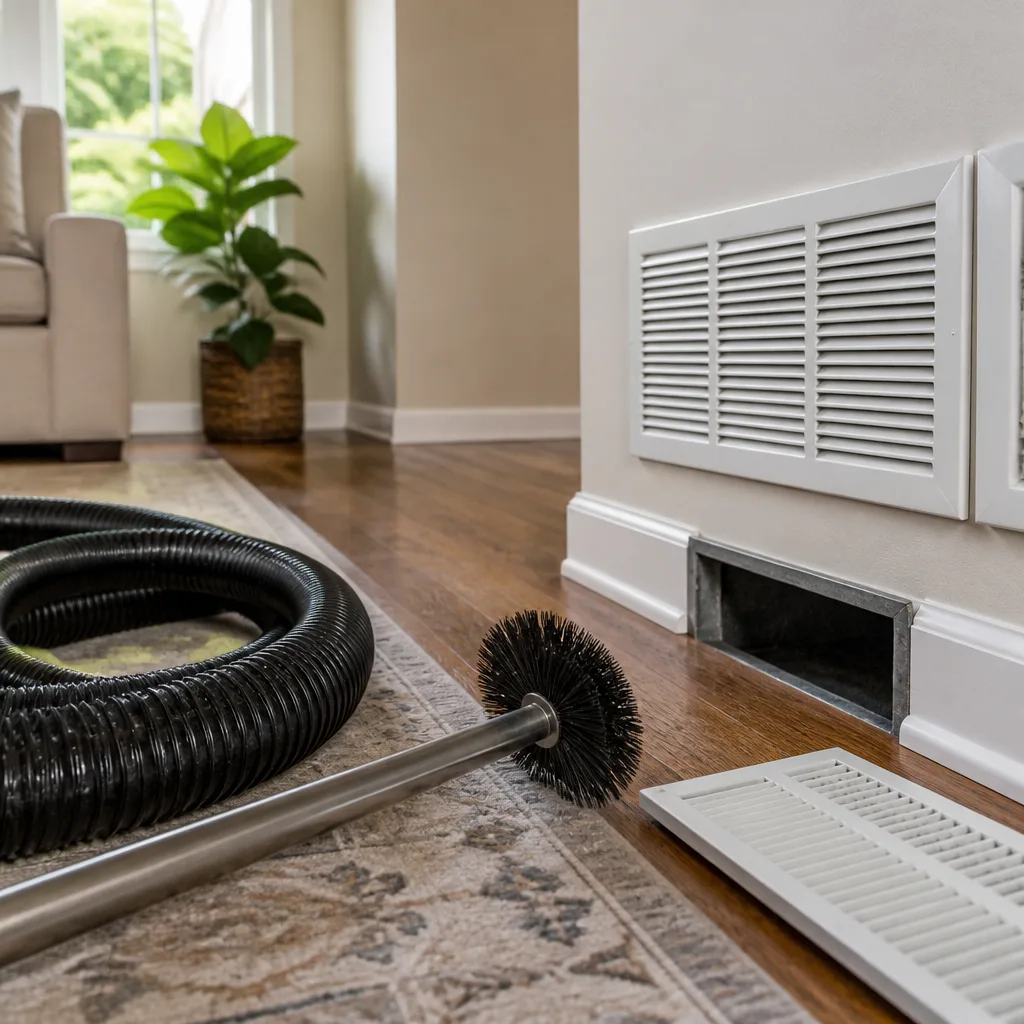 Whole-home duct cleaning
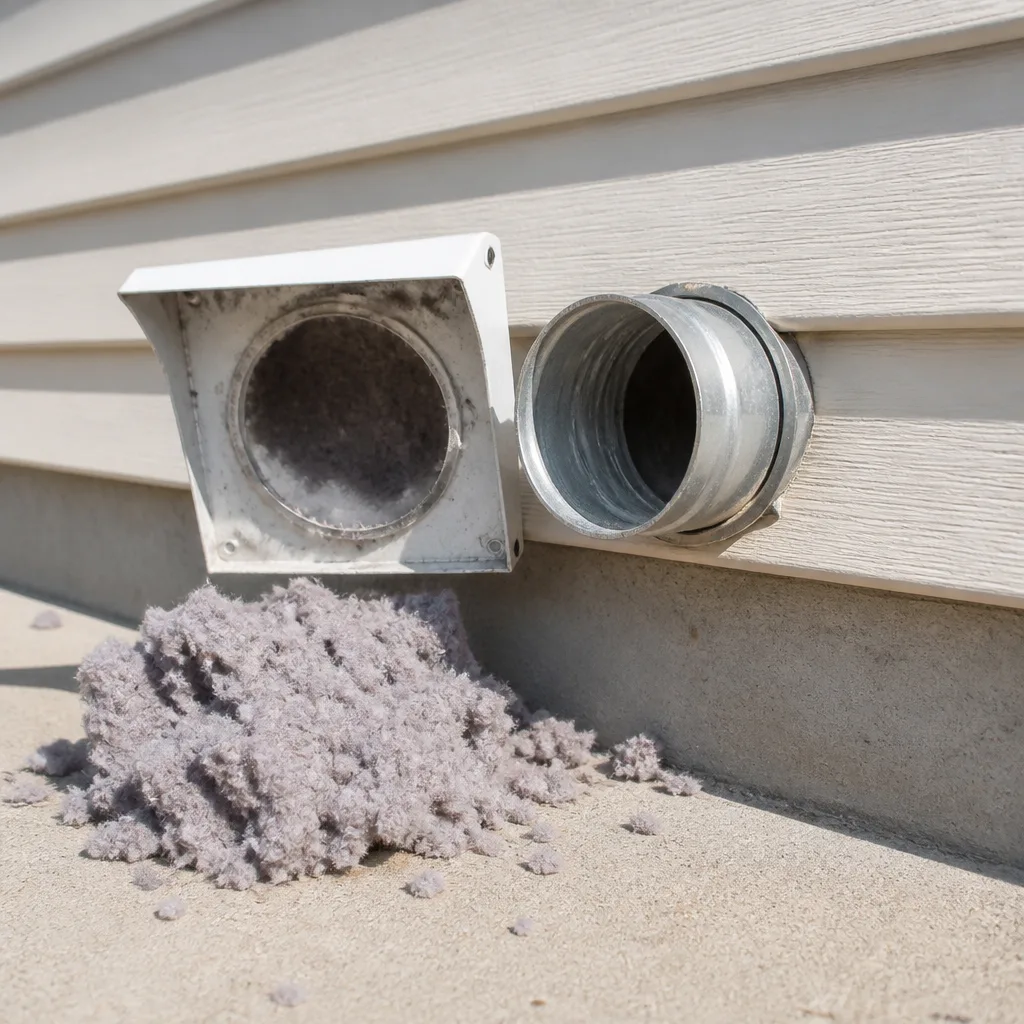 Dryer vent cleaning
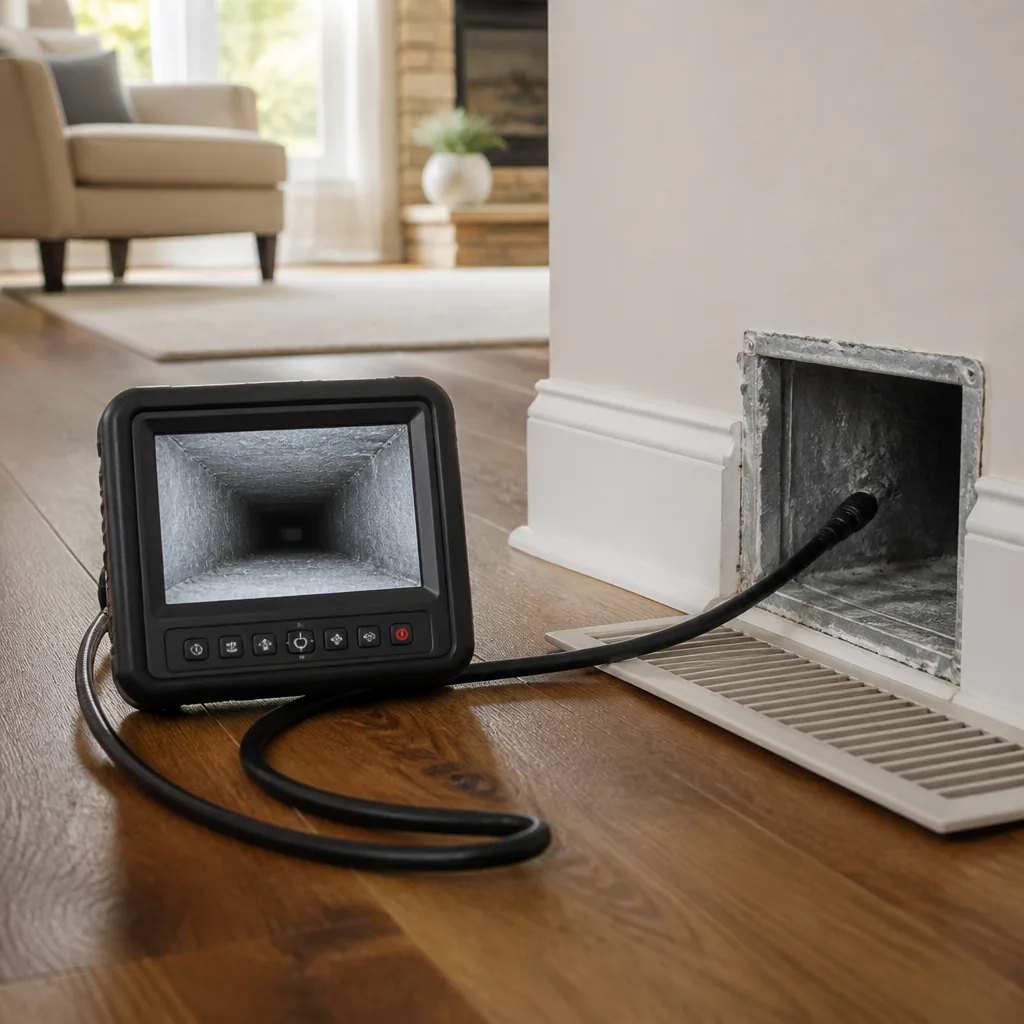 Camera inspection
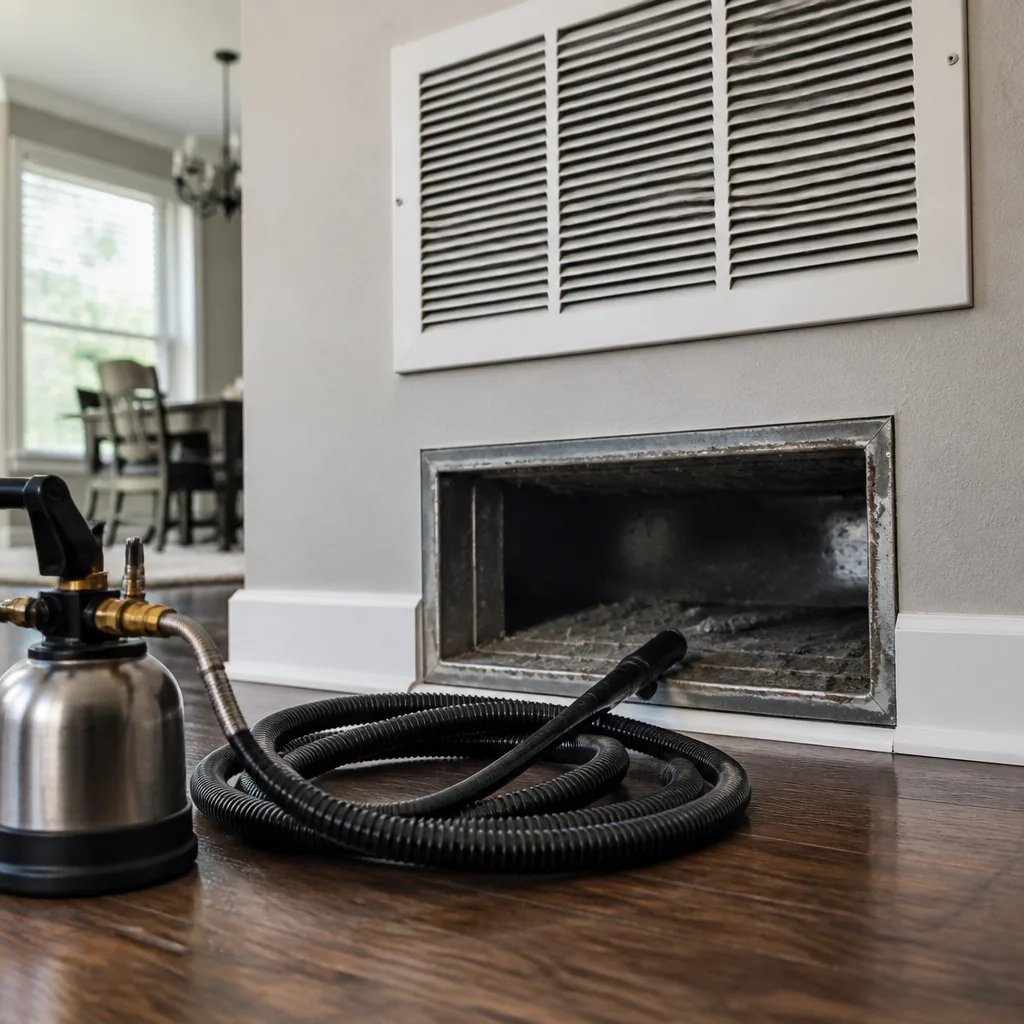 Sanitizing & deodorizing
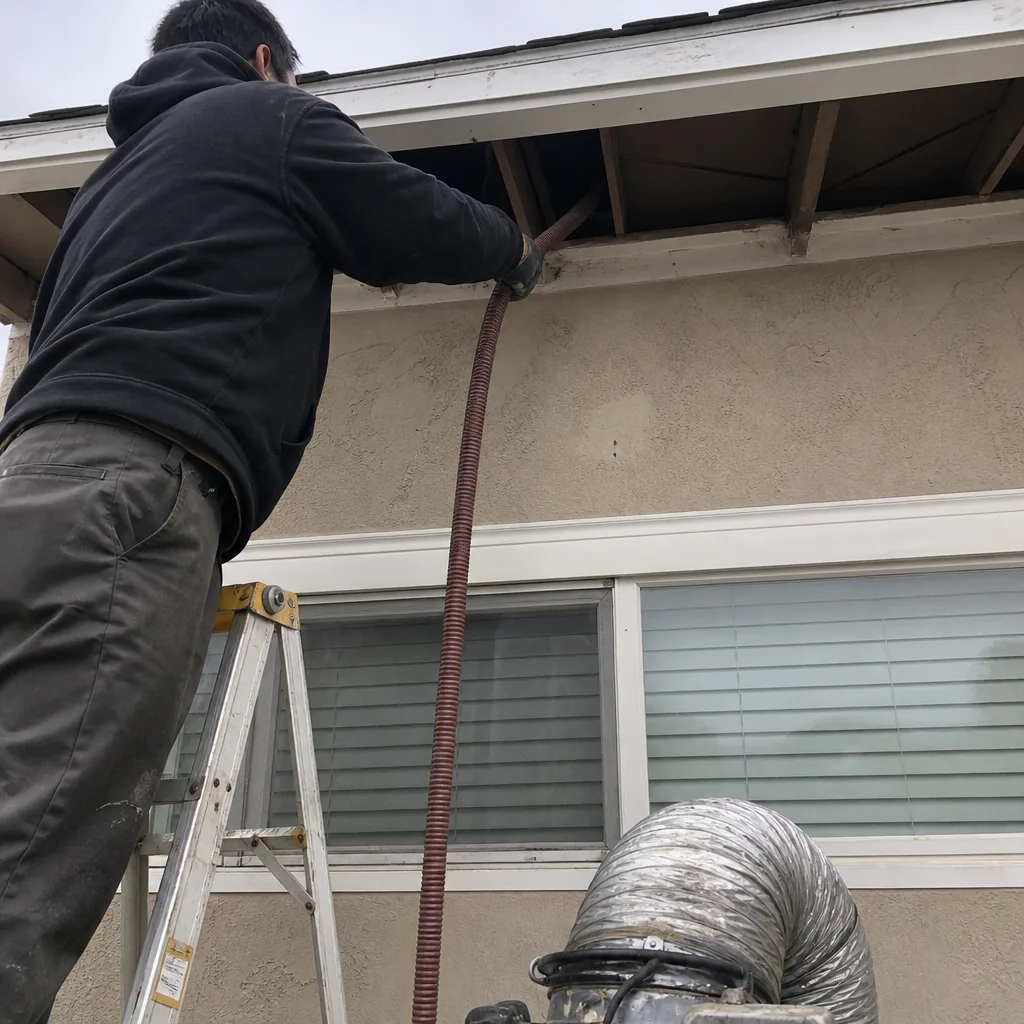
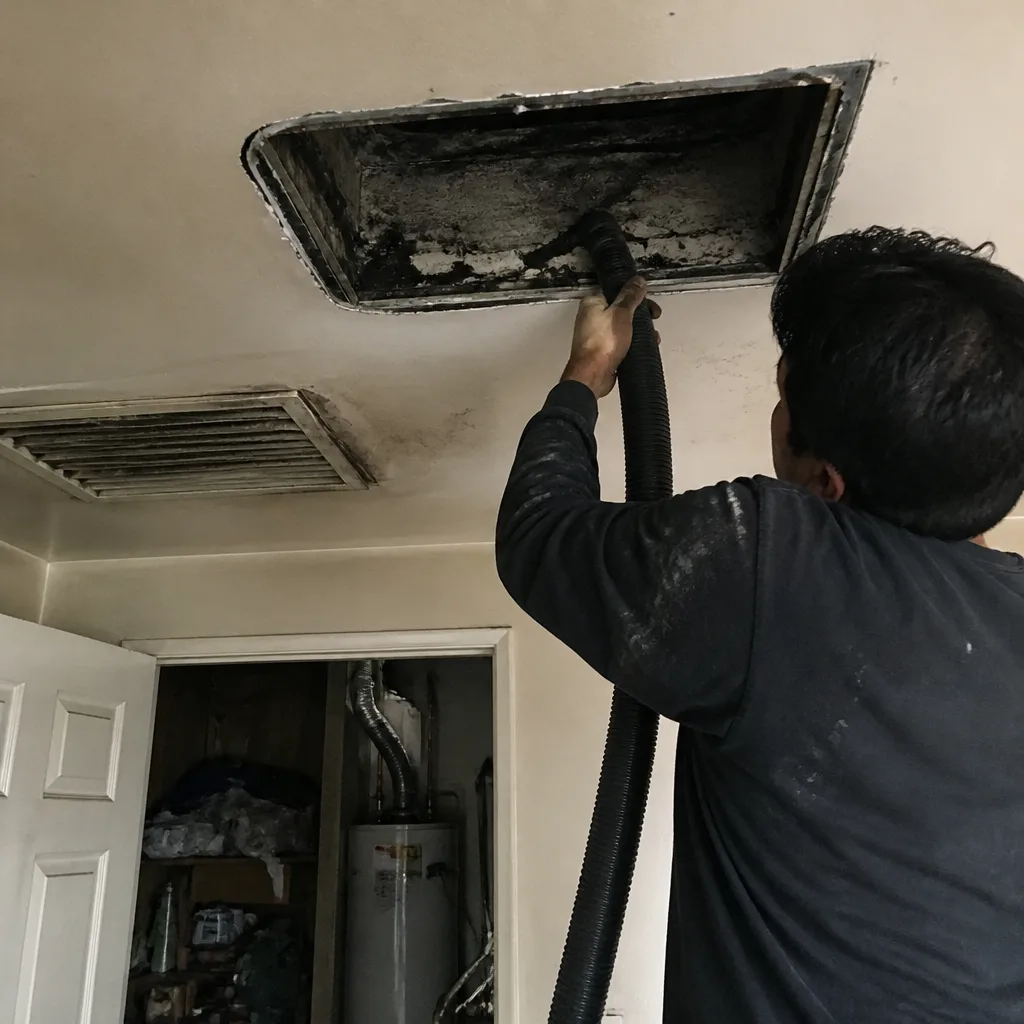
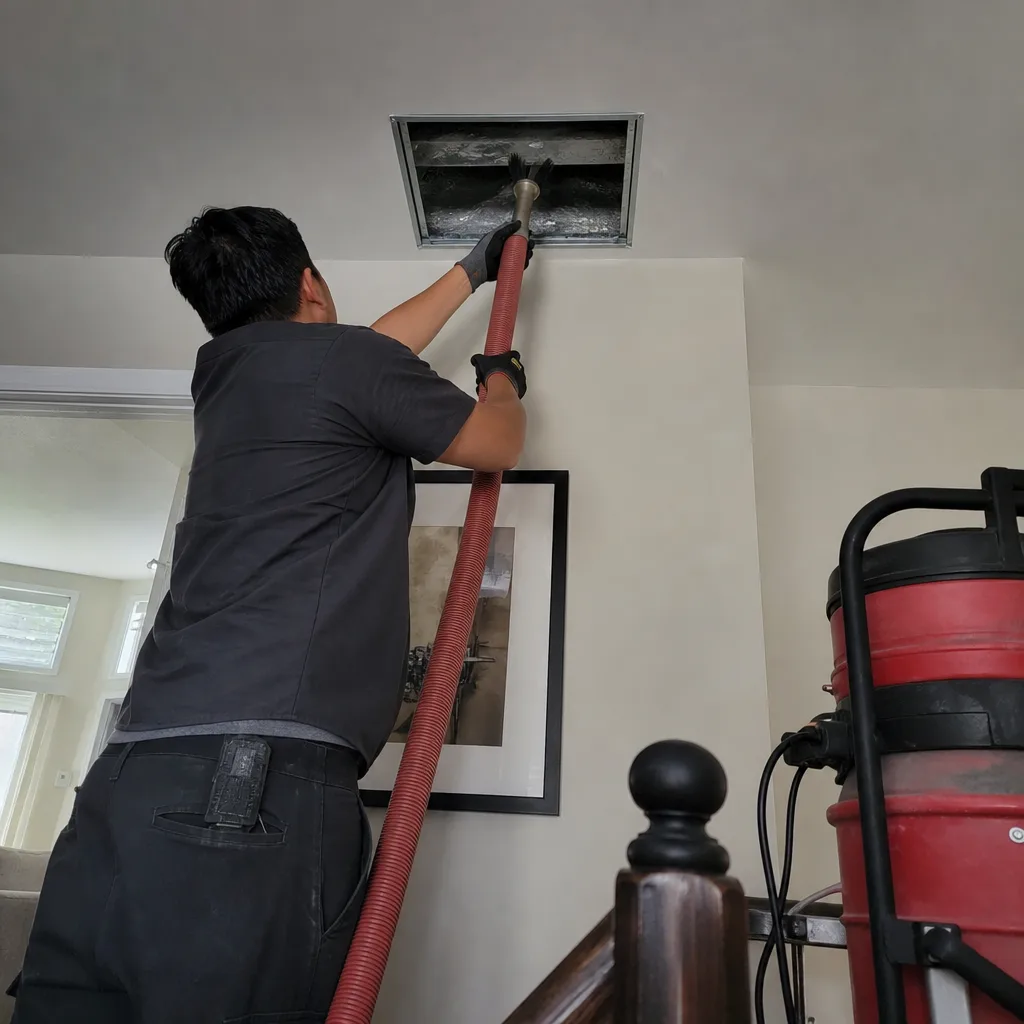
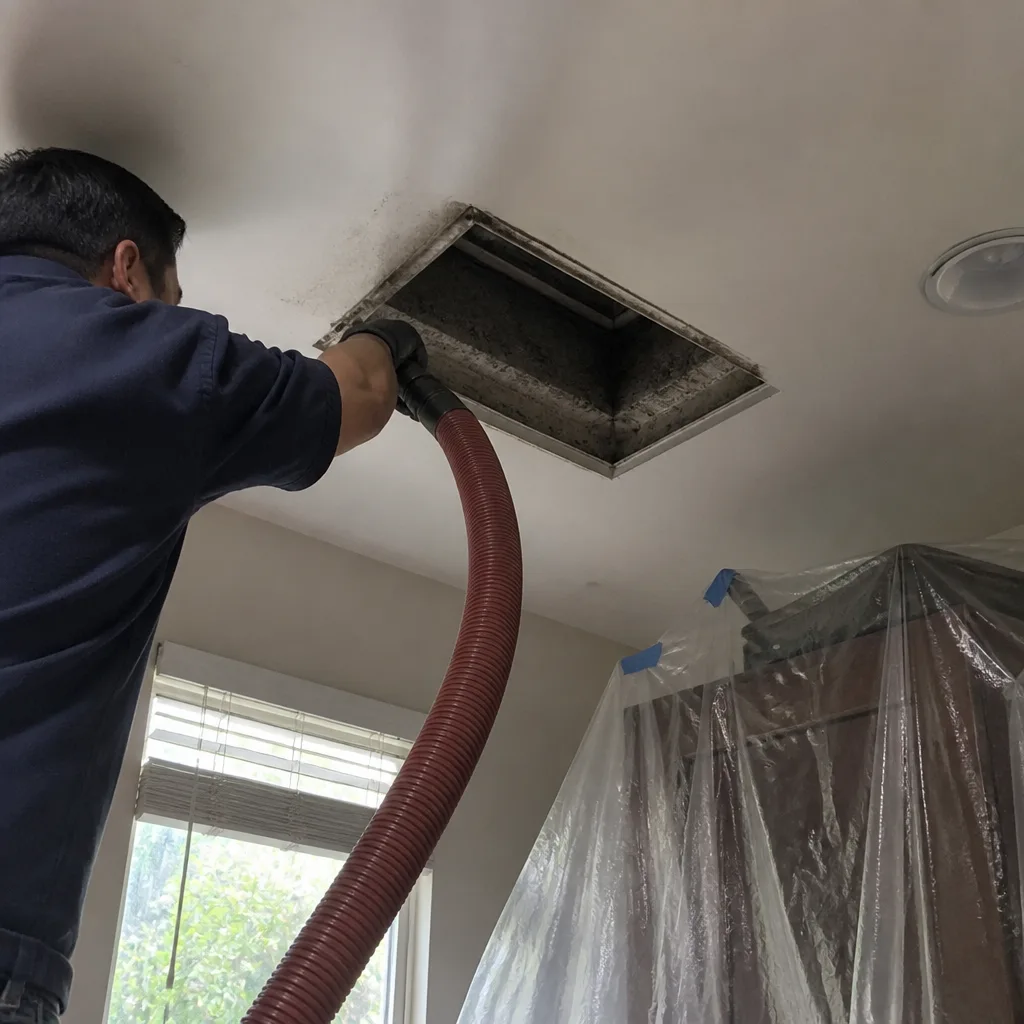
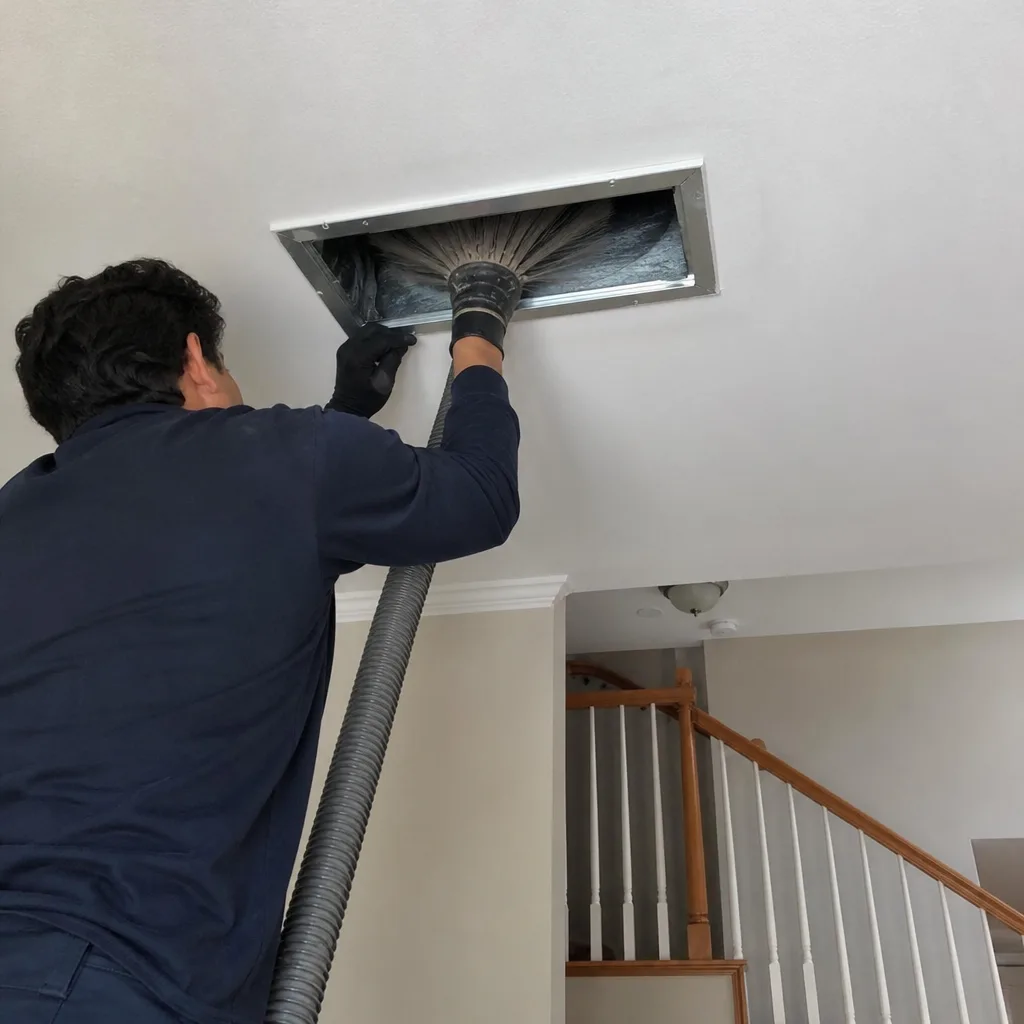
Whole-system duct and dryer vent check with before-and-after photos - you see exactly what came out of your vents
That "$99 whole-house special" is a bait ad - the real number appears once they are in your hallway, or the "clean" is a shop-vac at the register. We photograph the inside of your ducts before and after instead.
Seasonal Air Duct Cleaning Care for Mountain View: Year-Round Homeowner’s Guide
Mountain View averages more than 260 sunny days per year, which leads most homeowners to assume their HVAC system has an easy life. That assumption falls apart the first time a Diablo wind event pushes wildfire smoke over the Santa Cruz Mountains and the AQI climbs from “Good” to “Very Unhealthy” in under an hour. That same air moves through your return registers, into your ductwork, and across your filter. This guide breaks down what actually happens inside Mountain View ductwork across all four seasons, when cleaning and inspection make sense, and which months deserve your attention before problems compound.
Styles & brands we work with
- Whole-home duct cleaning
- Dryer vent cleaning
- Camera inspection
- Sanitizing & deodorizing
Quick Answer
Seasonal air duct cleaning in Mountain View means scheduling professional service twice a year: once in late spring after the pollen season tapers off, and once in late fall after wildfire smoke season ends and before winter humidity settles into crawl spaces. Most Mountain View homes need this cadence because the city’s oak, olive, and juniper canopy dumps heavy pollen into return ducts each spring, while late-summer smoke events load fine particulate matter onto duct walls that standard MERV 8 filters cannot catch. A two-visit annual rhythm keeps that seasonal debris from recirculating through your HVAC system for months at a time.
Table of Contents
- Spring in Mountain View: Pollen Season and Return Duct Loading
- Summer and Early Fall: Wildfire Smoke Protocol for Duct Systems
- Winter: Marine Layer Humidity and Crawl Space Ductwork
- Scheduling Cleaning Around HVAC Seasonal Switchover
- The Mountain View Air Quality Calendar: Monthly Actions
- Filter Upgrades That Actually Work for Mountain View’s Air
- When Ducts Need Repair, Not Just Cleaning
- Common Mistakes to Avoid
- When to Call a Professional
- Frequently Asked Questions
- The Bottom Line
Spring in Mountain View: Pollen Season and Return Duct Loading
Between March and May, Mountain View’s established tree canopy releases pollen in volumes that surprise even longtime residents. The biggest contributors are coast live oak, ornamental olive trees that line many mid-century neighborhoods like Gemello and Rex Manor, and juniper plantings common in Waverly Park and Blossom Valley landscaping. All three produce airborne pollen that travels easily through window screens and open doors.
Here’s what happens inside your ductwork: return-side ducts draw air from living spaces at negative pressure. Pollen particles, typically between 10 and 40 microns, drift toward return registers and get pulled into the duct system. A standard MERV 8 filter, which is what most Mountain View homes run, captures particles down to about 3 microns, but only on the air that actually passes through the filter. Pollen that settles on the interior walls of your return ductwork before reaching the filter stays there, accumulating week after week through the spring bloom.
In our experience cleaning ducts across Mountain View’s older housing stock, spring pollen is the single biggest contributor to visible duct wall buildup. Homes near heritage oaks in neighborhoods like Old Mountain View and Monta Loma consistently show heavier spring loading than homes in newer developments with fewer mature trees. That pollen coating becomes a problem in two ways. First, it feeds dust mite populations and provides a substrate for mold if humidity spikes. Second, when you switch from heating to cooling in May, the first few weeks of air conditioning blow across that pollen layer and redistribute fine particles into living spaces.
Spring is also when homeowners first notice allergy symptoms shifting indoors. If you’re running a HEPA room purifier in the bedroom but still waking up congested, return-duct pollen loading is a likely contributor. The fix is not a higher MERV rating alone, it’s removing what has already settled inside the duct system.
What to Do in Spring
- In late February or early March, inspect return registers for visible gray or yellow dust buildup on the grille fins.
- Replace your HVAC filter with a fresh MERV 11 or higher before the oak pollen peak hits in April.
- Run the HVAC fan in “On” mode rather than “Auto” during the worst pollen weeks, not “Auto.” This keeps air moving and reduces stagnation inside the return plenum.
- Schedule professional Air Duct Cleaning in Mountain View for late May or early June, once pollen counts have dropped and the settling period ends.
Summer and Early Fall: Wildfire Smoke Protocol for Duct Systems
Mountain View sits directly in the path of wildfire smoke corridors that develop when inland fires burn during late summer and early fall. Diablo wind events, typically peaking between August and October, push smoke from the East Bay and points further inland across the Bay and into the South Bay. The result is air quality that degrades from background levels to “Unhealthy” or “Very Unhealthy” ranges in a matter of hours.
Wildfire smoke is a different problem than pollen, and it demands a different duct strategy. Smoke particles are overwhelmingly PM2.5: fine particulate matter 2.5 microns or smaller. These particles are small enough to stay suspended in air for weeks, small enough to penetrate deep into lung tissue, and small enough to pass through most residential filters. More relevant to ductwork: PM2.5 particles from smoke carry tar-like organic compounds that coat duct walls with a sticky, dark residue. That residue traps subsequent dust, accelerates buildup, and creates a persistent smoke odor that lingers long after outdoor air clears.
The homeowner instinct during a smoke event is to run the HVAC system constantly to filter indoor air. That helps only if the filter is rated for PM2.5 interception. A standard MERV 8 fiberglass filter captures almost none of it. A MERV 13 or higher filter captures a meaningful fraction, but it loads quickly during sustained smoke events and requires replacement every two to three weeks, not every 90 days.
Wildfire Smoke Protocol for Mountain View Homes
- When AQI exceeds 150, set your HVAC fan to “On” and close outdoor air intake dampers if your system has one. Most Mountain View homes do not, which means smoke enters through window gaps and door seals, not through a dedicated intake.
- Upgrade to a MERV 13 filter during smoke season. Confirm your blower can handle the static pressure drop. Older systems in Mountain View’s 1960s housing stock sometimes struggle with high-MERV filters; a technician can verify airflow.
- Do not run bathroom exhaust fans or kitchen range hoods continuously during a smoke event. They depressurize the home and pull more outdoor smoke through gaps.
- After the smoke clears, schedule a post-event duct inspection and cleaning. Smoke residue on duct walls cannot be removed by a filter swap.
We use Abatement Technologies HEPA filtration equipment during every cleaning job, which matters most after a smoke event. HEPA containment means the contaminants we dislodge from duct walls are captured at the point of cleaning, not blown back into your living room. That distinction becomes especially relevant when the contaminant in question is wildfire soot, which is fine enough to stay airborne for hours if recirculated.
Winter: Marine Layer Humidity and Crawl Space Ductwork
Mountain View winters are mild by any national standard, but the marine layer that rolls in from November through February creates a humidity profile that many homeowners overlook. Morning fog, drizzle, and overcast skies push indoor relative humidity toward the 60-70% range for weeks at a time. That moisture level is meaningful for ductwork, especially in older homes with flex duct running through crawl spaces.
Flex duct, the insulated flexible tubing used extensively in Mountain View homes built before 2000, is vulnerable to three humidity-driven failures: condensation on exterior surfaces when crawl space air is cooler than the air inside the duct, seam separation when the outer jacket absorbs moisture and the adhesive degrades, and mold growth on the inner liner when condensation persists. Homes in neighborhoods like Cuesta Park and Martens-Carmelita, where pier-and-beam foundations open directly to crawl spaces, see this more often than slab-on-grade construction in newer developments near North Bayshore.
Winter is also when you’ll notice musty odors from supply registers. That odor is not necessarily mold inside the duct; it’s often humidity in the crawl space being pulled through small leaks in the duct jacket. Either way, the underlying issue is duct integrity under moisture load. Cleaning alone will not resolve a crawl space humidity problem. But a seasonal inspection during the wet months identifies seam failures early, before they become full separations that dump conditioned air into the crawl space and draw unfiltered crawl space air into the living space.
Winter Checklist
- Inspect visible flex duct in crawl spaces for sagging, disconnected joints, or condensation on the outer jacket.
- Run a dehumidifier in the crawl space if relative humidity consistently exceeds 65%.
- Replace the HVAC filter before winter heating season begins, even if it was replaced during smoke season.
- If you smell mustiness from supply registers on damp mornings, schedule a duct integrity inspection. Musty smell plus flex duct in a crawl space rarely resolves on its own.
Where winter uncovers separated ducts, torn jackets, or crushed sections, we refer to our Air Duct Repair in Mountain View service. Repair addresses root-cause duct integrity issues that cleaning cannot fix
Scheduling Cleaning Around HVAC Seasonal Switchover
Here’s a scheduling principle we apply to every Mountain View home: the worst time to clean ducts is right after you’ve already switched modes. Here’s why. In May, when you switch from heating to cooling for the first time, the blower pushes air through ducts that have accumulated six months of whatever your home’s air carried. If you clean in mid-June, after two weeks of cooling, you’ve already blown a portion of that accumulated debris into your living space and across your coil. The same applies in November, when the first heat cycle pushes four months of pollen-season residue through the system.
The better approach is to clean before the switchover, not after. Aim for late April to early May, just as pollen season winds down and before the heat arrives. Then again in late October or early November, before you switch back to heating. This cadence removes seasonal accumulation at its peak, just before the system mode change circulates everything that settled.
If you’re only going to clean once per year, choose late fall. That single service removes spring pollen, summer dust, and any wildfire smoke residue in one pass, and sets you up for the winter heating season with clean duct walls. The tradeoff is that you’ll spend spring and summer running air through pollen-loaded ducts, which matters if anyone in the home has seasonal allergies.
For homes with residents who have asthma or significant seasonal allergies, the twice-yearly schedule is not a luxury. It’s the difference between managing symptoms and managing the source.
The Mountain View Air Quality Calendar: Monthly Actions
Mountain View’s air quality follows a predictable rhythm, and your duct maintenance should follow it. Here’s a month-by-month breakdown built around the city’s actual air quality calendar, not a generic national template.
January
Marine layer humidity is at its peak. Check crawl space flex duct for condensation and sagging. Replace the HVAC filter if it’s been more than 60 days since the last swap.
February
Humidity begins tapering. Schedule any duct repair work identified during winter inspection before spring pollen season arrives.
March
Oak and juniper pollen begins. Switch to a MERV 11 filter. Run the fan in “On” mode during peak pollen weeks. Begin thinking about scheduling a spring cleaning.
April
Peak pollen month in Mountain View. Oak, olive, and juniper are all releasing. If allergy symptoms are severe indoors, close windows and run the HVAC fan continuously.
May
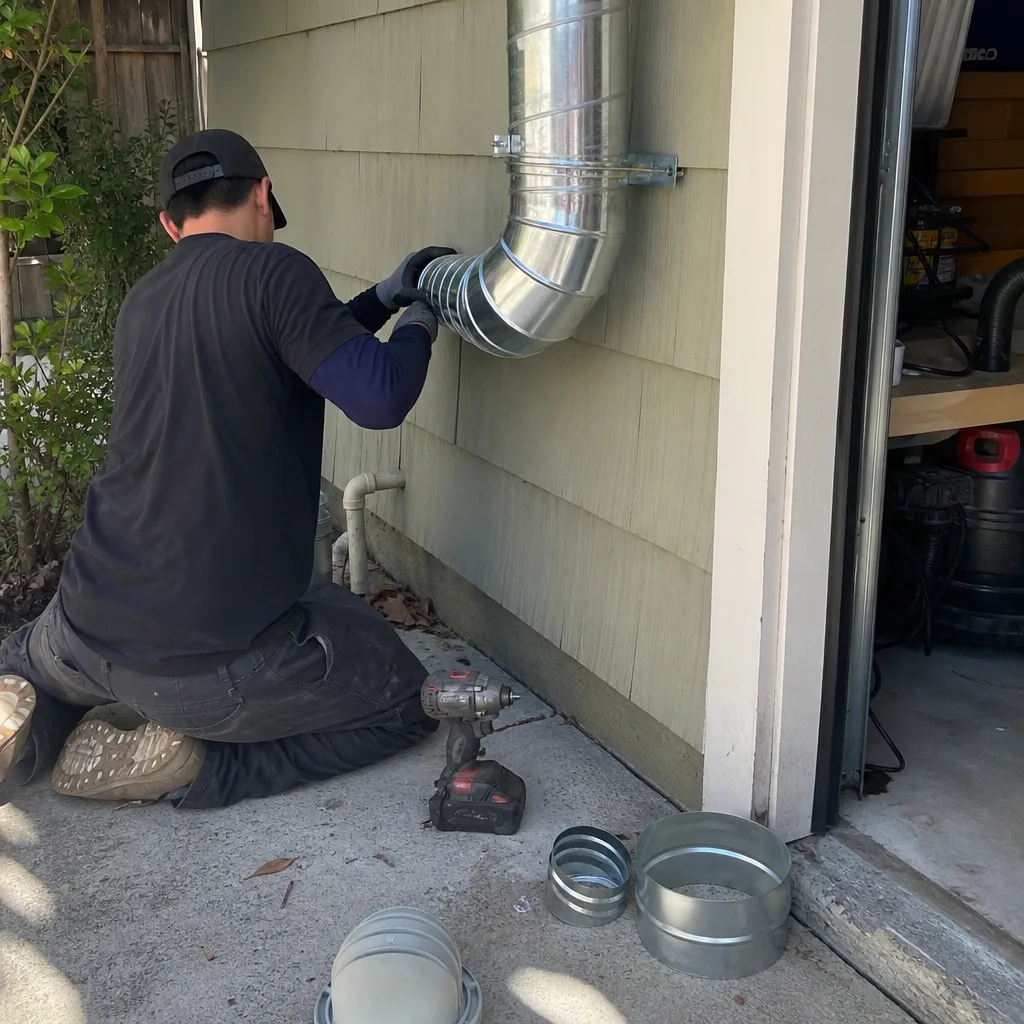
Pollen counts drop. Schedule professional duct cleaning before cooling season starts. This is the first of two recommended annual service points. Have dryer vents cleaned at the same time, since lint accumulation from winter laundry plus spring pollen creates a combined hazard. See our Dryer Vent Cleaning in Mountain View page for details on dryer-specific service.
June
Cooling season begins. With clean ducts and a fresh filter, the system runs efficiently through the first heat waves.
July
Low pollen, moderate ozone. Replace the filter if it’s been 60 days. Check return registers for dust accumulation.
August
Wildfire season begins in earnest. Monitor AQI. If smoke events occur, follow the smoke protocol: MERV 13 filter, fan “On,” limit exhaust fan use.
September
Peak wildfire smoke risk for Mountain View. Diablo wind events are most common this month. After any sustained smoke episode, inspect supply registers for soot staining.
October
Smoke season tapers. Schedule the second professional duct cleaning of the year and a dryer vent check before winter. This timing removes accumulated smoke residue and summer dust before heating season.
November
Heating season begins. With clean ducts, the first heat cycles don’t redistribute seasonal debris. Switch to a fresh filter.
December
Monitor indoor humidity. If it exceeds 60% consistently, address ventilation in bathrooms and laundry areas to reduce moisture load on ductwork.
Filter Upgrades That Actually Work for Mountain View’s Air
Filter choice matters more in Mountain View than in most Bay Area cities because the city’s air quality challenges are seasonal and specific. A single year-round filter rating is a compromise that leaves gaps in either spring or fall protection.
Standard MERV 8 filters, the type most homes in Mountain View run year-round, capture roughly 20% of PM2.5 particles. During spring pollen season, pollen particles are larger and easier to catch. But during wildfire smoke events, PM2.5 is the primary threat, and MERV 8 filtering is inadequate. A MERV 13 filter captures 50% or more of PM2.5 on a single pass, which matters when outdoor air is repeatedly cycled through the system.
The tradeoff is airflow resistance. Higher MERV ratings create more static pressure drop, which reduces airflow and can strain older blowers. Homes in Mountain View with original HVAC equipment from the 1980s or 1990s may not handle a MERV 13 filter without measurable airflow loss. In those cases, a MERV 11 filter is the practical compromise: better than MERV 8, less restrictive than MERV 13, and adequate for moderate pollen seasons.
For smoke season specifically, consider a MERV 13 filter installed only during August through October, then switch back to MERV 11 for the rest of the year. This seasonal filter rotation optimizes protection during high-risk months without overloading the blower year-round.
One more note: filter upgrades do not substitute for duct cleaning. A filter catches particles on the air that passes through it. Particles that settle on duct walls upstream of the filter are already in the system and will be redistributed every time the blower runs. The filter can’t reach them. Only contact cleaning removes what’s already adhered to duct surfaces.
When Ducts Need Repair, Not Just Cleaning
Cleaning removes what’s inside the duct. Repair fixes the duct itself. In Mountain View’s older housing stock, which includes thousands of homes built between 1950 and 1980, the two services are often needed together.
Here’s how to tell the difference. If you see dust blowing from supply registers after a cleaning, that’s not incomplete cleaning; that’s a duct leak pulling unfiltered attic or crawl space air into the system. If one room never reaches the temperature of the rest of the house, that’s often a disconnected or crushed duct run, not a duct wall problem. If you hear rattling or feel vibration in walls when the blower runs, that’s a loose duct joint or separated seam. These are structural and mechanical issues that cleaning cannot address.
Common repair scenarios we see in Mountain View include: flex duct separating from rigid trunk lines in crawl spaces, duct jacket tears from rodent activity in pier-and-beam foundations, collapsed sections where old ductwork has been crushed by crawl space traffic, and leaking plenum connections at the air handler. Each of these requires physical repair or replacement of duct sections, not additional cleaning passes.
The distinction matters because homeowners sometimes pay for a second or third cleaning when the real problem is a leak or separation that keeps recontaminating the system. We clean the duct. We also fix it if it’s broken. That’s the difference between treating symptoms and fixing the source. Our Air Duct Repair in Mountain View service covers the structural side of the equation.
Common Mistakes to Avoid
- Cleaning once and assuming the problem is solved permanently. Duct walls re-accumulate debris on a seasonal cycle in Mountain View. Without a spring and fall rhythm, you’re back to square one within six months.
- Running a MERV 13 filter year-round on an older blower. The airflow restriction can cause the blower to work harder, increase energy use, and shorten motor life. Match the filter to the season and the equipment.
- Waiting until after the first heat wave to clean in spring. By then, you’ve already pushed accumulated pollen through the system. Clean before the mode switchover.
- Ignoring crawl space humidity and focusing only on duct surfaces. In Mountain View winters, moisture is often the root cause of musty odors and mold growth. Address humidity and duct integrity together.
- Using a consumer-grade shop vacuum to clean ducts. Duct cleaning requires negative pressure equipment that captures dislodged particles. We use Rotobrush and Nikro professional cleaning systems, not shop vacuums. The difference is containment.
- Assuming a furnace filter change handles wildfire residue. Smoke soot adheres to duct walls and requires contact removal. A filter swap does nothing for residue already in the system.
- Skipping dryer vent maintenance because the dryer “still works.” Slow drying is the late-stage symptom. Lint accumulation combined with spring pollen and fall humidity creates conditions for a duct fire before performance degrades noticeably.
When to Call a Professional
Call a duct cleaning professional when you notice visible dust or pollen buildup on return grilles, when allergy symptoms worsen indoors despite a clean home, when supply registers show soot staining after a wildfire smoke event, or when rooms fail to reach set temperatures. Also call if you smell mustiness from registers on damp winter mornings, hear rattling in the walls when the blower runs, or notice dryer cycles taking longer than 45 minutes for a standard load. These are all signals that go beyond what a filter swap or DIY inspection can resolve. HEPA containment means what comes off your duct walls doesn’t go back into your air, which is the baseline requirement for any legitimate cleaning service. Duct Cleaning Mountain View offers free estimates in Mountain View. Call (866) 528-3938 to schedule an inspection.
Frequently Asked Questions
Professional air duct cleaning for a standard Mountain View single-family home typically ranges from $350 to $700 for a complete system, including all supply and return ducts, the plenum, and the air handler. Homes with larger duct networks, multiple HVAC zones, or significant wildfire smoke residue may fall above that range. Dryer vent cleaning is a separate service and typically costs $100 to $200. Call (866) 528-3938 for an exact quote. Estimates are free.
Twice per year is the right cadence for most Mountain View homes: once in late spring after pollen season ends, and once in late fall after wildfire smoke season and before winter heating begins. Homes without allergy-sensitive residents and with minimal tree cover can often go to an annual schedule with a late-fall cleaning. If anyone in the home has asthma or significant allergies, twice per year is the safer choice. Call (866) 528-3938 to talk through your home’s specific exposure profile.
Cheap duct cleaning quotes usually come from operators using consumer-grade equipment, rushing through the job in under an hour, or offering a low teaser price that expands once the technician arrives. Legitimate duct cleaning requires professional negative-pressure equipment, access to every duct run, and enough time to actually clean the full system rather than a few visible registers. The bait-and-switch model is common in this industry. We quote one flat price per system, agreed before work begins, with no per-vent pricing. Call (866) 528-3938 for a straight quote.
Ask for before-and-after photos of the inside of your ducts. Any legitimate service should provide them as standard practice. You can also check that the technician accesses every register and the air handler, not just a few visible grilles. Run the blower after the service and check for reduced dust on supply registers within a week. If the technician won’t provide photos, that’s a red flag. Our process includes before-and-after documentation of your actual duct system, not stock photos. Call (866) 528-3938 to ask about our documentation process.
Late fall is the single best time, ideally in October or early November after wildfire smoke season ends and before heating season begins. This single cleaning removes spring pollen, summer dust, and smoke residue in one pass. If you’re doing two cleanings per year, add a late-spring visit in May before cooling season starts. The goal in both cases is to clean before HVAC mode switchover, not after. Call (866) 528-3938 to schedule a pre-switchover cleaning.
Wildfire smoke residue itself does not damage duct materials, but it coats duct walls with a sticky, tar-like layer that accelerates dust accumulation and can create persistent odors. If smoke exposure was severe or prolonged, professional cleaning with HEPA containment equipment removes the residue. In extreme cases where odor persists after cleaning, sections of flex duct may need replacement. Any torn or separated duct jackets exposed to smoke should be repaired or replaced. Call (866) 528-3938 for a smoke-residue assessment.
The Bottom Line
Mountain View’s air quality challenges follow a predictable rhythm: spring pollen, summer and fall wildfire smoke, and winter marine-layer humidity. Each season loads your ductwork with a different contaminant, and each demands a different homeowner response. The most effective strategy is simple: clean your ducts twice a year, in late spring and late fall, timed around HVAC mode switchover so you’re not redistributing six months of accumulated debris through a freshly started system. Use seasonal filters strategically, watch crawl space humidity in winter, and address duct integrity issues when they appear instead of paying for repeat cleanings that cannot fix structural problems. Professional-grade equipment, HEPA containment, and a focus on the duct system specifically make the difference between a cleaning that lasts and one that doesn’t. For help with any part of this, call Duct Cleaning Mountain View at (866) 528-3938 for a free estimate.
Explore more about our services at the Duct Cleaning Mountain View home page or browse our specific service pages: Air Duct Cleaning in Mountain View, Dryer Vent Cleaning in Mountain View, and Air Duct Repair in Mountain View.
Written by the team at Duct Cleaning Mountain View, serving Mountain View since 2015.
See the difference
 Before
 After
 Before
 After
 Before
 After