
Last updated November 2, 2026
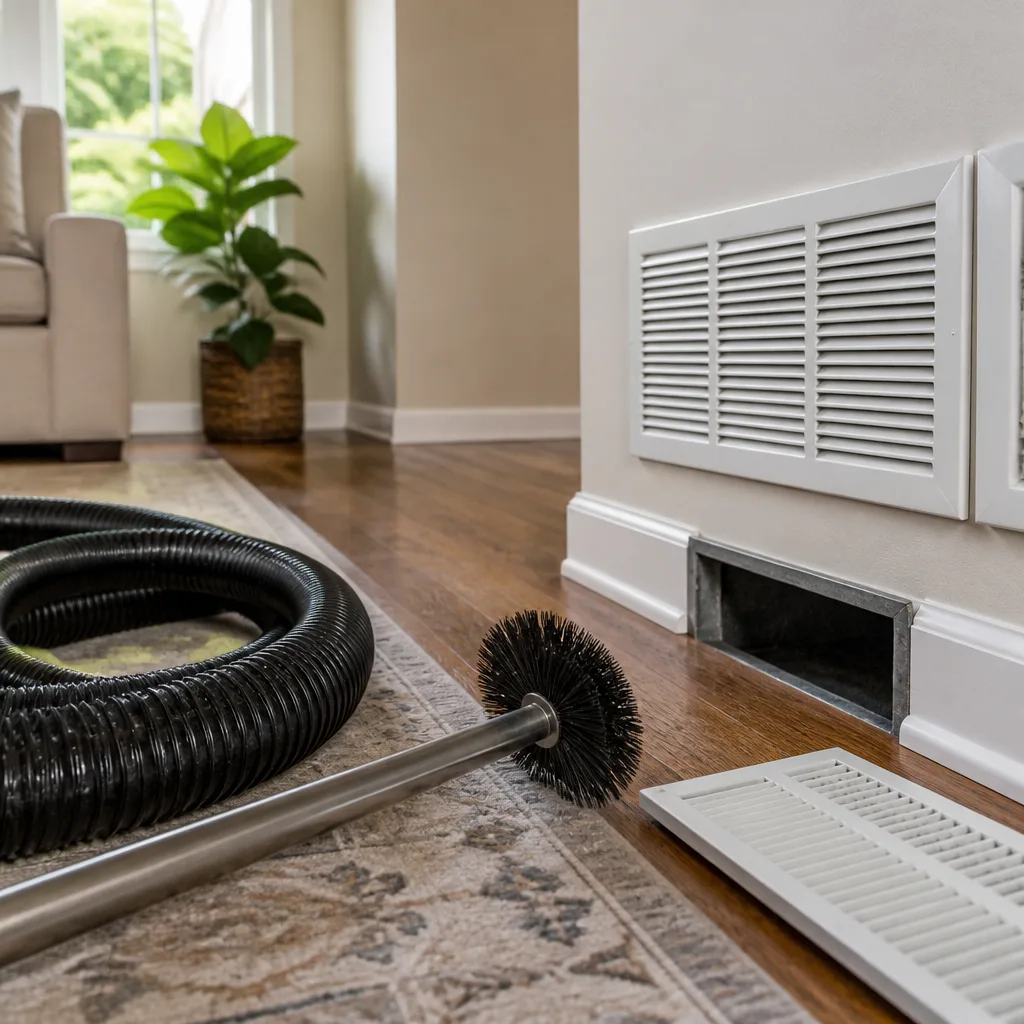 Whole-home duct cleaning
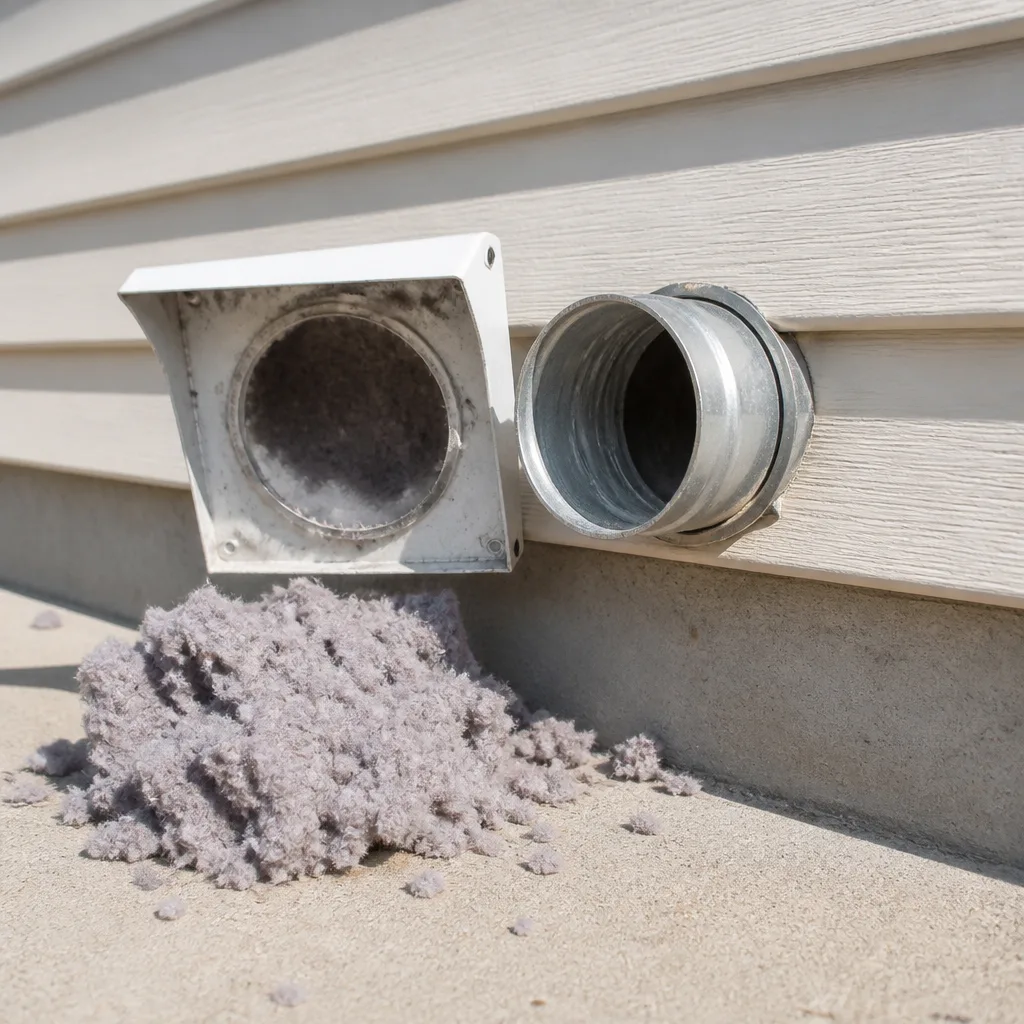 Dryer vent cleaning
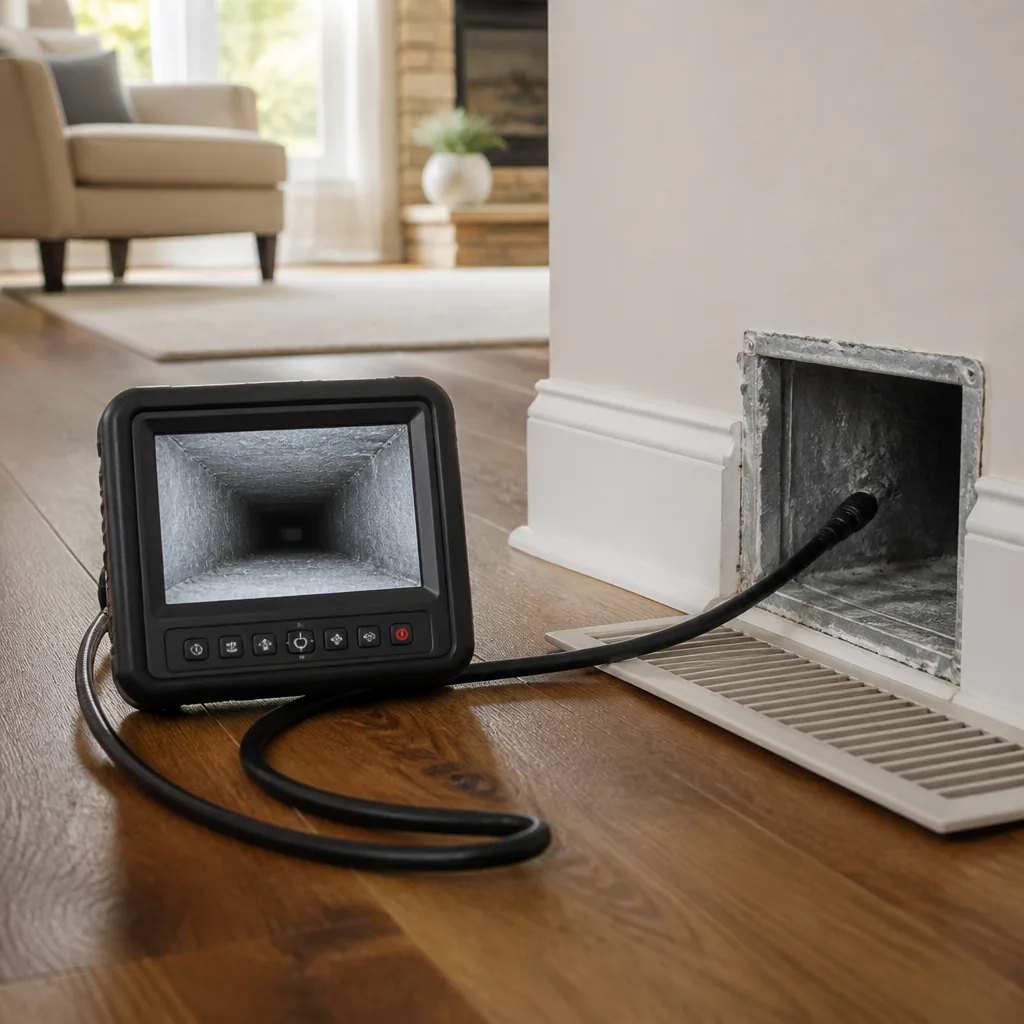 Camera inspection
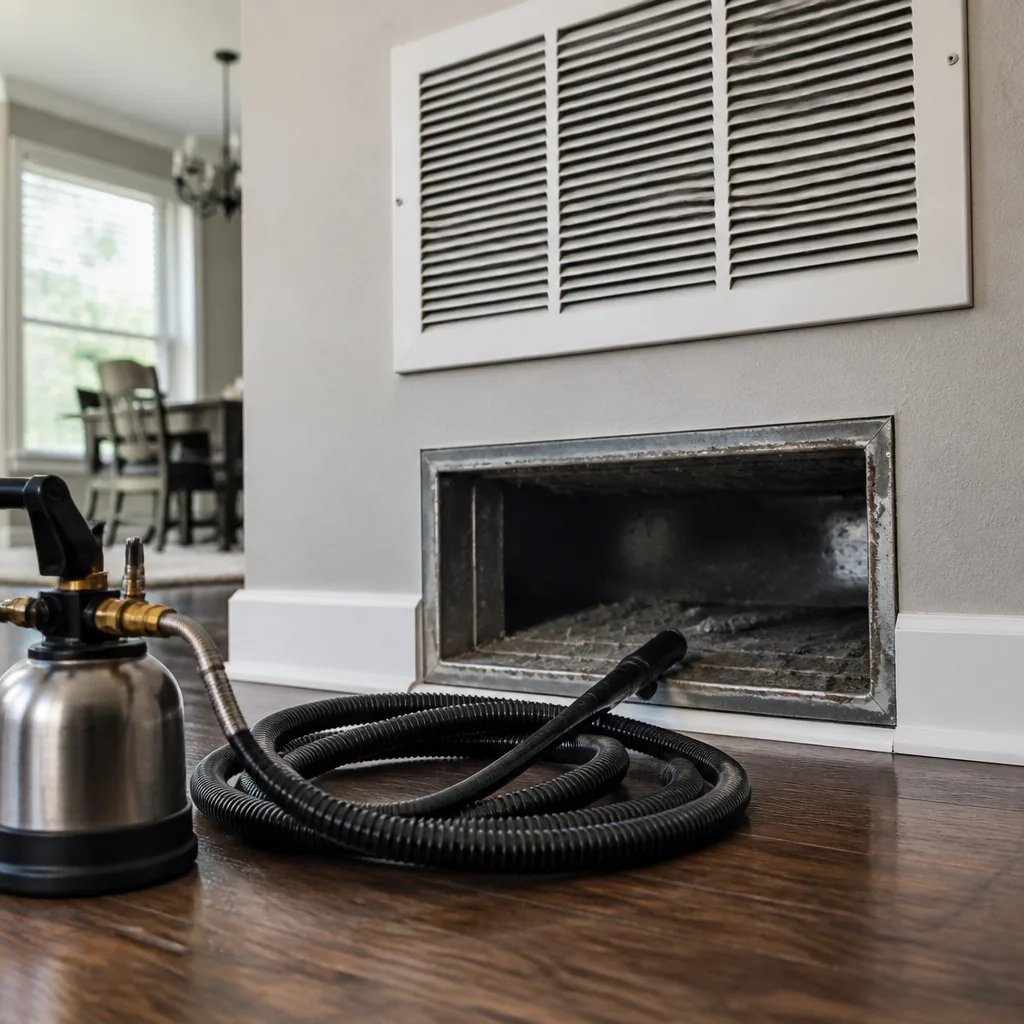 Sanitizing & deodorizing
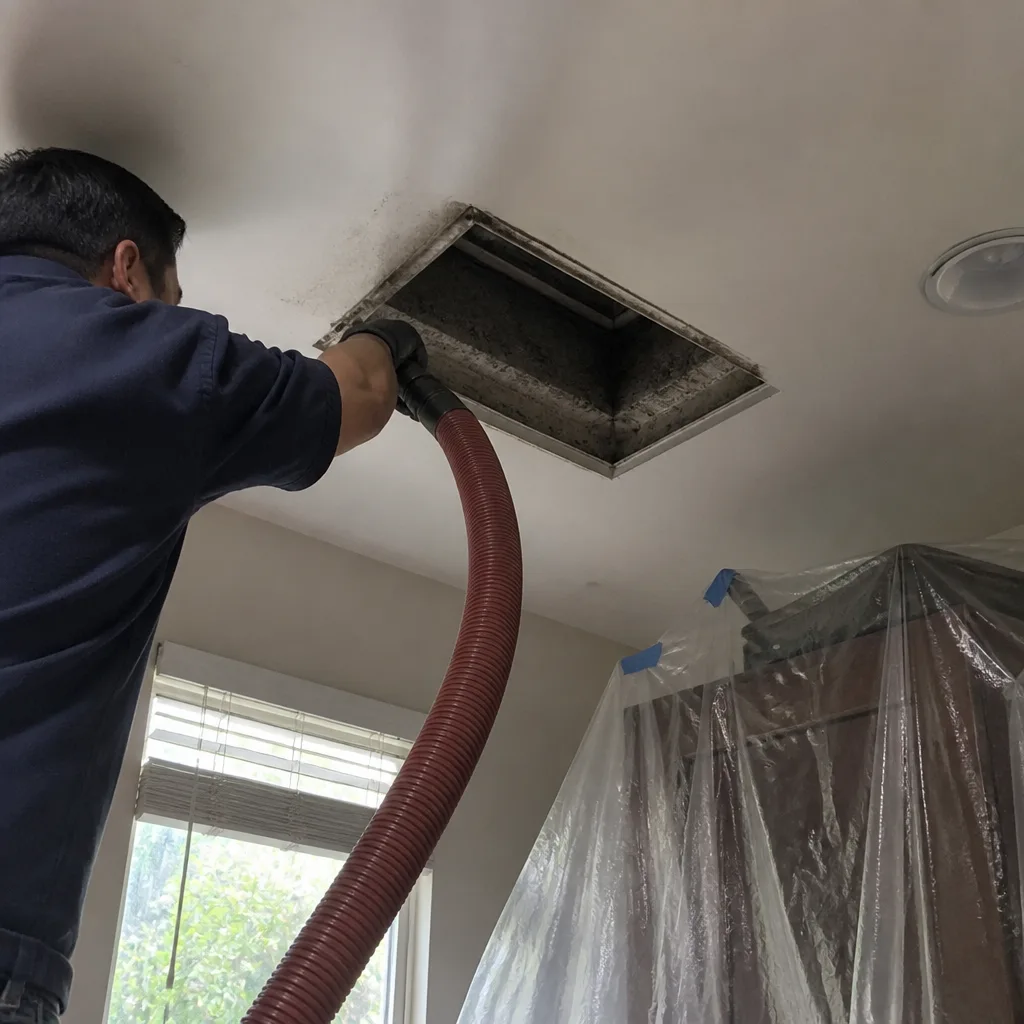
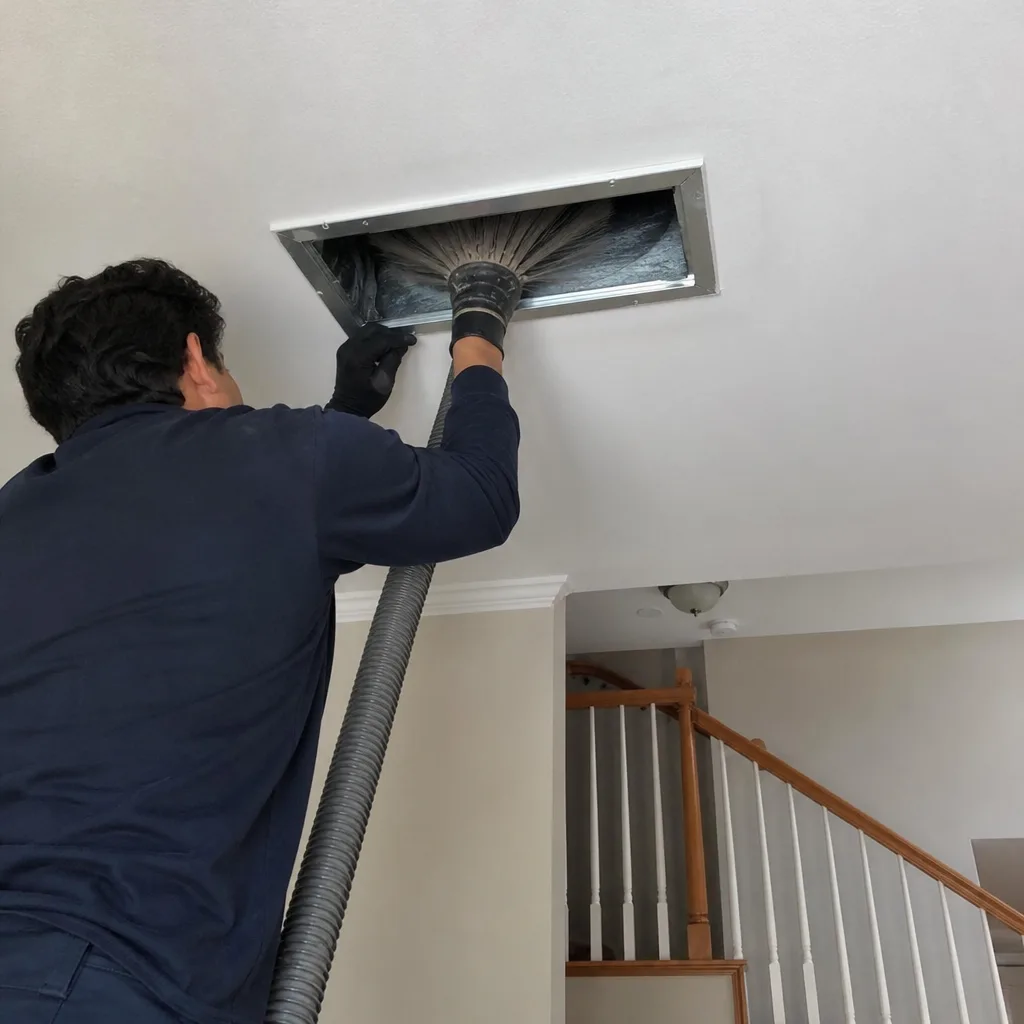
Whole-system duct and dryer vent check with before-and-after photos - you see exactly what came out of your vents
That "$99 whole-house special" is a bait ad - the real number appears once they are in your hallway, or the "clean" is a shop-vac at the register. We photograph the inside of your ducts before and after instead.
The Complete Air Duct Cleaning Guide for Mountain View Homeowners
Mountain View sits in an air basin that the EPA has flagged for PM2.5 exceedances multiple times since 2020. That means the air outside your home carries fine particulate matter that finds its way into your ductwork, settles there, and recirculates every time your furnace or AC kicks on. Most duct cleaning advice you’ll find online was written for humid Midwest basements or Florida humidity, not a Silicon Valley home with a wildfire season and a crawl space. This guide maps the actual conditions Mountain View homes face, because knowing your local duct reality changes every decision you make about cleaning, repair, and maintenance.
Styles & brands we work with
- Whole-home duct cleaning
- Dryer vent cleaning
- Camera inspection
- Sanitizing & deodorizing
Quick Answer
Air duct cleaning in Mountain View typically costs between $450 and $900 for a whole-home system, depending on square footage, number of returns, and the condition of the ductwork. The job takes 3 to 6 hours and should include negative pressure extraction with HEPA filtration, not a shop-vac-and-brush approach. Homes with crawl-space flex duct or recent wildfire smoke exposure benefit most from professional cleaning.
Table of Contents
- Why Mountain View Ducts Get Dirtier Than the National Average
- Duct Types in Mountain View Homes and How Each Is Cleaned
- What Professional Equipment Actually Does Mechanically
- How to Vet a Duct Cleaning Contractor Using the NADCA ACR Standard
- The Cleaning Process, Step by Step
- What It Costs in Mountain View
- Post-Cleaning Filter and IAQ Maintenance for Mountain View’s Seasons
- Common Mistakes to Avoid
- When to Call a Professional
- Frequently Asked Questions
- The Bottom Line
Why Mountain View Ducts Get Dirtier Than the National Average
Mountain View homes accumulate duct debris faster than most of the country for three reasons that have nothing to do with housekeeping. First, wildfire smoke. When the Santa Cruz Mountains burn or a north wind carries smoke from the Diablo Range into the South Bay, fine particulate matter gets pulled into your return registers and coats the interior of your ductwork. This soot is sub-2.5-micron, which means it passes through standard fiberglass furnace filters without stopping. Once it’s inside the ducts, it stays there until someone physically removes it.
Second, the crawl-space problem. A significant portion of Mountain View’s housing stock, especially the mid-century tract homes around Monta Loma, Rex Manor, and the neighborhoods east of Rengstorff Park, runs ductwork through unconditioned crawl spaces. These spaces are dusty, often damp in winter, and rarely sealed. Flex duct in a Mountain View crawl space pulls in particulate matter through any seam, joint, or pinhole. We regularly open up crawl-space duct runs in this city and find a layer of fine gray dust that traces back to the soil itself.
Third, the run-time factor. Mountain View’s climate means your HVAC system cycles less than a Phoenix system but more than a coastal Half Moon Bay system. Every cycle pulls air through the filter and pushes it through the ducts. If the ducts are dirty, every cycle stirs that debris back into your living space. The EPA’s indoor air quality guidance notes that indoor particulate concentrations can be two to five times higher than outdoor levels. In a city where outdoor levels already spike during fire season, that multiplier matters.
This is why a Duct Cleaning Mountain View home guide starts with local conditions. The national averages for duct cleaning frequency assume ordinary household dust. Mountain View homes deal with smoke events, crawl-space particulates, and construction dust from the constant remodeling that defines Silicon Valley real estate.
Duct Types in Mountain View Homes and How Each Is Cleaned
Not all ductwork is the same, and the cleaning method should change based on what’s actually in your house. Mountain View has three dominant housing eras, and each one comes with its own duct profile.
Mid-Century Eichler and Eichler-Adjacent Homes (1950s – 1970s)
Joseph Eichler built thousands of homes in Mountain View, particularly in the Monta Loma and Shadow Oaks areas. Original Eichlers used radiant heating: hot water pipes in the concrete slab, no forced air ducts at all. But most of these homes have been retrofitted over the decades, and the retrofits often pushed flexible duct through the attic or crawl space. Retrofit flex duct in an Eichler is rarely sized well and often runs longer than it should, which creates more internal surface area for dust to cling to. Cleaning these systems requires lower-agitation methods because 50-year-old retrofit flex can be fragile. Aggressive rotary brushing can tear the inner liner.
1970s – 1990s Tract Housing
The housing boom around Cuesta Park, Waverly Park, and the Blossom Valley corridor produced thousands of single-family homes with forced-air systems running rigid sheet metal trunk lines with flex branch runs. The sheet metal holds up well to brush cleaning, but the flex branches, now 30 to 50 years old, are often degraded. In these systems, we see the inner vinyl liner delaminating, which creates a rough surface that catches dust faster. Cleaning these systems mechanically is straightforward, but a good contractor should flag liner degradation while they’re in there.
2000s – Present Construction and Condo Conversions
Newer multifamily buildings and infill development in Mountain View use mostly flex duct, often packed tight in shared chases. Cleaning these systems means working through registers and returns carefully, since access to the duct interior is limited. Condo associations and property managers in Mountain View often schedule cleaning on a rotating basis, and the scope of work should be defined clearly before anyone starts, especially when ducts run through shared walls.
The bottom line: before you hire anyone, find out what kind of ducts you actually have. If the contractor doesn’t ask, that’s a red flag. Air Duct Cleaning in Mountain View starts with a system assessment, not a truck arriving with hoses already unrolled.
What Professional Equipment Actually Does Mechanically
Most homeowners have never seen the inside of a truly professional duct cleaning operation, so the difference between real equipment and a knockoff operation is worth explaining in plain terms.
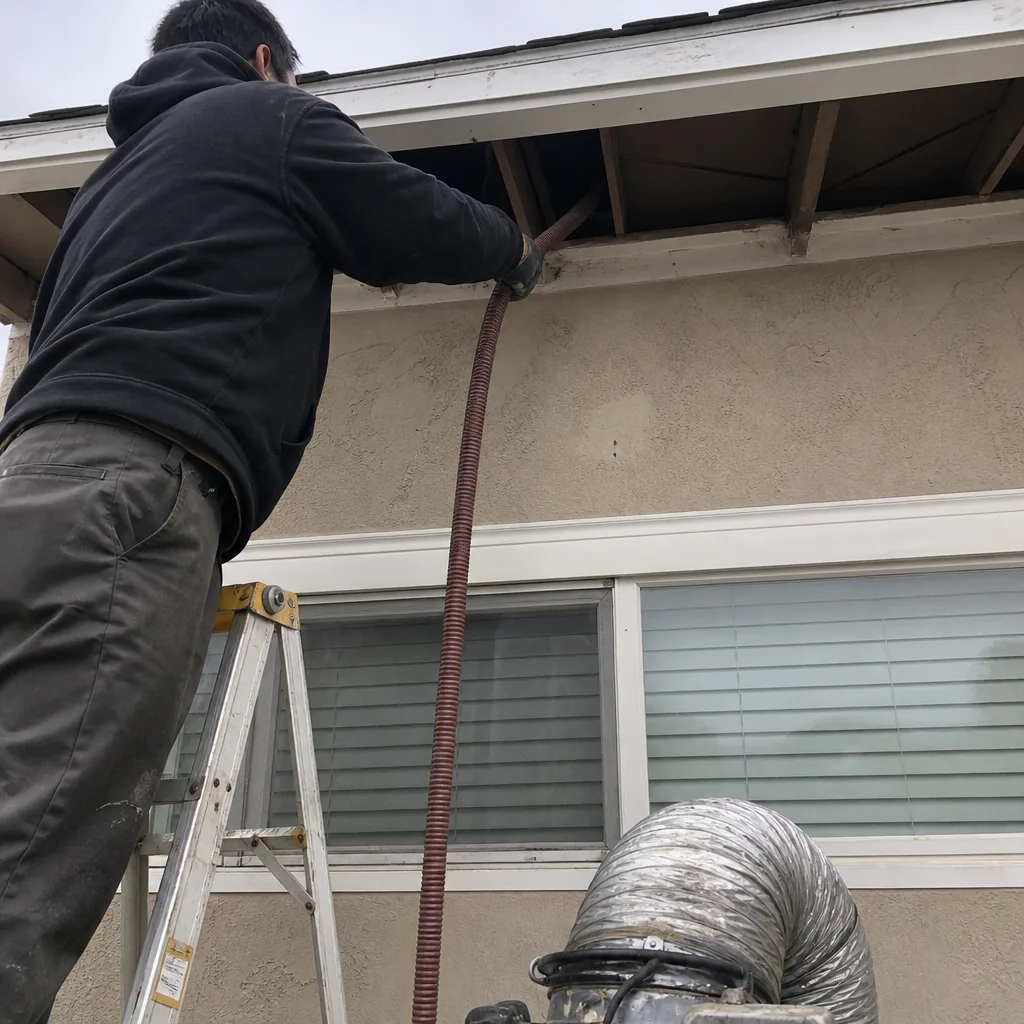
First, the core principle: professional duct cleaning uses negative pressure. A high-powered vacuum unit, either truck-mounted or a large portable unit, connects to the duct system to pull a vacuum on the entire length of ductwork. This does two things. It creates airflow through the system, and it maintains the duct under negative pressure so that anything dislodged gets pulled into the vacuum rather than puffing out into your living room.
The agitation tools differ by brand and approach. Rotobrush systems use a rotating brush head on a flexible shaft that physically scrubs the duct walls while the vacuum draws debris back toward the collection point. Nikro systems, another industry-standard platform, include high-powered negative air machines and pneumatic agitation tools that work well on both sheet metal and flex duct. The key distinction between these tools and a consumer shop vac is simple: volume and containment. A shop vac attached to a brush knocks some dust loose but cannot pull air through 40 feet of duct with enough velocity to carry debris out. It also has no meaningful filtration, so a fine dust cloud escapes right back into the room.
HEPA containment is the second piece. Our cleaning runs use Abatement Technologies HEPA filtration systems on the vacuum side. That means the air exhausted from the vacuum unit passes through a HEPA filter before it returns to the space. HEPA filters capture 99.97% of particles at 0.3 microns, which includes the fine wildfire soot that standard filters miss. Without HEPA containment, a duct cleaning job can actually make your indoor air worse during the cleaning itself. HEPA containment means what comes off your duct walls doesn’t go back into your air.
This is the equipment conversation you should have with any contractor in Mountain View. Ask what they’re using by name. If the answer is vague, or if they describe something that sounds like a vacuum cleaner from Home Depot, walk away. Real duct cleaning is an industrial process scaled to fit a house, not a housekeeping task scaled up.
How to Vet a Duct Cleaning Contractor Using the NADCA ACR Standard
NADCA, the National Air Duct Cleaners Association, publishes the ACR Standard, which is the closest thing the industry has to a formal specification for how duct cleaning should be performed. It’s a useful checklist for Mountain View homeowners who want to compare contractors objectively rather than by marketing.
Here’s what the ACR standard requires and how to use it when you’re getting quotes:
- Scope of work in writing. The contractor should specify which components are included: supply ducts, return ducts, registers, grilles, plenums, coils, blower motor, and drain pan. If a quote just says “clean ducts,” ask for the component list. NADCA’s standard covers the entire air conveyance system, not just the big trunk lines.
- Source removal, not encapsulation. The standard requires physical removal of debris. Some low-end operations spray a sealant or “fog” the ducts and call that cleaning. That is not cleaning. It’s coating. If a Mountain View contractor proposes fogging as the primary method, decline.
- Negative pressure with HEPA filtration. The vacuum side of the system must exhaust through HEPA filtration, especially if the vacuum unit is inside the home. This is non-negotiable for houses in Mountain View where the client just watched a wildfire season blanket their neighborhood in ash.
- Access points as needed. The standard allows for cutting access holes into ductwork when the geometry requires it, with proper resealing afterward. If a contractor says they can clean everything through the registers without ever needing access, that’s a warning sign for a superficial job.
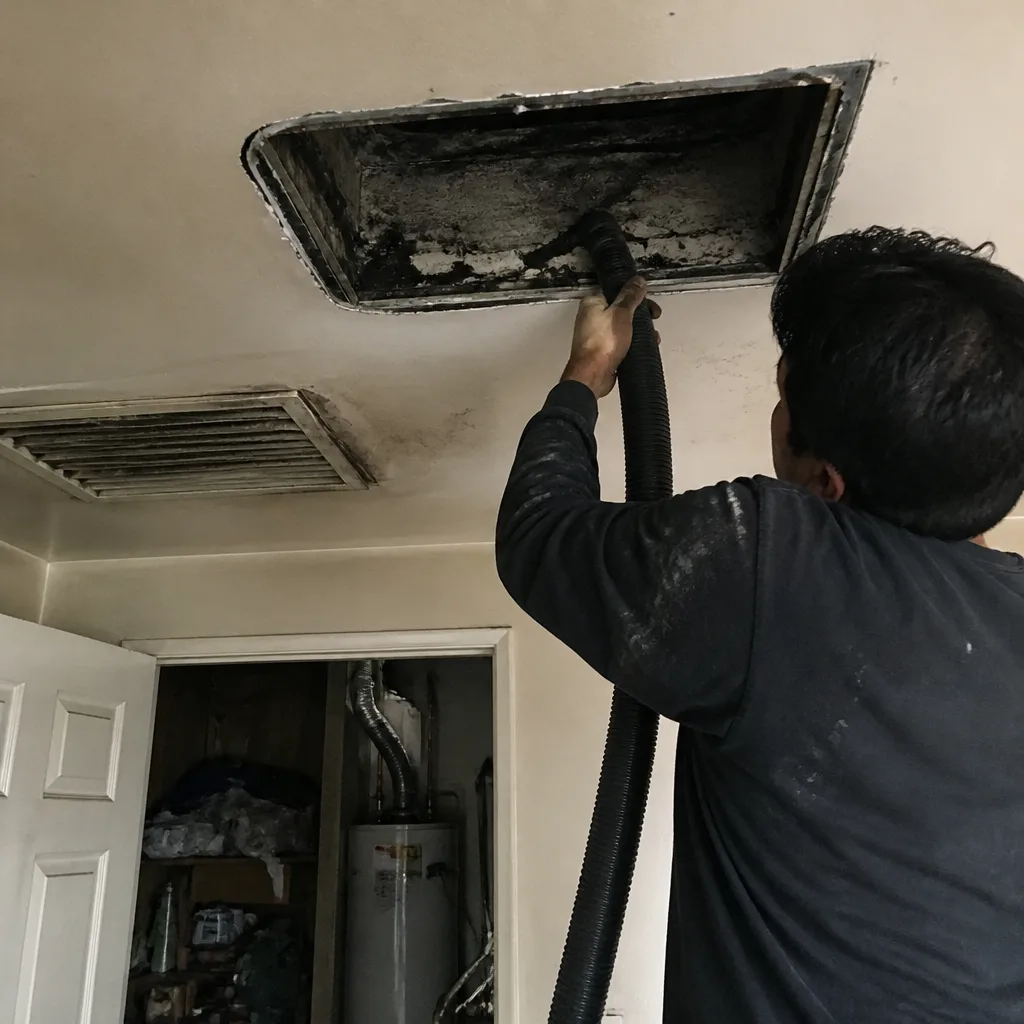
- Visual inspection before and after. The contractor should offer or provide camera inspection of the duct interior. If a company won’t show you before-and-after photos of your own ducts, you cannot verify the work was done. We provide photographic documentation on every Air Duct Cleaning in Mountain View job, specifically so you can see what came out and what the duct looks like afterward.
Mountain View homeowners should also ask about local experience. A contractor who works primarily in new suburban construction in the Central Valley may not understand crawl-space flex duct degradation in a 1970s Cuesta Park rancher. Local experience with the actual housing stock matters.
The Cleaning Process, Step by Step
Here is what a full professional cleaning looks like when it’s done properly in a Mountain View home. This is what you should expect, and if a contractor’s process differs significantly, ask why.
- System assessment. The tech identifies the type of ductwork, maps the layout, checks the filter housing, and locates the blower, coil, and returns. In Mountain View homes with crawl-space duct runs, this step includes checking for collapsed flex or disconnected joints before any cleaning begins. Finding structural problems before cleaning is why Air Duct Repair in Mountain View is a separate service we offer, not an afterthought.
- Filter removal and equipment hookup. The existing furnace filter, often loaded with dust in Mountain View homes, is removed. The negative air machine connects to the main trunk line, usually at the plenum or a large access point near the air handler.
- Registers sealed to maintain negative pressure. The technician covers most registers to focus airflow, then works through the system one section at a time, opening registers strategically to direct the vacuum draw.
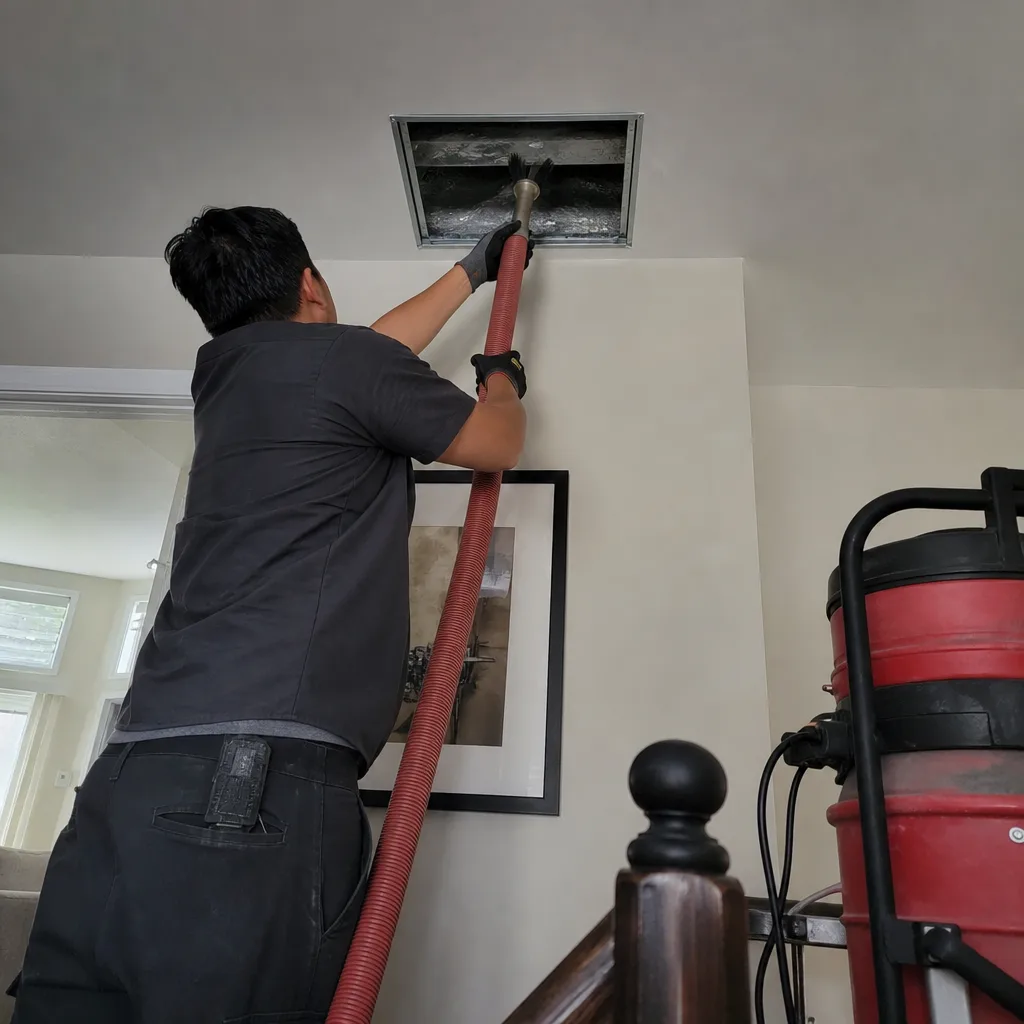
- Mechanical agitation. Using Rotobrush or Nikro agitation tools, the tech scrubs the interior walls of the sheet metal trunks and flex branches. The rotating brush dislodges the dust cake, and the negative pressure pulls it into the vacuum stream immediately, so it never migrates back into the room.
- Return side cleaning. Return ducts often carry more debris than supply ducts because they pull unfiltered air from the living space. The tech repeats the agitation and extraction process on the return side, including the return risers and panned joist cavities if your home uses them.
- Component cleaning. The blower motor, evaporator coil if accessible, and drain pan are cleaned. In Mountain View, where AC runs for several months each year, coil cleaning is part of the job. A dirty coil blocks airflow and holds moisture, which feeds microbial growth.
- Final filter install and system test. A new filter goes in, the system cycles, and the tech verifies airflow at each register. You should receive before-and-after photos and a summary of what was removed.
The whole process takes 3 to 6 hours for an average 1,400 to 2,200 square foot Mountain View home. Larger homes or systems with significant buildup take longer. Duct cleaning is a scheduled job, not a 45-minute drive-by.
What It Costs in Mountain View
Duct cleaning pricing in Mountain View runs higher than national averages because of the cost of doing business in the Bay Area and the housing stock’s complexity. Here’s a realistic breakdown based on the market:
| Scope | Typical Price Range | Notes |
|---|---|---|
| Single system, 1,500 sq ft or less | $450 – $650 | One furnace/air handler, 8 – 12 registers |
| Single system, 1,500 – 2,500 sq ft | $550 – $800 | Typical Mountain View rancher or two-story |
| Larger home or dual-zone system | $750 – $1,100 | Two air handlers or unusually long duct runs |
| Additional dryer vent cleaning | $90 – $180 | Frequently added on, see Dryer Vent Cleaning in Mountain View |
| Crawl-space access or repair work | Varies by scope | Sealing, reconnecting, or replacing flex duct |
Two pricing red flags to watch in Mountain View. First, the “$49 whole-house special” that morphs into $800 once the tech arrives and “finds” problems. Second, per-vent pricing, which incentivizes fast, shallow work and creates uncertainty about the final invoice. Our pricing model is one flat price per system agreed before work starts. You know the number before we touch a register.
Why are some quotes so much cheaper? Because the company runs a small portable vacuum, skips the agitation step, doesn’t use HEPA filtration, and finishes in 90 minutes. That’s not the same service. A legitimate cleaning that actually removes the debris from crawl-space flex runs, return cavities, and coils takes hours and requires real equipment. The price difference reflects the difference in what’s actually being done.
Call (866) 528-3938 for an exact quote. Estimates are free.
Post-Cleaning Filter and IAQ Maintenance for Mountain View’s Seasons
After the ducts are clean, the maintenance cadence that keeps them clean in Mountain View follows the local seasonal cycle. Here’s the schedule we recommend:
Fire Season (August – November)
During wildfire season, when AQI numbers in Mountain View push past 100 for consecutive days, replace your furnace filter every 30 days, not 90. Use a MERV 11 or MERV 13 filter. When smoke is heavy, and if you have a Honeywell or Aprilaire media cabinet, step up to the high-efficiency media for those months. Sealing the home and running the fan on constant recirculation helps filter the indoor air, but only if the filter itself is clean.
Pollen Season (March – May)
Mountain View’s tree pollen cycle starts early, with oaks, cedars, and the city’s legacy orchard trees all contributing. Pollen is large and gets caught by filters, but once a filter is loaded, it stops catching anything and just blocks airflow. Check filters monthly in spring. This is also a good time to wipe down registers and returns to keep surface dust from being pulled back into the system.
Summer AC Season (June – September)
As the AC runs, the coil produces condensation. If it’s clean and the drain is clear, that’s fine. If there’s any residual debris from before the cleaning, the wet coil turns it into a biological breeding ground. Annual coil inspection in early summer is the cheapest insurance against musty smells in August.
Year-Round IAQ Products
For homeowners who want cleaner air between cleanings, Honeywell and Aprilaire products cover the spectrum: media cabinets, whole-home dehumidifiers, and smart thermostats that can run the fan on a schedule. We supply and work with these product lines because they’re serviceable, supported, and familiar to any qualified Bay Area HVAC technician. If you want cleaner air to stay that way after we’ve cleaned the ducts, this is how you achieve it.
Common Mistakes to Avoid
- Hiring based on price alone. The “$99 special” business model depends on finding “problems” once the tech is inside. In Mountain View, where crawl-space ducts are common, there’s always a problem to find. Know the full price before the van arrives.
- Skipping the dryer vent. Duct cleaning and dryer vent cleaning are different services. Lint accumulation in the dryer exhaust is a fire hazard, and Mountain View laundry rooms often have long, convoluted vent runs. Ask for Dryer Vent Cleaning in Mountain View as part of the scope, not as a separate surprise.
- Accepting fogging as cleaning. Spraying antimicrobial fog into dirty ducts coats the dirt; it doesn’t remove it. The debris stays, and now it’s glued to the duct walls. Walk away from anyone who leads with fogging.
- Ignoring the crawl space. If your Mountain View home has flex duct in a crawl space, and the contractor never goes under the house, the job is incomplete. Crawl-space runs are where the worst debris accumulates and where disconnections and collapsed ducts hide.
- Replacing the filter and calling it done. A clean filter catches new dust. It does not remove the existing dust cake on the duct walls. Filter changes are maintenance; they are not a substitute for cleaning.
- Choosing a general HVAC company for specialized work. Some HVAC companies treat duct cleaning as an add-on they offer because it’s on the service menu. Cleaning ductwork properly requires specific equipment and a crew that does it every day. We clean the duct. We also fix it if it’s broken. That focus matters.
- Not asking for before-and-after proof. If you can’t verify the work, you didn’t buy cleaning; you bought a story. Camera inspection and photos of your actual ducts before and after are standard for legitimate operators.
When to Call a Professional
Some situations are DIY-adjacent: swapping a filter, wiping a register. Others require professional equipment. Water intrusion, visible mold growth, clumps of dust blowing from registers when the system cycles, rodent activity in the ductwork, or a musty smell that persists after filter changes all warrant professional assessment. Same goes for flex duct that’s disconnected, crushed, or torn in the crawl space. None of these situations resolve with over-the-counter products. Duct Cleaning Mountain View offers free estimates in Mountain View – call (866) 528-3938 and we’ll assess what’s happening inside your system.
Frequently Asked Questions
A whole-home duct cleaning in Mountain View typically costs between $450 and $900, depending on home size and system complexity. One flat price per system agreed before work begins is the pricing model you want, not per-vent charges that quietly inflate the bill. Call (866) 528-3938 for a free estimate based on your actual home configuration.
Cheaper quotes usually mean less equipment and less time: a portable vacuum instead of a truck-mounted negative air machine, no HEPA filtration, no mechanical agitation, and a 90-minute service window. The cleaning doesn’t actually clean, or it redistributes dust into the air. A credible job on a typical Mountain View home takes 3 to 6 hours with professional-grade equipment like Rotobrush or Nikro systems and HEPA containment. The price difference is the difference between source removal and a surface wipe.
Ask for camera inspection and before-and-after photographs of your actual ducts, not stock photos. A reputable contractor will provide visual proof of the interior condition before and after the work. If a company declines to show you photos, assume the work cannot be verified. Call (866) 528-3938 and ask about our photographic documentation approach.
For most Mountain View homes, every 3 to 5 years is a reasonable cleaning cadence. Homes with heavy wildfire smoke exposure, pets, recent remodeling, or crawl-space dust issues may need it more often. If you’ve never had the ducts cleaned and the home is more than 10 years old, the first cleaning is likely overdue.
No. A high-MERV filter catches more particles before they enter the ducts, which slows debris accumulation, but it does not remove what’s already inside. It also increases static pressure, which can strain older blowers if not properly matched to the system. Think of a good filter as a maintenance tool that extends the interval between cleanings, not a replacement for them.
Cleaning removes debris from existing ducts. Repair addresses structural problems: disconnected flex runs, crushed ducts, torn inner liners, leaking plenum connections, or improperly sealed joints. If your Mountain View crawl space has a disconnected return pulling in soil dust, cleaning will help temporarily, but the problem recurs. That’s why we list Air Duct Repair in Mountain View as a distinct service, not an upsell buried inside a cleaning invoice.
The Bottom Line
Mountain View homeowners face a specific set of duct realities that generic national guides miss: wildfire smoke in the air basin, aging crawl-space flex duct, and housing stock that spans radiant-era Eichlers to modern infill. The right cleaning approach depends on your duct type, your seasonal exposure, and the equipment your contractor actually runs. Ask for the NADCA ACR standard, demand HEPA containment, and verify the work with before-and-after photos. When the equipment is right and the scope is honest, the result is measurable: lower particulate counts in the living space, a more efficient system, and clean air that stays clean.
If you’re in Mountain View and want a straight assessment of your duct system, call (866) 528-3938 for a free estimate. We’ll tell you what we found, what needs cleaning, and what doesn’t.
Written by the team at Duct Cleaning Mountain View, serving Mountain View since 2015.
See the difference
 Before
 After
 Before
 After
 Before
 After