
Last updated November 2, 2026
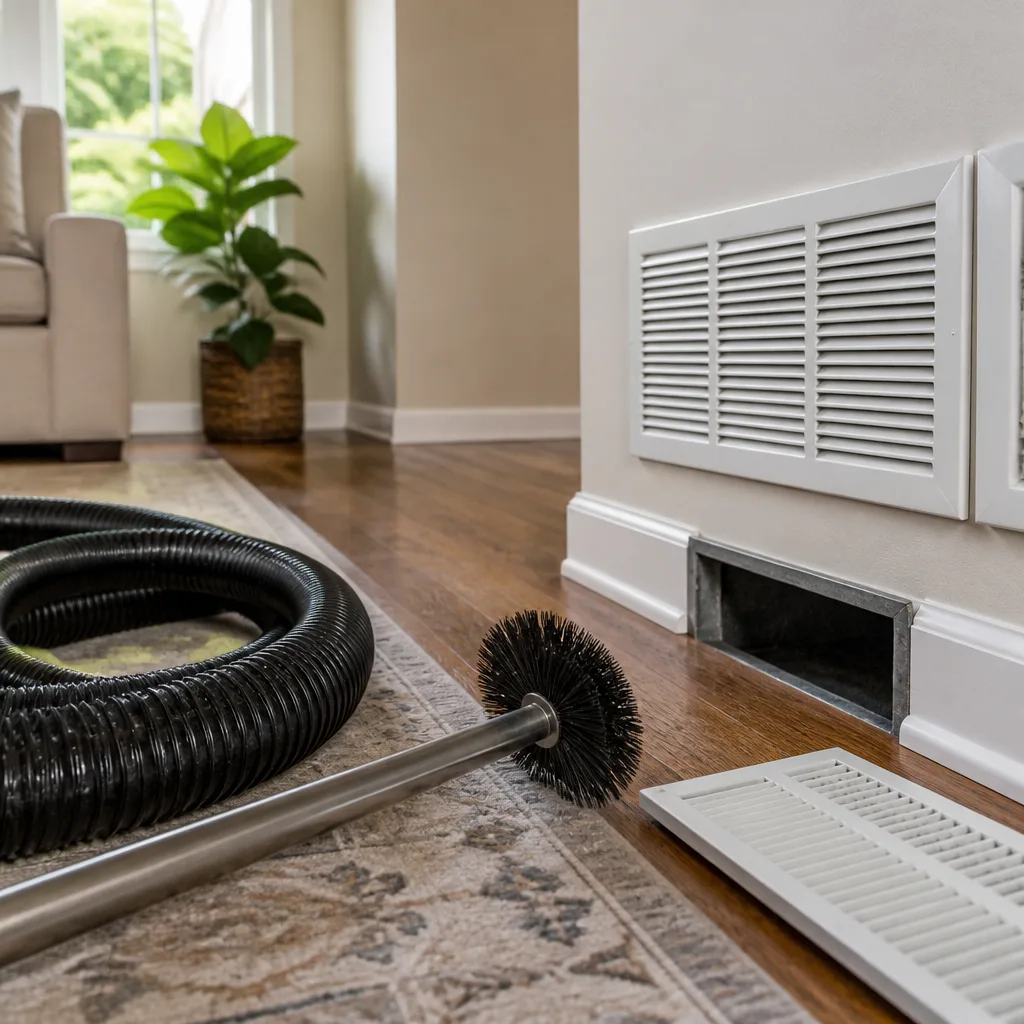 Whole-home duct cleaning
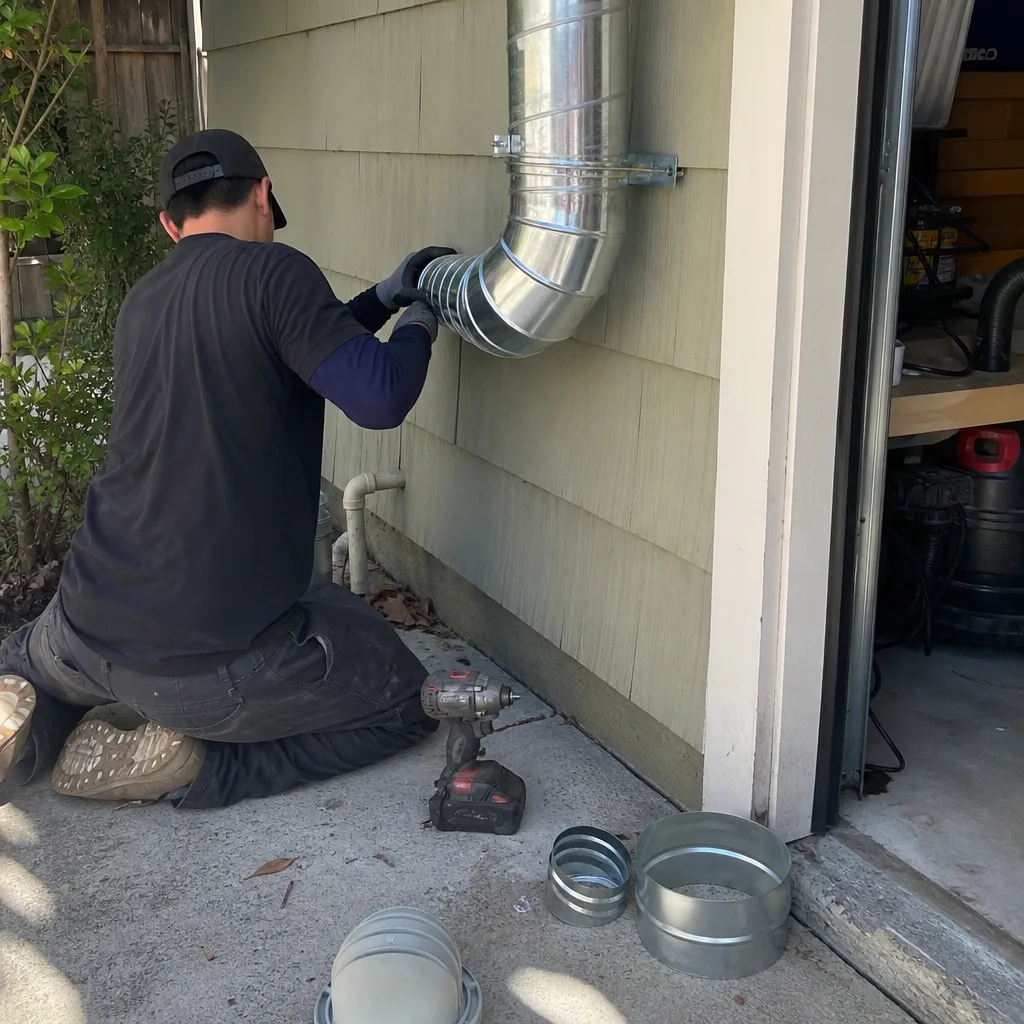
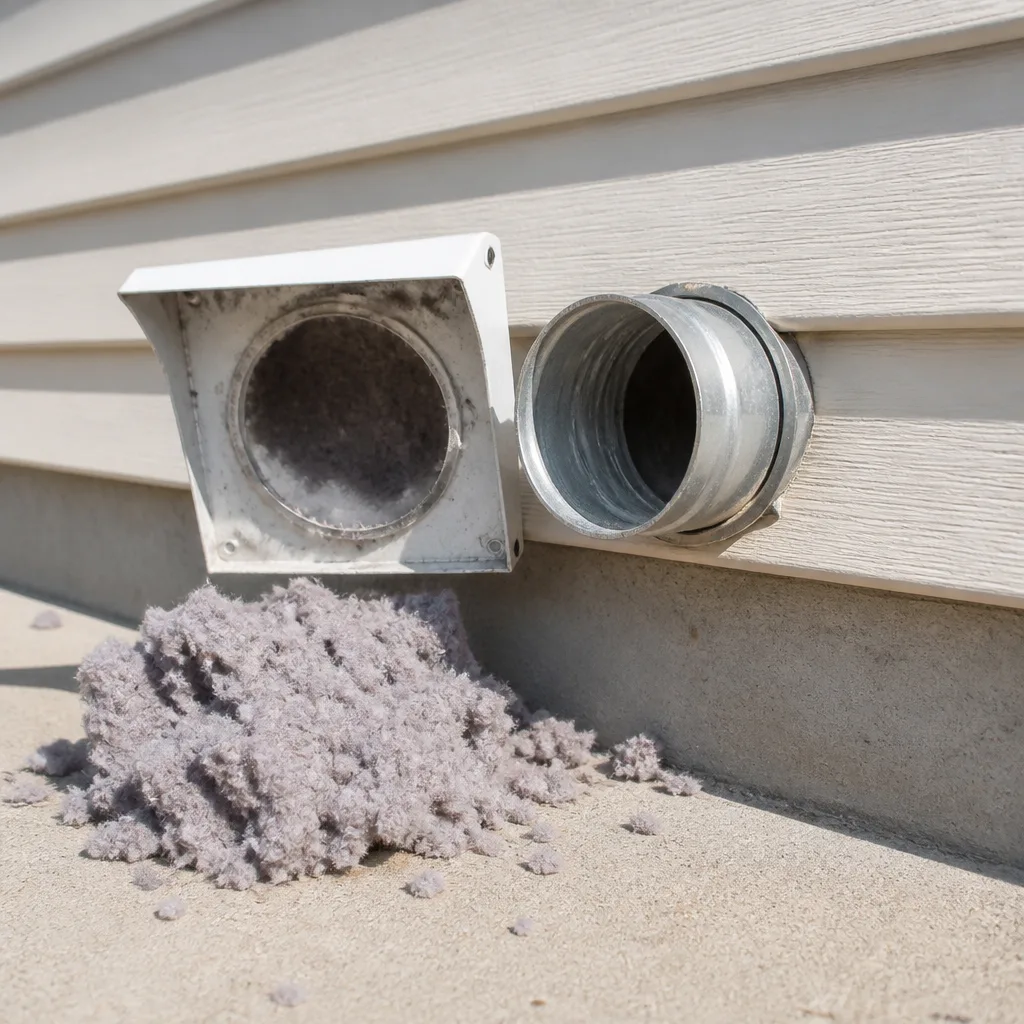 Dryer vent cleaning
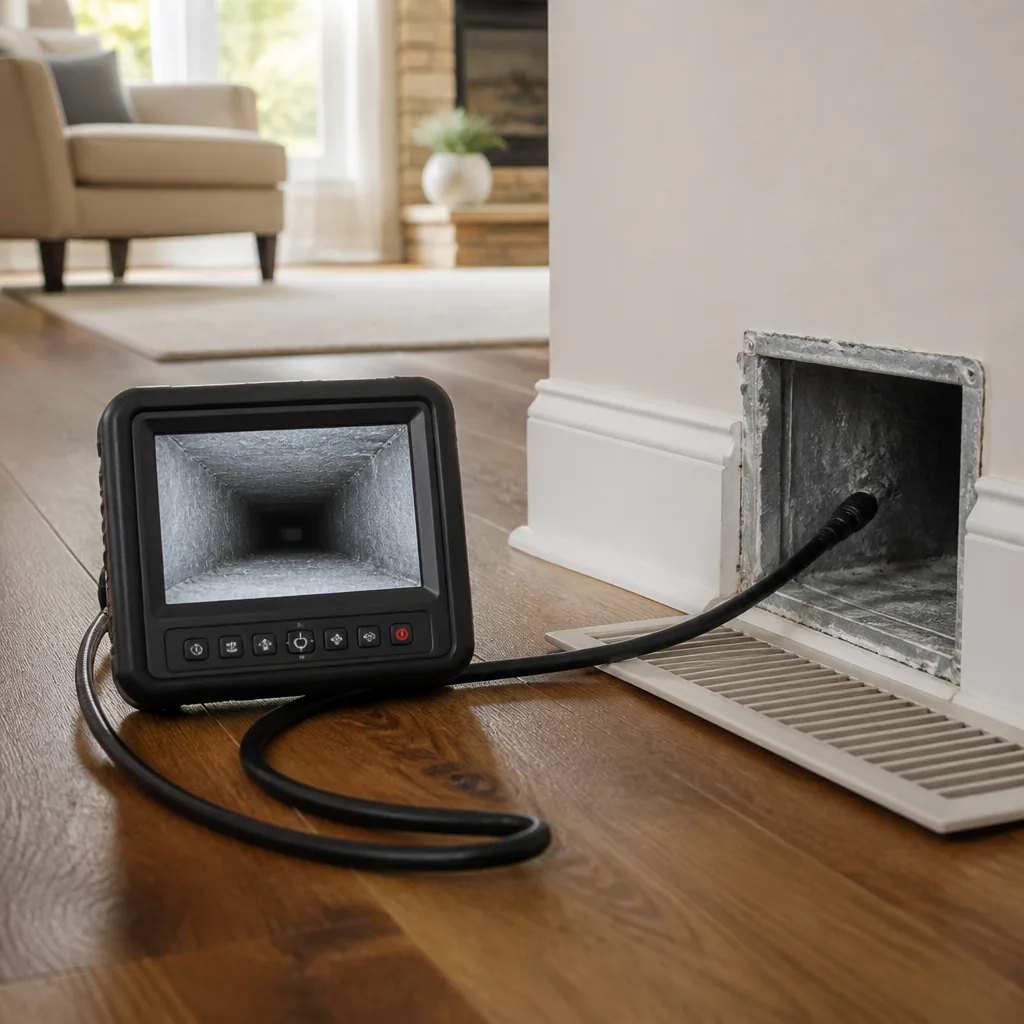 Camera inspection
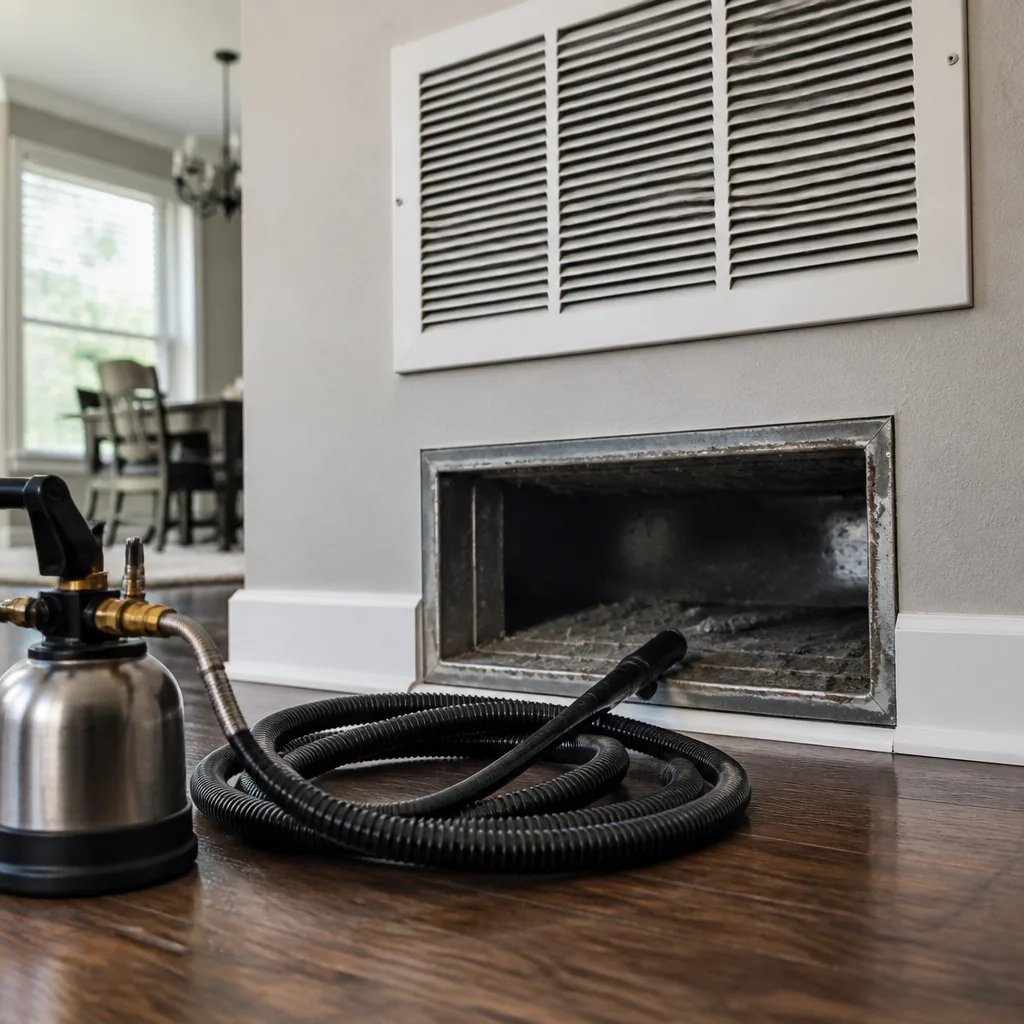 Sanitizing & deodorizing
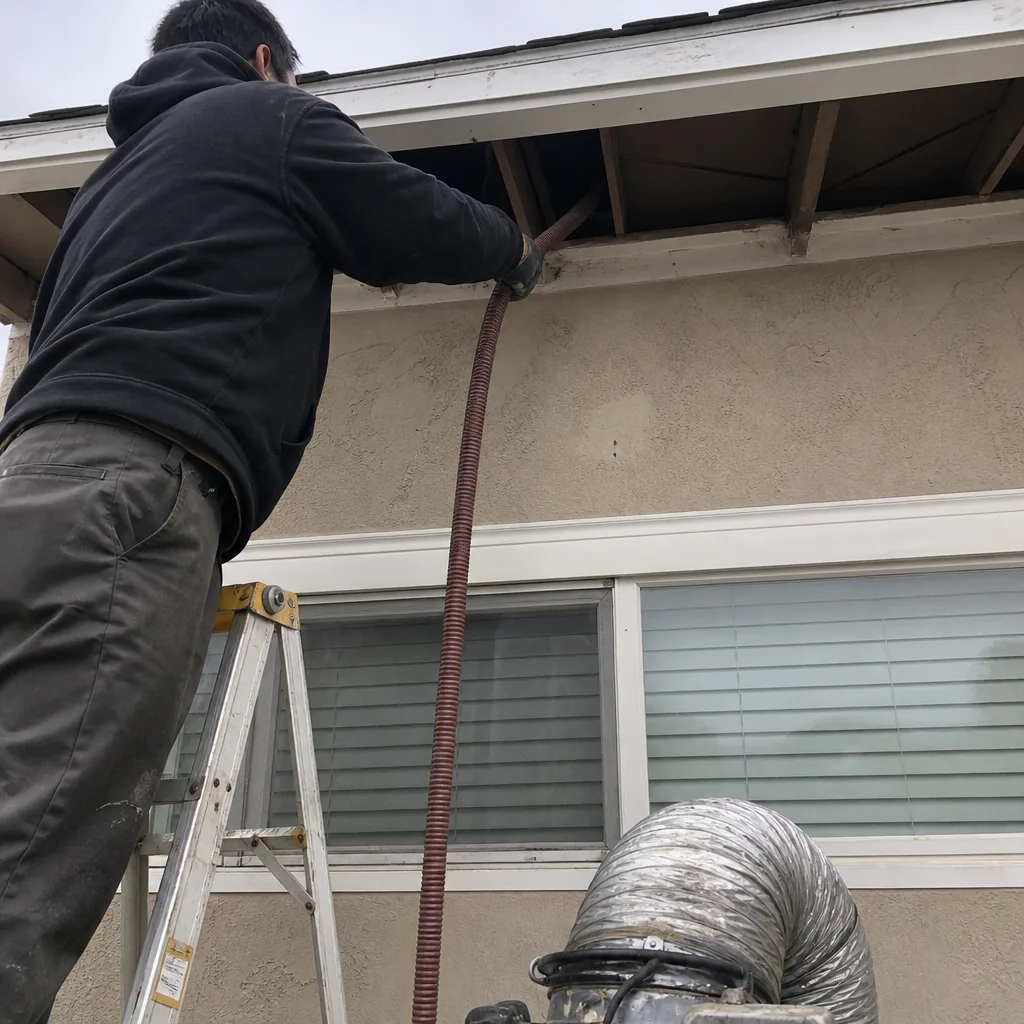
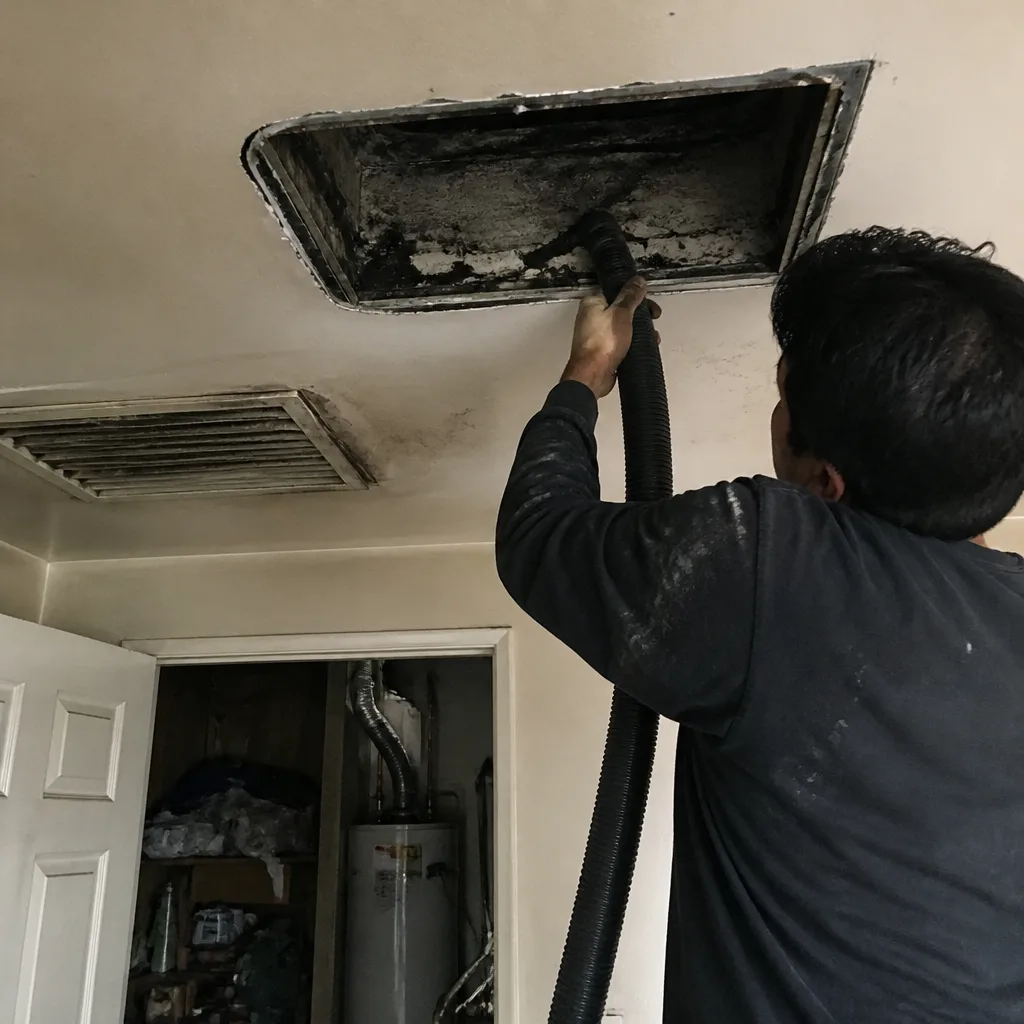
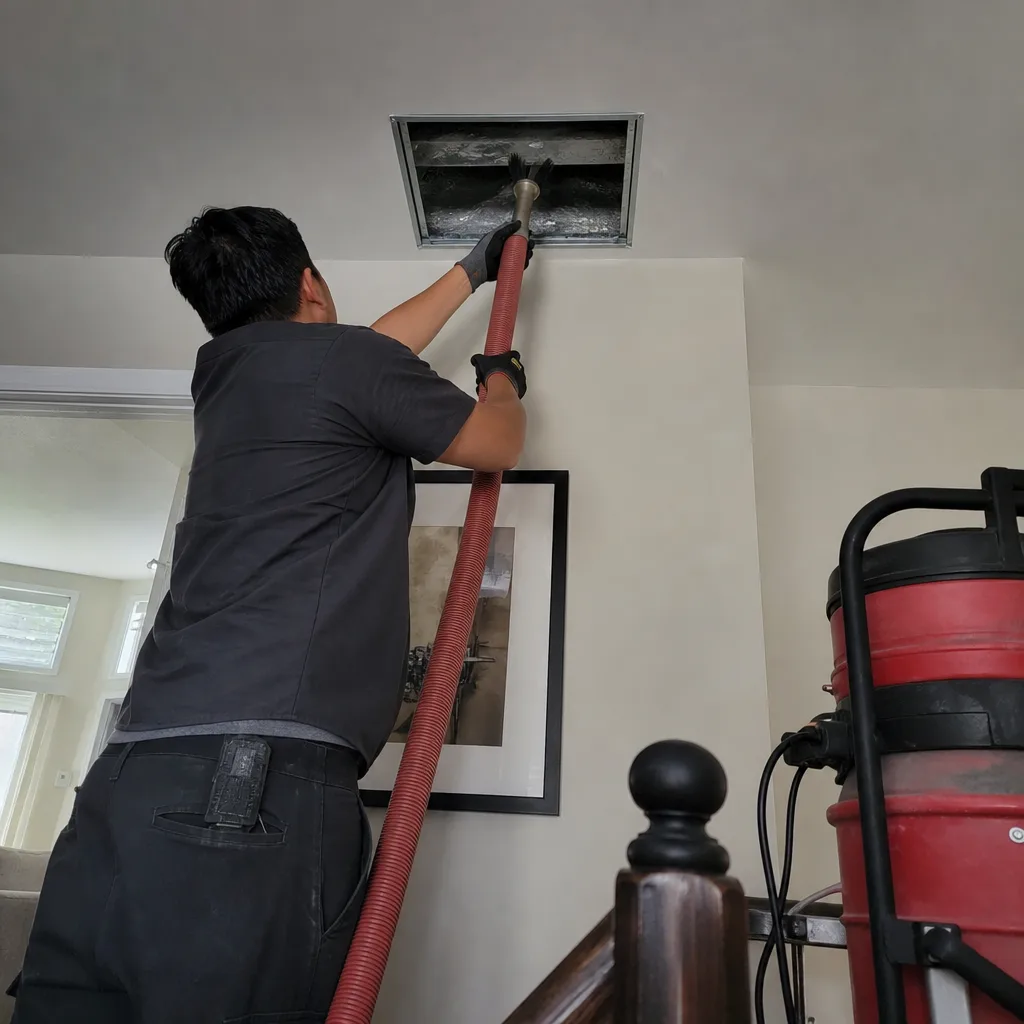
Whole-system duct and dryer vent check with before-and-after photos - you see exactly what came out of your vents
That "$99 whole-house special" is a bait ad - the real number appears once they are in your hallway, or the "clean" is a shop-vac at the register. We photograph the inside of your ducts before and after instead.
Air Duct Cleaning Warning Signs: A Mountain View Homeowner’s Reference Guide
A dusty house isn’t always a dirty duct problem. In a significant share of Mountain View homes we’ve inspected, the actual issue is duct leakage, a cracked plenum, or a filter that doesn’t fit its slot. Cleaning a leaking system does nothing but move the same attic air through your rooms again. This guide – along with The Complete Air Duct Cleaning Guide for Mountain View Homeowners – treats each warning sign as a diagnostic clue, so you can tell the difference between debris you can clean, leaks you must seal, and airflow problems that need repair before you spend a dollar on the wrong service.
Quick Answer
The clearest signs you need our Air Duct Cleaning services in Mountain View are visible dust plumes from supply registers while the system runs, dark gray or rust-colored debris accumulating at the same registers, and odors that change character when the blower turns on. If rooms heat and cool unevenly while registers stay open, that’s more often a leakage or damper problem, which cleaning won’t fix. A 10-minute register inspection will usually tell you which service you actually need.
Styles & brands we work with
- Whole-home duct cleaning
- Dryer vent cleaning
- Camera inspection
- Sanitizing & deodorizing
Table of Contents
- Dust Plumes at the Register: Reading the Particulate
- Debris Color as a Diagnostic: Gray, Rust, and White
- Uneven Room Temperatures: When Cleaning Won’t Help
- Odor Diagnostics: Musty, Burning, and Chemical Smells
- Post-Renovation and Wildfire Smoke: Mountain View Triggers
- Filter Bypass: The Problem That Looks Like Dirty Ducts
- Common Mistakes to Avoid
- When to Call a Professional
- Frequently Asked Questions
Dust Plumes at the Register: Reading the Particulate
Turn on your system, hold a flashlight at the supply register, and watch what happens in the beam. If you see a faint shimmer that settles within a second or two, that’s normal household dust stirred by moving air. If you see a visible plume that continues while the blower runs, you’re looking at accumulated debris inside the supply trunk or branch lines being pushed out register by register.
The behavior of the plume tells you where the problem lives. Debris that streams from every register points to contamination of the main supply trunk or the return side, upstream of the branches. Debris from one or two registers suggests a local accumulation in that branch, often from a disconnected joint pulling attic insulation into a specific run. In our experience with Mountain View homes built between 1960 and 1990, the most common culprit is flex duct that has sagged away from its connection at the boot, creating a gap that pulls insulation and fiberglass into the airstream.
Key distinction: Dust that appears when the system is off and falls from the register face is not necessarily a duct problem. Register faces sit on the floor or ceiling and collect whatever drifts through the room. What matters is active ejection during blower operation.
If the plume is consistent across multiple registers and you’ve had no recent renovation work, the system likely carries a genuine accumulated debris load. That’s when professional air duct cleaning makes sense, and it’s the most common finding during our Air Duct Cleaning in Mountain View calls. If the plume comes from one register only, you’re probably looking at an Air Duct Repair in Mountain View scenario instead: a disconnected joint, a broken boot, or a torn flex run.
Debris Color as a Diagnostic: Gray, Rust, and White
Homeowners rarely look closely at the material around their register faces. The color and texture of that debris is one of the fastest ways to localize a duct system problem before anyone opens a wall or crawls an attic.
- Dark gray, fine particulate: This is typically household dust plus carbon from cooking, candles, and outdoor particulate that has been circulating through the return side. It collects in the return trunk, the filter housing, and the first few feet of the supply plenum. This is ordinary accumulated debris and responds well to professional cleaning. If it’s greasy to the touch, it has bonded with oils from cooking; mechanical agitation is required, not just suction.
- Rust-colored or orange-brown flakes: In most cases this is oxidation from inside the air handler cabinet, the blower wheel housing, or metal duct joints. It means moisture has been present at some point. In a Mountain View climate with marine-layer humidity and occasional condensation at the coil, surface rust inside the cabinet is common. Rust flakes do not mean the duct is rusted through; they mean the blower compartment or a section of rigid metal duct has surface corrosion. If the flakes are uniform and fine, cleaning the system and confirming the condensate drain is clear often resolves it. If the flakes are large and structural, the metal itself is failing and repair is the answer.
- White fibrous material: If you see white, cotton-like fibers at the supply registers, that’s almost always insulation: fiberglass from a torn flex duct, a disconnected boot, or attic insulation pulled through a return leak. This is not something cleaning alone fixes. The fiber source must be located and sealed, which is why we treat it as a duct repair diagnostic first. At our Duct Cleaning Mountain View home service area, white fiber findings trigger a camera inspection before any cleaning quote.
- Black, sooty streaking around register edges: This is surface staining from air bypassing the register, often combined with fine particulate settling on the wall or ceiling. It indicates high-velocity air leaks around the register boot, not necessarily contaminated ducts. Sealing the boot to the drywall and fixing the register fitment addresses the streaking.
The important lesson: gray dust says clean it, rust says inspect the cabinet and coil, white fiber says find the leak. Paying for cleaning when the real problem is a torn flex run will produce no visible improvement, because the source keeps feeding the airstream.
Uneven Room Temperatures: When Cleaning Won’t Help
Most lists of duct cleaning warning signs include uneven room temperatures. That’s only half right. Uneven temperatures point to an airflow imbalance, and airflow imbalances have at least four distinct causes in ducted systems. Cleaning addresses exactly one of them.
- Restricted airflow from debris load. If a branch duct or the blower wheel carries significant accumulated debris, the affected room will underperform. The tell: multiple rooms are affected, filters clog quickly, and airflow feels weak but steady at those registers. Cleaning restores design airflow.
- Duct leakage in a specific branch. A torn flex run or disconnected joint in one branch bleeds conditioned air into the attic or crawlspace. The tell: one or two rooms never reach setpoint, the register flow feels weak, and the room is typically farthest from the air handler. Cleaning will not change the room temperature by a single degree. This is a repair job.
- Improper damper position. Many Mountain View homes have manual balancing dampers at the trunk takeoffs. If a previous homeowner or contractor left one partially closed, the branch served by that damper gets reduced flow. The tell: airflow is weak at the register but the system is clean and no leakage is present. An adjustment, not a cleaning, is the fix.
- Undersized or poorly insulated duct runs. In ranch-style and split-level homes common to Mountain View’s older neighborhoods, long flex runs over uninsulated attics lose both pressure and temperature. The tell: rooms at the end of the longest runs are warm in summer and cold in winter, regardless of cleaning history. Cleaning will not change the physics of an undersized run.
Before you call anyone about uneven temperatures, check the filter, walk the house with a register thermometer or just your hand, and note which rooms underperform. Weak flow at the farthest rooms plus dirty overall airflow suggests cleaning. Weak flow at one specific room suggests a leak or damper issue. Weak flow everywhere suggests a blower problem, a collapsed return, or a filter restriction at the unit. The symptom list gets you close; the inspection confirms it.
Because Mountain View’s winter heating load is intermittent, many homeowners don’t notice a branch leak until the first heat wave when one bedroom stays ten degrees warmer than the rest of the house. If that sounds familiar, the most productive next step is a duct inspection rather than a cleaning.
Odor Diagnostics: Musty, Burning, and Chemical Smells
Odors are subjective, but they are also consistent. The character of a smell, and whether it appears only when the blower runs, narrows the source to specific components. Here’s how we think through odor complaints in the field.
Musty or mildew-like odor, present year-round and stronger when the system runs: The most common source in our climate is biological growth on the evaporator coil or inside the condensate pan, where standing moisture meets organic dust. Mountain View’s marine layer keeps spring and early-summer humidity high, and any coil that doesn’t drain fully becomes a site for this. The odor moves through the supply side because the air passes over the coil after filtration. Cleaning the ductwork alone will not remove a coil odor; the coil itself and the pan need attention. A secondary cause is a return duct pulling air from a damp crawlspace or attic with standing moisture. That enters as a leak repair, not a cleaning.
Burning or hot dust smell, typically at the start of heating season: In a gas furnace system, dust settles on the heat exchanger during the months the system runs in cooling or fan-only mode. The first few heating cycles burn that dust off. If the smell persists beyond two or three cycles, the more serious causes are debris reaching the heat exchanger from a failed filter bypass, or an overheated component. Persistent burning odor is a reason to shut the system down and inspect the cabinet before proceeding. It is not a routine cleaning invitation.
Chemical or plastic-like odor, especially in newer construction or after renovation: Ducts, flex liners, mastics, and adhesives all off-gas when new. In Mountain View’s active remodel market, this odor often follows a renovation where a portion of ductwork was replaced or sealed. The smell typically dissipates within weeks as materials cure. If it persists for months, the cause may be an incompatible liner adhesive, overheated flex duct in contact with the plenum, or a return leak pulling air from a garage or attic that contains stored chemicals or vehicle exhaust. A camera inspection of the return path usually settles it.
The diagnostic takeaway is simple: match the odor to the component. Coil smells live on the supply side. Burning smells originate at the heat source. Chemical smells suggest recent materials or an external contaminant entering the return. None of these resolve with cleaning alone unless the specific component involved is accessible to the cleaning process.
Post-Renovation and Wildfire Smoke: Mountain View Triggers
Mountain View has one of the most active home remodeling markets in the Bay Area, and every renovation produces fine particulate that enters the duct system. Drywall dust, hardwood floor sanding, tile cutting, and demolition work create particles small enough to be pulled through the return side and deposited throughout the trunk and branches. Even with plastic sheeting and negative pressure setups, the HVAC system often runs during parts of the job and distributes dust throughout the system.
The indicators are specific. After a renovation, watch for:
- Immediate dust accumulation on horizontal surfaces in every room within days of the project’s completion, even though the house was cleaned.
- Fine white or gray dust visible in the return grille’s filter track.
- A persistent drywall-dust smell when the blower runs, weeks after the work ended.
- Reduced filter life: a standard 1-inch filter that loaded up in three months now loads up in three weeks.
If these indicators are present, the system has been used as a jobsite exhaust, and a professional cleaning with HEPA containment is the appropriate response. When our teams run a post-renovation cleaning in Mountain View, the process uses negative-pressure HEPA filtration at the unit so that dislodged dust is captured at the source rather than exhausted into the living space. That’s the difference between a cleaning that moves dust around and one that removes it.
Wildfire smoke creates a different contamination profile. Smoke particulate is extremely fine, oily, and adhesive. It penetrates filter media, coats blower housings and coil fins, and lingers as a persistent odor. After a regional wildfire event with sustained smoke exposure in Mountain View, homeowners may notice an odor that returns whenever the system runs, even after the air outside clears. If the system ran during heavy smoke days with a low-efficiency filter, the particulate is now inside the ductwork and the air handler. A standard cleaning with brushing and suction removes the bulk of the deposited particulate; replacing the filter with a higher-efficiency option for smoke season is a sensible follow-up. We work with Honeywell and Aprilaire filtration product lines when a homeowner wants better filtration after a smoke event.
Filter Bypass: The Problem That Looks Like Dirty Ducts
Some homes have filters that don’t actually cover the entire return opening. The filter slot is loose, the filter sags, or a previous homeowner used the wrong size and packed the gap with cardboard or foam. When the blower runs, a portion of the return air bypasses the filter entirely, carrying unfiltered household dust into the blower, the coil, and the supply ducts. The system then exhibits every classic sign of dirty ducts: dust at registers, reduced airflow, and odor from accumulated debris on the coil. But the root cause is a fitting issue, not a contamination issue.
Here’s the sequence we walk through on a Mountain View call when pattern suggests filter bypass:
- Check the filter fit. With the blower off, the filter should sit flush in its slot with no visible gaps around the edges. Any gap larger than about 1/8 inch allows bypass.
- Inspect for dust trails. Look at the blower side of the filter housing and the blower wheel. If the wheel is coated with gray fuzz while the filter itself is not fully loaded, air is going around the filter.
- Measure the slot. Measure the actual filter track dimensions and compare to the installed filter. A 16×25 slot holding a 16×24 filter is a common finding.
- Note the register pattern. Filter bypass distributes dust evenly across all supply registers, because the bypassed air goes through the entire supply system after the blower. A leak in one branch, by contrast, produces a localized dust pattern.
If the inspection confirms bypass, fix the filter fitment first. Then clean the system to remove what the bypass deposited on the blower, coil, and supply side. If you clean without fixing the bypass, the dust returns within a season. This is one reason we treat air duct cleaning as part of a broader system assessment rather than a standalone, one-size-fits-all service.
Common Mistakes to Avoid
- Paying for cleaning before checking the return side for leaks. In Mountain View homes with attic-mounted air handlers, return leaks are common where flex connects to the return plenum. If the return pulls attic air, the system stays dirty no matter how many times you clean it.
- Running fans on high during wildfire smoke events and expecting the filter to protect the system. Standard 1-inch filters capture a fraction of smoke particulate. The system becomes a smoke trap that recirculates the residue for months.
- Painting register faces without removing them and inspecting the boot. The register covers the one visible opening into the supply side. Leaving it in place hides boot leaks and debris accumulation at the connection point.
- Using duct tape on flex duct connections. Duct tape dries, cracks, and falls off within a few years in attic heat. Proper sealing uses mastic and UL-listed foil tape. A previous owner’s duct-tape fix is often the original source of a branch leak.
- Assuming one hot room is a balancing issue. It might be, but it’s just as often a disconnected or crushed flex run. A quick register airflow check costs nothing and tells you which professional to call.
- Waiting until the smell is unbearable. Coil and pan issues worsen with time and moisture cycling. Early biological growth on a coil is often simple to remediate; a saturated duct liner with prolonged moisture exposure is a much larger problem.
When to Call a Professional
If the register inspection shows persistent dust plumes during blower operation, white fibers at multiple registers, rust-colored debris from the supply side, or any odor that doesn’t resolve after filter replacement and two heating cycles, you need a professional assessment. Duct Cleaning Mountain View offers free estimates in Mountain View and covers the full system profile: air duct cleaning, dryer vent cleaning, and structural duct repair. For help selecting a provider, see Choosing the Right Air Duct Cleaning Brand: A Buyer’s Guide for Mountain View. The inspection tells you which of the three you actually need. Call (866) 528-3938 to schedule.
Frequently Asked Questions
Whole-system air duct cleaning in Mountain View typically runs between $350 and $650 for a standard single-system home, depending on the number of returns, the system’s accessibility, and whether dryer vent service or coil cleaning is included. You’ll see lower quotes that assume a single trunk and two or three runs; you’ll see higher quotes for homes with multiple returns and long flex runs. The honest price is a flat system price agreed to before work starts, not a per-vent figure that grows once the technician arrives. Call (866) 528-3938 for an exact quote on your system.
Most Mountain View homes need professional duct cleaning every four to six years, assuming regular filter changes and no renovation work or wildfire smoke exposure. Homes with pets, smokers, recent remodeling, or systems that ran during heavy smoke events may need cleaning more frequently. The best indicator is the register test: if you see active dust plumes or dark gray debris at the registers after a recent cleaning, the interval should shorten.
Low quotes typically assume a basic trunk-and-branch cleaning with consumer-grade equipment, exclude coil cleaning and dryer vent service, and may not include HEPA containment. The gap between a $99 quote and a $400 quote is usually the difference between a vacuum attached to one register and a professional system that captures dislodged debris at the unit rather than exhausting it into the living space. Ask directly whether the quote includes HEPA containment at the unit and coil cleaning; if it doesn’t, the price difference is explained.
Request before-and-after photos or video from inside the duct system. Any credible professional service should be able to provide camera documentation from the return side, the supply trunk, and representative branch runs. At Duct Cleaning Mountain View, we photograph the system before and after every cleaning so you can verify the work at the register level and inside the ducts.
Duct cleaning removes accumulated debris from inside the duct system using professional equipment like Rotobrush and Nikro systems with HEPA containment. Duct repair addresses structural problems: disconnected joints, torn flex, crushed runs, leaking boots, and damaged sections that allow unconditioned air and contaminants into the system. Cleaning cannot fix a leak, and repair cannot remove accumulated debris; many homes need both, in the right order.
Wildfire smoke leaves an oily, fine particulate residue that coats metal surfaces inside the air handler and ductwork. It does not permanently damage the metal, but it creates a persistent odor that returns whenever the system runs. Professional cleaning with agitation removes the deposited particulate. Many Mountain View homeowners follow a smoke-season cleaning with an upgraded filtration approach from Honeywell or Aprilaire to reduce the next event’s impact.
The Bottom Line
Warning signs aren’t interchangeable. A dust plume means debris; white fiber means a leak; a persistent musty odor means a wet coil or pan; a hot room means an airflow problem with at least four possible causes. The difference between cleaning, sealing, and repair is not academic, because paying for the wrong one changes nothing. In Mountain View’s particular environment, with its active remodel market, marine-layer humidity, and seasonal wildfire smoke, the duct system accumulates problems the way a car accumulates them: one component at a time, each with its own failure signature. Read the signature, then call the right professional – or explore more guides & resources to keep learning.
Written by the team at Duct Cleaning Mountain View, serving Mountain View since 2015.
See the difference
 Before
 After
 Before
 After
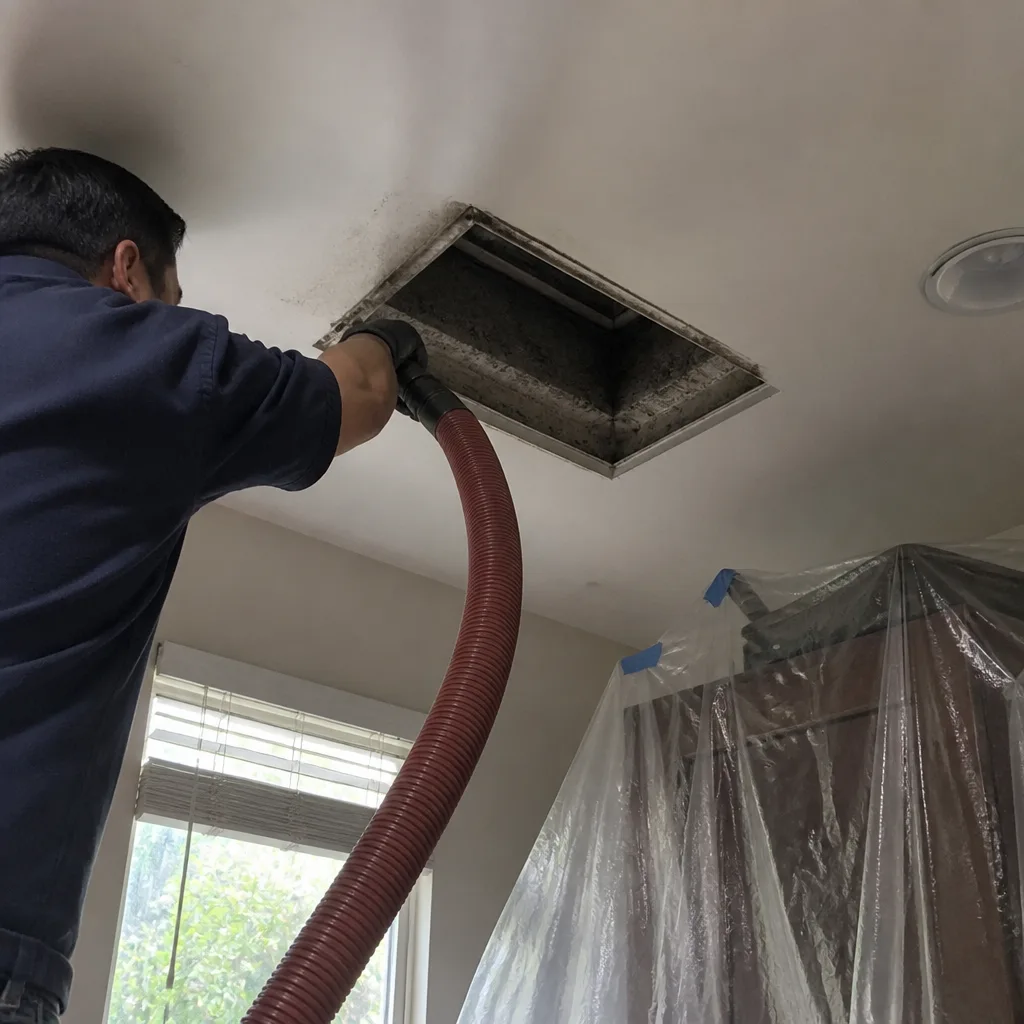 Before
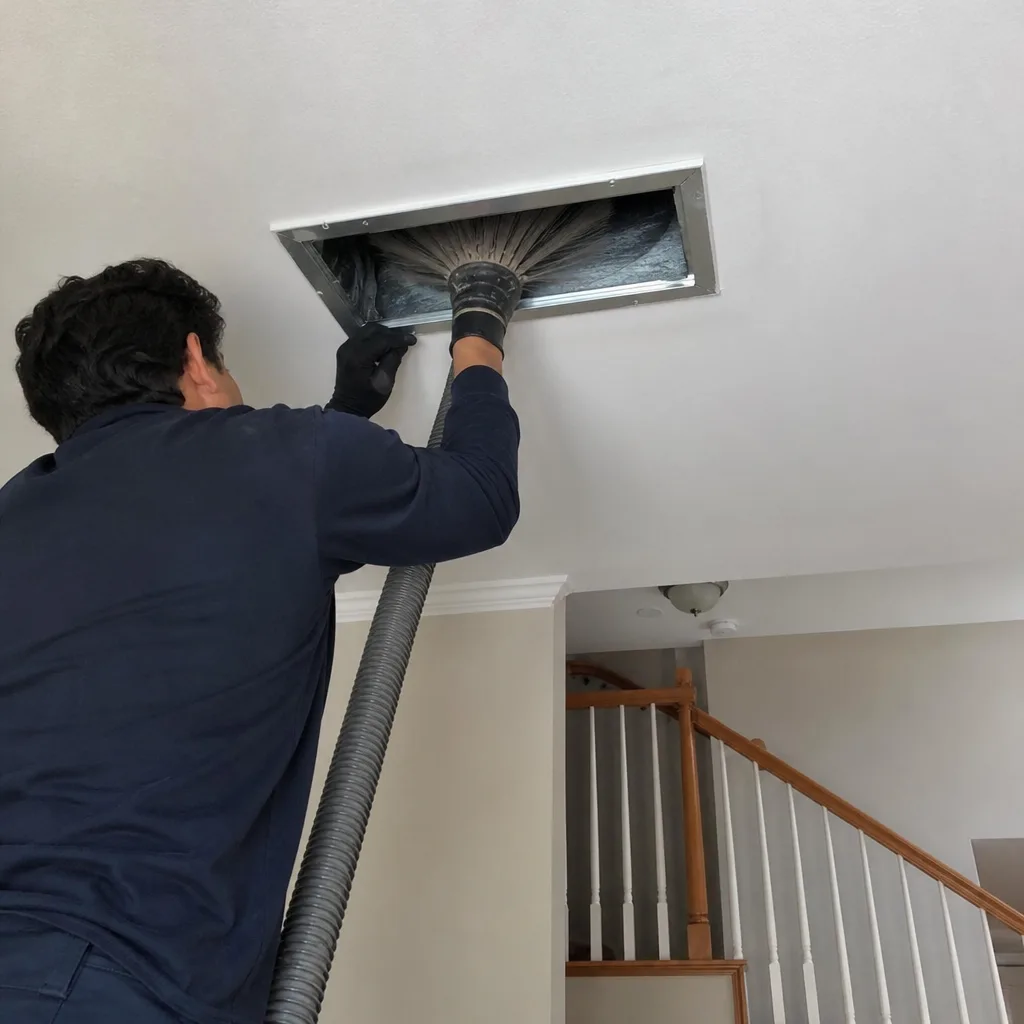 After